11 Bakheng Street, Svay Dangkum,
Siem Reap, Cambodia
Email our experts:
info@truenorthlean.com
11 Bakheng Street, Svay Dangkum,
Siem Reap, Cambodia
Email our experts:
info@truenorthlean.com

Blog

Smart Lean and the Real Story of Digital Transformation

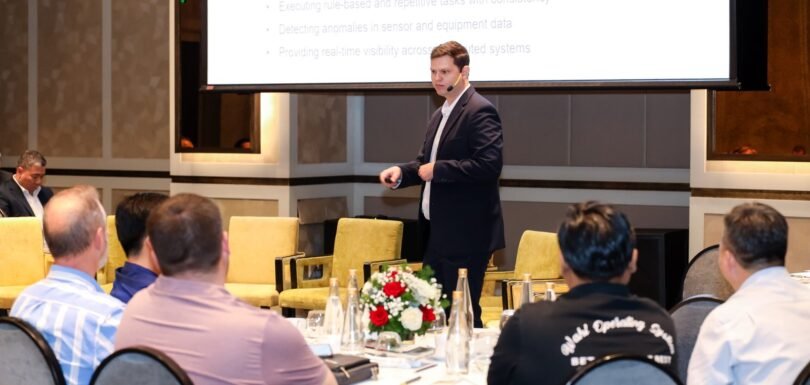
Presented by Ian Gray at the True North Lean CXO Summit Most factories today are filled with conversations about AI, dashboards, automation, and digital transformation. But if you step onto the shop floor and watch how work truly happens, the story is very different. Machines run, stop, and start again. Operators juggle tasks. Supervisors search for the right information. And amidst all this, many expensive digital tools remain untouched. That gap between ambition and reality is where most transformation efforts begin to fall apart. This was the heart of the message delivered by Ian Gray at the True North Lean CXO Summit. His session did not romanticize technology. Instead, it brought forward a truth that many leaders feel but rarely say out loud. Technology is not failing us. We are failing to prepare ourselves to use it meaningfully. The world may be excited about AI, but factories are still struggling with something as basic as accurate and consistent data. When Truth Hits Hard Ian opened his talk with numbers that made the room go quiet. Most AI initiatives stall. Many pilot projects never show financial results. And across many industries, the biggest complaint is not about algorithms or computing power. It is about unreliable data and unclear problem statements. What shocked people most was his remark that a simple Excel sheet often performs better than a sophisticated platform. Not because Excel is magical, but because operators know how to use it and trust what it tells them. This is the part leaders often forget. A tool is only as powerful as the culture, clarity, and capability of the people using it. Everything Begins at the Gemba Ian repeatedly emphasised the importance of the gemba. The real work happens beside machines, not in meeting rooms. If a digital tool does not solve a real pain point at the gemba, it becomes another abandoned experiment. When operators do not find it useful, it disappears quickly. When supervisors cannot rely on the information, it loses value. And when frontline teams do not feel ownership, no transformation will ever last. The foundation of Smart Lean is simple. Start by understanding the real problem deeply. Determine if it actually needs technology. And if it does, choose the simplest digital tool that supports the work without complicating it. Quality of Data Matters More Than Quantity One of the points that resonated strongly with many attendees was Ian’s perspective on data. In many factories, leaders believe collecting more data will automatically help them make better decisions. But without structure and discipline, more data only creates more confusion. Ian shared the example of downtime tracking. Before the digital solution, operators filled out manual sheets that often got lost or filled incorrectly. Supervisors waited too long for insights. By the time the data was compiled, the moment for action had already passed. A simple tablet-based capture system changed everything. Suddenly, insights were immediate. Operators could see patterns right away. Supervisors could take action before issues grew. The solution was not glamorous, but it was exactly what was needed. The Real Power of People A major theme in the session was the idea that people, not machines, remain the most intelligent part of any operation. Operators understand context. They sense irregularities. They can interpret signals that no sensor or algorithm can read. They use intuition built over years of hands-on experience. Technology has its own strength. It handles structured data at a scale no human can manage. It identifies deviations quickly. It performs repetitive tasks consistently without fatigue. Ian made it clear that smart factories are created not by replacing people, but by combining human judgement with digital assistance in a balanced way. Knowing When to Digitize Ian encouraged leaders to be thoughtful when choosing which processes should be digitized. Not every task needs AI or automation. Some tasks benefit more from simple checklists, visual controls, or manual verification. Others truly require the speed and structure that technology offers. His example of document analysis made this point clear. Reviewing large volumes of compliance documents manually took hours and carried high risk. When digital tools were introduced to ingest, translate, and extract critical information, they immediately reduced workload and improved accuracy. This was a place where digitization genuinely made sense because it amplified human capability. Early Signs a Project Is Heading in the Wrong Direction Ian shared warning signs that often show up early, long before a project officially fails. If a company buys technology before clearly identifying the problem, trouble is coming. If the data collected becomes more important than the problem it is supposed to solve, teams will lose direction. If operators do not trust the system, adoption will stop instantly. And if dashboards are created but no one looks at them, it means they were built for the wrong audience. At that point, the only wise move is to pause, return to the gemba, and rediscover what the problem really is. Each Factory Has Its Own Journey Ian reminded the audience that transformation does not follow one universal path. Some factories are still building discipline in paper-based processes. Others are ready for automated data capture or advanced analytics. The Smart Lean journey respects the maturity and readiness of each organization. It is not about rushing toward AI. It is about growing step by step, in a way that creates trust and confidence at every stage. The Principles Every Leader Should Remember Ian closed with lessons that every factory, regardless of its size or industry, can apply immediately. Always begin at the gemba. Every improvement should make life easier for the people doing the work.Treat digitalisation as a gradual journey. Start small and grow naturally.Put people first, then process, and bring technology only when it truly supports both.Reliable data always beats large but unreliable datasets.Prove value on a small scale before expanding any digital tool across the plant. These principles connect Lean thinking with modern digital transformation. Lean creates discipline. Digital tools create visibility. Together, they create factories
Continue Reading

When Nike Met Toyota: A Human Story About Lean, Leadership, and the Courage to Change

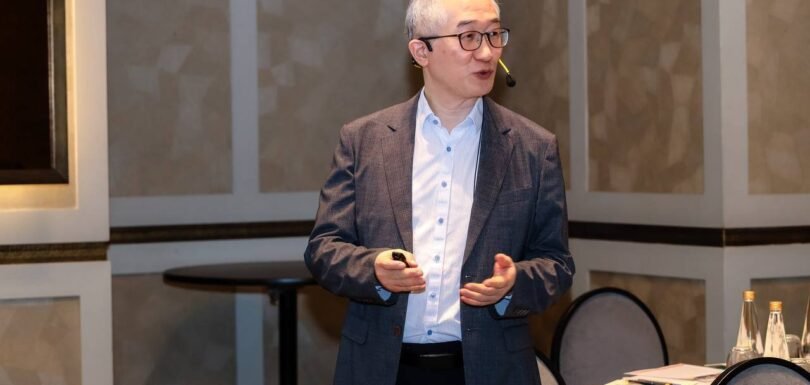
Based on the presentation by DJ Kim, presented at the True North Lean CXO Summit, Ho Chi Minh City There are moments in business history when two worlds collide and something quietly revolutionary begins. When Nike met Toyota, it wasn’t just a meeting of a sportswear giant and the world’s most respected manufacturing system. It was a meeting between ambition and humility, between rapid growth and thoughtful discipline, between a company in crisis and a philosophy forged through generations of learning. Nike’s story, as shared by DJ Kim, is not a tale of a brand chasing perfection. It’s the story of a company stumbling, questioning itself, and rediscovering what it means to solve problems at their root. In the early days, Nike’s success was unmistakable, yet beneath the surface lay cracks: exploding supplier networks, inconsistent quality, delivery failures, labor and compliance issues, media backlash, and financial decline. In 1998, the world’s most iconic sports brand found itself asking a question that would change its trajectory: Why is this happening, and how do we fix it? That question eventually led them to Toyota. With Toyota came a new lens, one not focused on tools, but on thinking. Nike embarked on what DJ Kim describes as “Lean 1.0,” a decade defined by the Age of the Tool. Factories shifted from batch to flow, lead times were cut dramatically, inventories fell, quality improved, and more than 700,000 team members felt the impact of Lean transformation. The numbers were impressive, but something wasn’t sticking. Gains plateaued. Some teams treated Lean as a compliance exercise rather than a living system. Improvement became an activity, not a habit. This is where the real learning began, what DJ Kim calls Lean 2.0. Lean 2.0 isn’t about tools. It’s about people, leadership, and culture. It’s about understanding that no amount of standardization will ever replace the need for engaged minds and empowered workers. Toyota’s wisdom echoed through the transformation: “We do the same work as other companies, but we do it very thoroughly.” What makes the difference is depth – thinking deeply, engaging honestly, and turning important actions into disciplined habits. Nike’s journey highlights the profound truth that factories do not improve because tools are deployed. They improve because leaders learn how to see. Leader Standard Work, visual control, daily accountability, and leadership discipline formed the four interdependent pillars of Nike’s Lean Management System. These were not checklists, but commitments, daily, lived expressions of leadership. Yet transformation did not stop on the factory floor. It expanded into product development, modernization, and the realization that making shoes is one of the hardest manufacturing challenges on the planet. Flexible materials, endless design variations, and complex assembly meant that automation alone could never be the answer. True modernization required thinking differently about design, engineering, and the development process itself, just as Toyota did when it reduced its vehicle development cycle from 48 months to 12. The future of competitiveness would depend not on machines but on minds. And in an age where AI looms large, DJ Kim delivers a grounding truth: AI will not replace Lean. AI will accelerate it. It will shorten learning cycles, deepen insight, and open new pathways for discovery. But the heart of Lean, problem-solving, remains profoundly human. The courage to ask why. The humility to see problems as gifts. The discipline to return, again and again, to the root cause. Ultimately, Nike’s story is not about footwear. It is not even about Lean. It is about organizations choosing to evolve. It is about the belief that every business, at its core, is a continuous journey of designing, producing, coordinating, selling, and leading with clarity and purpose. It is about leaders who choose to learn rather than command, and teams who choose to think rather than comply. When Nike met Toyota, the real gift wasn’t a new system. It was a new way of seeing. And in that way of seeing lies the future of every organization that wants to thrive, not by running faster, but by learning deeper.
Continue Reading

Case Study: Transforming a Fresh-Produce Business Through Lean Agribusiness Management

Maintaining consistent quality and ensuring on-time delivery is crucial in the competitive world of fresh produce. A medium-sized farm and processing enterprise specializing in ready-to-eat salads recently discovered how structured agribusiness management and Lean practices could completely change the game. The Challenge The company dispersed its operations across several farms and two processing plants. Despite strong demand, recurring inefficiencies were holding them back. The company was experiencing issues such as poor coordination between harvesting and packing, frequent breakdowns of packaging machines, inconsistent productivity, and crop waste due to overproduction. With thin margins and perishable goods, every delay meant real losses. Mapping the Process The improvement journey began with a complete mapping of the end-to-end process from receiving seeds and seedlings to delivering finished salad packs to customers. This exercise revealed bottlenecks across farming, processing, and logistics. By visualizing every step of the value chain, managers could identify precisely where waste was being created and how to tackle it. Lean Implementation in action. The first wave of change focused on the packing process. Using Lean tools like 5S (Sort, Set in order, Shine, Standardize, Sustain) and Standard Work, teams reorganized workspaces, optimized line layouts, and eliminated unnecessary movements. Equipment downtime, once a daily headache, dropped sharply after technicians and operators began analyzing problems systematically instead of reacting to them. At the farm level, the focus shifted to harvesting. Previously, each worker followed a different method, causing unpredictable yields and variable quality. The introduction of standard harvesting procedures brought uniformity and boosted productivity. Organized pickup schedules also ensured that harvested produce wasn’t left in the field to degrade under the sun, a simple change that prevented significant product loss. Embedding Continuous Improvement Next came improvements in sowing and growing practices. The team applied 5S principles to daily crop checks, irrigation routines, and record-keeping. Visual management tools helped farmers monitor plant health and respond quickly to issues. Over time, this established a pattern of continuous improvement, identifying minor issues before they escalated into costly failures. The final step was in supply-chain planning. Demand forecasting and production scheduling were aligned more closely to reduce surplus and avoid shipping products long distances just to balance supply. By treating logistics as part of the value chain — not a separate afterthought — the company reduced waste from spoiled or excess crops. Results That Speak for Themselves Within months, the transformation produced remarkable outcomes: Lessons for Agribusiness Leaders This case shows that effective agribusiness management is more than just beneficial farming; it’s about strategic thinking, data-driven decisions, and empowering people to improve every day. By combining agricultural expertise with Lean management principles, even a mid-sized enterprise can achieve world-class performance. For other agribusinesses, the message is clear: success grows from the soil up, but sustainability, profitability, and scalability come from disciplined management and continuous improvement.
Continue Reading

Case Study: Transforming a Food Manufacturing Facility Through Lean Thinking

In the competitive world of food manufacturing, where margins are tight and customer demands are high, one company discovered that operational excellence does not have to come at the cost of employee well-being. This case study explores how a mid-sized packaged foods producer improved profitability and created a more fulfilling work environment by applying Lean principles and empowering its frontline workforce. Industry ContextThe food manufacturing industry faces seasonal fluctuations in demand, rising raw material prices, and stringent quality standards. Many companies struggle to maintain efficiency during production peaks without overburdening staff or increasing waste. This organization faced a similar challenge: growing production costs, especially in labor and material waste, were eroding profits despite steady sales. Identifying the Core ProblemThe leadership team noticed that overtime expenses surged during high-demand months. Workers arrived hours early to prepare ingredients, perform equipment setup, and organize raw materials. Despite this extra effort, production delays and inconsistencies persisted. The assumption was that more labor and longer hours were necessary to maintain output. A deeper examination revealed the true issue lay not in workforce capability but in inefficient processes. Going to the SourceInstead of making quick decisions from the boardroom, the management team decided to observe work directly on the factory floor. By mapping out each operator’s movement during a full shift, they discovered excessive time spent walking to fetch tools, materials, or packaging supplies. Valuable production time was lost to disorganization and repetitive motion. Workers often left their stations to restock components or assist others, disrupting flow and increasing fatigue. Redesigning the Work ProcessThe company’s first major shift came from reorganizing the factory into self-contained production cells. Each cell was equipped with an on-demand supply system that replenished ingredients and materials continuously, eliminating the need for operators to leave their stations. A new “support runner” role was introduced to circulate between work areas, restock materials, and remove finished goods. The process also integrated a real-time production tracking board. Operators used visual signals to request assistance or materials without stopping their work. These small but impactful changes reduced motion waste, improved product flow, and stabilized daily output. Continuous Flow and Just-in-Time ProductionA just-in-time replenishment model replaced the traditional batch-prep system. Rather than preparing large quantities of semi-finished goods in advance, the facility shifted to producing smaller batches based on real-time demand. For example, dough preparation, previously done in bulk at the start of the day, was scheduled in intervals aligned with packaging and dispatch requirements. This prevented overproduction, reduced spoilage, and freed up valuable storage space. Testing and Scaling the SolutionThe results of the pilot implementation exceeded expectations. During an unexpected surge in orders, the existing workforce managed production without additional temporary hires or extended shifts. Productivity increased by 15 percent, and overtime costs dropped by nearly 30 percent. The streamlined layout and standardized procedures also improved safety, reducing incidents of strain and fatigue among workers. Empowering Employees as Problem SolversPerhaps the most transformative change came from the shift in leadership behavior. Supervisors transitioned from giving directives to coaching their teams. Daily stand-up meetings encouraged workers to raise problems and propose solutions. A simple problem-tracking sheet helped identify recurring issues, such as material shortages or machine setup delays, which were then addressed collaboratively. Over time, this participative culture fostered ownership among employees. Team members began suggesting process improvements on their own, from better tool placement to more efficient cleaning routines. Absenteeism declined, and morale improved significantly. Results and ImpactWithin a year, the company achieved measurable gains across financial and human performance indicators. Profit margins increased by 4 percent due to lower waste and optimized labor utilization. Quality defects were reduced by 18 percent, and customer satisfaction scores improved. More importantly, the workplace atmosphere shifted from one of stress and blame to one of collaboration and purpose. Key TakeawaysThis transformation in the food manufacturing industry illustrates that sustainable profitability stems from developing people, not just refining processes. By enabling employees to focus on value creation and eliminating unnecessary burdens, organizations can unlock both operational excellence and a positive work culture. What began as a cost-reduction initiative evolved into a mindset revolution where every worker became a problem-solver, every manager became a coach, and every improvement built a stronger foundation for the future.
Continue Reading

Lean Thinking Beyond the Factory Walls

For many years, Lean was seen as a philosophy designed only for factories. It belonged to the world of machines, assembly lines, and production targets. But today, a quiet revolution is taking place. The same Lean ideas that once transformed manufacturing are now reshaping offices, schools, banks, and even hospitals. The essence of Lean has never been about where it is applied but how it helps people see waste, understand value, and make work flow better. At its core, Lean teaches us to see what is often invisible. In an office or a classroom, inefficiency hides in emails waiting for responses, forms that require multiple approvals, or meetings without clear outcomes. Once people begin to recognize these delays and distractions as waste, they realize Lean is not a factory method at all—it is a way of thinking. Organizations that once believed improvement belonged only on the shop floor are learning that their biggest opportunities exist in their everyday business processes. Financial departments, customer service units, and HR teams are discovering that the same principles used to cut defects or reduce cycle times in production can also improve how they handle paperwork, decisions, and communication. One of the most important steps in this journey is learning to make office work visible. In a factory, a process can be seen, touched, and measured. In a service environment, work is often buried inside computers and conversations. Many companies begin by mapping their processes—making each step clear so that delays, bottlenecks, and rework can be exposed. When employees see their workflow laid out on a wall or a digital board, improvement stops being abstract. It becomes real, measurable, and achievable. Leaders play a central role in expanding Lean beyond production. The most successful organizations start with small projects, learn from them, and then grow. They do not impose Lean; they demonstrate it. When a finance manager or a school dean personally leads a Lean improvement, it signals that the method is not a passing trend but a commitment to better work. In education, Lean is helping teachers rethink how courses are structured and delivered. Some educators now treat students as valued customers, focusing on what students truly need to learn and how to make that learning more effective. Lessons are redesigned for clarity, assignments are balanced to avoid overload, and feedback loops are built so improvements happen continuously. The result is a better learning experience and a culture that respects both time and effort. In service industries, Lean has shown that the path to efficiency is not about working faster but working smarter. A large insurance company, for example, applied Lean principles to its agent licensing process. By studying the steps involved, they realized that half of the work added no value to the customer. Simplifying forms, setting clear approval rules, and introducing pull systems reduced delays from weeks to days. Employees could focus on helping customers instead of chasing paperwork. One of the toughest challenges in any non-manufacturing environment is the belief that professional work cannot be standardized. Many people assume that creativity and standardization cannot coexist. In reality, standardization frees creative minds to focus on meaningful problem solving instead of repeating routine mistakes. Just as a painter arranges brushes before beginning a portrait, professionals benefit from stable processes that allow them to concentrate on value creation. The real strength of Lean beyond production lies in respect for people. It invites everyone to participate in improvement. It encourages leaders to listen to the people closest to the work and act on their ideas. When staff realize that their suggestions lead to visible change, motivation grows naturally. The organization becomes a learning system, not a control system. Lean also changes how companies view technology. Instead of automating bad processes, they first simplify and stabilize them. Only after the work flows smoothly do they bring in digital tools to make it faster or more flexible. This mindset prevents the common trap of using software to hide inefficiency rather than solve it. The results of applying Lean in offices and institutions are often dramatic. Lead times drop, customer satisfaction improves, and teams feel a new sense of ownership. Yet, the most lasting benefit is cultural. People begin to question why things are done a certain way. They stop accepting problems as normal and start looking for causes and countermeasures. Lean is no longer the language of production engineers. It is the language of improvement, collaboration, and respect. Whether used in an insurance office, a university, or a hospital, it helps people see clearly, think deeply, and act with purpose. When applied with sincerity and patience, Lean becomes more than a method—it becomes a shared way of working that connects people through the pursuit of better results every day.
Continue Reading

Lean Never Fails, People Simply Stop Practicing

Across industries, it has become common to hear that most Lean transformations fail. Some say half of them do. Others say nearly all. These claims circulate widely, shaping a belief that Lean somehow does not deliver what it promises. Yet reality tells a different story. In factories, hospitals, service centers, and offices, every Lean journey leaves behind something valuable. Sometimes the gains are visible in numbers. Other times they are quiet and cultural. People begin to speak differently about problems, listen more carefully to one another, and take pride in small improvements. That is not failure. That is growth. Lean was never meant to be a project with a start and finish. It was designed as a way of thinking, a habit of learning together. When people stop seeing Lean as a checklist and start seeing it as a mindset, transformation becomes continuous. In one Southeast Asian manufacturing unit, Lean enthusiasm began high. Charts were printed, boards were placed, and meetings filled calendars. After a few months, the energy faded. Results seemed slow. Many assumed the effort had ended unsuccessfully. But on one production line, a supervisor began asking a simple daily question: “What can be made easier tomorrow?” The question spread quietly through the workshop. Within months, ideas began to flow. Tools were repositioned, workstations reorganized, and communication improved. There was no single breakthrough moment, yet performance rose steadily and morale returned. This example reflects a truth often forgotten. Lean does not fail when results come slowly. It only falters when learning stops. As W. Edwards Deming once reminded the world, learning is not compulsory, but neither is survival. Lean does not demand perfection. It asks for persistence. It thrives in patience, curiosity, and honest reflection. The strongest Lean cultures share one thing in common: leaders who listen. Not the loud kind of leadership that demands results overnight, but the steady kind that trusts teams to learn their way forward. When leaders value progress over perfection, Lean becomes part of daily life rather than a temporary initiative. Jeffrey Liker described Lean as being “better than yesterday.” That simple phrase captures the essence of continuous improvement. Every small adjustment, every reflection, every shared lesson adds to a larger story of growth. Lean never fails. It changes pace, it takes detours, and it evolves with people. It breathes through daily routines, through quiet observations, and through the courage to keep improving. The only time Lean seems to fail is when people stop practicing it. And the moment someone asks again, “How can this be done better?” Lean begins anew. In every organization that keeps learning, Lean remains alive. It does not fail. It simply continues to grow through people who care.
Continue Reading

Categories

  • No categories

Latest Posts

Subscribe Newsletter

Sign up to receive notifications about the latest news and events from us!

    x

    Inspiring Your Team to Continuous Growth and Sustainable Excellence.

    Address Business
    11 Bakheng Street, Svay Dangkum,
    Siem Reap, Cambodia
    Contact With Us
    +855 10 983138
    info@truenorthlean.com
    Select the fields to be shown. Others will be hidden. Drag and drop to rearrange the order.
    • Image
    • SKU
    • Rating
    • Price
    • Stock
    • Availability
    • Add to cart
    • Description
    • Content
    • Weight
    • Dimensions
    • Additional information
    Click outside to hide the comparison bar
    Compare