11 Bakheng Street, Svay Dangkum,
Siem Reap, Cambodia
Email our experts:
info@truenorthlean.com
11 Bakheng Street, Svay Dangkum,
Siem Reap, Cambodia
Email our experts:
info@truenorthlean.com

Case Study

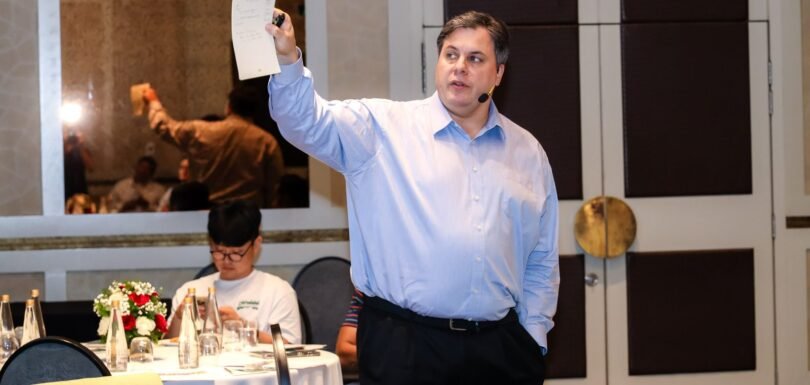
Building a Culture of Sustainable Excellence: Insights from Dave Becnel at the True North Lean CXO Summit, Ho Chi Minh City

There are speakers who share concepts, and then there are speakers who share clarity. When Dave Becnel, VP Quality Vietnam at Techtronic Industries TTi, addressed the audience at the True North Lean CXO Summit in Ho Chi Minh City, he offered something far more valuable than theory. He shared a grounded perspective on how sustainable excellence is truly built inside an organisation. His message was simple but powerful. Lasting performance comes from people who are capable, confident, and trusted to take ownership of their work. Dave’s long journey through engineering, production, Lean promotion, manufacturing, and quality leadership has given him a deep understanding of what makes operations thrive. His experience is not academic. It comes from years of supporting teams, fixing processes, and building systems that continue working even when no one is watching. Self Reliance The Heart of Sustainability Dave began by highlighting one of the most overlooked truths in manufacturing. Production teams must be able to manage their own lines. In many factories, support departments become crutches. Lean teams, quality controllers, and engineers often step in to solve issues that the frontline should be capable of handling. This does not empower people. It weakens the culture. True sustainability starts when production teams understand their process and can control quality, safety, cost, delivery, and improvement on their own. This mindset builds responsibility. It builds pride. And over time, it builds a culture where problems are solved at the source instead of being passed from one department to another. Highly Capable Lines The Foundation of Operational Excellence Dave emphasised that sustainable excellence depends on building highly capable production lines. These are lines where flow makes sense, ergonomics protect workers, equipment is reliable, and quality is designed to be right the first time. When these elements come together, the line becomes stable. Operators feel in control. Leaders stop firefighting and begin focusing on real improvement. But achieving this capability rarely happens if improvement begins only after mass production starts. Many organisations wait for problems to appear before looking for solutions. By then, waste is expensive and change becomes disruptive. 3P A Better Way to Build Excellence Dave introduced a concept that many organisations underestimate. The Production Preparation Process or 3P. Instead of separating design, industrialisation, and mass production into different phases, 3P brings everyone together early. Designers, engineers, pilot teams, and frontline operators sit together, explore options, and shape the process before it becomes permanent. This early collaboration eliminates waste before it ever reaches the production floor. It helps teams design processes that are safer, simpler, more ergonomic, and more cost effective. It also helps operators feel deeply connected to the process because they helped create it. Dave shared that real margin growth happens here, not after the line is already running. When waste is prevented instead of corrected, operational excellence becomes much easier to sustain. Leadership Sets the Tone At one point in his session, Dave pointed out something that every senior leader should reflect on. Frontline sustainability mirrors the discipline of the boardroom. If leaders do not prioritise stability, clarity, and support, the frontline will struggle to maintain improvement. But when leaders consistently model the behaviours they expect, the entire organisation follows that example. A culture of excellence needs strong expectations from the top and strong empowerment at the bottom. When those two forces meet, sustainability becomes natural. Problem Solving Keep It Simple Keep It Together One of the most human parts of Dave’s presentation was his reminder that problem solving does not need to be complicated. Fancy tools and complex methodologies are not the answer. What matters most is getting the right people in the same room and working through the issue with discipline and honesty. Simple formats like 4C or RCCA are often enough to solve even serious problems when they are used correctly. The key is clarity. Teams must understand the real problem. They must understand the real root cause. And they must agree on how to prevent it from returning. When organisations commit to this kind of simple, shared thinking, improvement becomes much faster and far more consistent. Three Lessons That Stay With You Dave wrapped up his presentation with three lessons that apply to any organisation striving for lasting excellence. Empower people first Self reliant teams build ownership and pride. When people feel capable, sustainability follows naturally. Build production friendly designs Cross functional collaboration during preparation and design prevents waste, improves quality, and creates margins before production begins. Use simple problem solving Strong teamwork and simple tools used with discipline can solve most issues faster than complex methods used without understanding. A Message That Will Influence Leaders For Years The True North Lean CXO Summit brought together leaders from across Asia who are shaping the next chapter of operational excellence. Dave Becnel’s message stood out because it was real. It was practical. And it reminded everyone that improvement begins and ends with people. In today’s world of technology and automation, his presentation was a timely reminder. Sustainable excellence does not come from tools. It comes from cultures built on trust, clarity, and shared ownership. When people are empowered to control their work and leaders support them with discipline and consistency, organisations do more than improve. They transform.
Continue Reading

When Nike Met Toyota: A Human Story About Lean, Leadership, and the Courage to Change

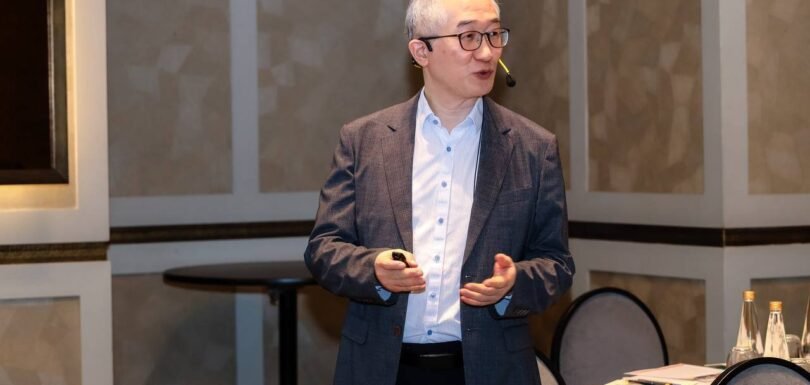
Based on the presentation by DJ Kim, presented at the True North Lean CXO Summit, Ho Chi Minh City There are moments in business history when two worlds collide and something quietly revolutionary begins. When Nike met Toyota, it wasn’t just a meeting of a sportswear giant and the world’s most respected manufacturing system. It was a meeting between ambition and humility, between rapid growth and thoughtful discipline, between a company in crisis and a philosophy forged through generations of learning. Nike’s story, as shared by DJ Kim, is not a tale of a brand chasing perfection. It’s the story of a company stumbling, questioning itself, and rediscovering what it means to solve problems at their root. In the early days, Nike’s success was unmistakable, yet beneath the surface lay cracks: exploding supplier networks, inconsistent quality, delivery failures, labor and compliance issues, media backlash, and financial decline. In 1998, the world’s most iconic sports brand found itself asking a question that would change its trajectory: Why is this happening, and how do we fix it? That question eventually led them to Toyota. With Toyota came a new lens, one not focused on tools, but on thinking. Nike embarked on what DJ Kim describes as “Lean 1.0,” a decade defined by the Age of the Tool. Factories shifted from batch to flow, lead times were cut dramatically, inventories fell, quality improved, and more than 700,000 team members felt the impact of Lean transformation. The numbers were impressive, but something wasn’t sticking. Gains plateaued. Some teams treated Lean as a compliance exercise rather than a living system. Improvement became an activity, not a habit. This is where the real learning began, what DJ Kim calls Lean 2.0. Lean 2.0 isn’t about tools. It’s about people, leadership, and culture. It’s about understanding that no amount of standardization will ever replace the need for engaged minds and empowered workers. Toyota’s wisdom echoed through the transformation: “We do the same work as other companies, but we do it very thoroughly.” What makes the difference is depth – thinking deeply, engaging honestly, and turning important actions into disciplined habits. Nike’s journey highlights the profound truth that factories do not improve because tools are deployed. They improve because leaders learn how to see. Leader Standard Work, visual control, daily accountability, and leadership discipline formed the four interdependent pillars of Nike’s Lean Management System. These were not checklists, but commitments, daily, lived expressions of leadership. Yet transformation did not stop on the factory floor. It expanded into product development, modernization, and the realization that making shoes is one of the hardest manufacturing challenges on the planet. Flexible materials, endless design variations, and complex assembly meant that automation alone could never be the answer. True modernization required thinking differently about design, engineering, and the development process itself, just as Toyota did when it reduced its vehicle development cycle from 48 months to 12. The future of competitiveness would depend not on machines but on minds. And in an age where AI looms large, DJ Kim delivers a grounding truth: AI will not replace Lean. AI will accelerate it. It will shorten learning cycles, deepen insight, and open new pathways for discovery. But the heart of Lean, problem-solving, remains profoundly human. The courage to ask why. The humility to see problems as gifts. The discipline to return, again and again, to the root cause. Ultimately, Nike’s story is not about footwear. It is not even about Lean. It is about organizations choosing to evolve. It is about the belief that every business, at its core, is a continuous journey of designing, producing, coordinating, selling, and leading with clarity and purpose. It is about leaders who choose to learn rather than command, and teams who choose to think rather than comply. When Nike met Toyota, the real gift wasn’t a new system. It was a new way of seeing. And in that way of seeing lies the future of every organization that wants to thrive, not by running faster, but by learning deeper.
Continue Reading

Case Study: Transforming a Fresh-Produce Business Through Lean Agribusiness Management

Maintaining consistent quality and ensuring on-time delivery is crucial in the competitive world of fresh produce. A medium-sized farm and processing enterprise specializing in ready-to-eat salads recently discovered how structured agribusiness management and Lean practices could completely change the game. The Challenge The company dispersed its operations across several farms and two processing plants. Despite strong demand, recurring inefficiencies were holding them back. The company was experiencing issues such as poor coordination between harvesting and packing, frequent breakdowns of packaging machines, inconsistent productivity, and crop waste due to overproduction. With thin margins and perishable goods, every delay meant real losses. Mapping the Process The improvement journey began with a complete mapping of the end-to-end process from receiving seeds and seedlings to delivering finished salad packs to customers. This exercise revealed bottlenecks across farming, processing, and logistics. By visualizing every step of the value chain, managers could identify precisely where waste was being created and how to tackle it. Lean Implementation in action. The first wave of change focused on the packing process. Using Lean tools like 5S (Sort, Set in order, Shine, Standardize, Sustain) and Standard Work, teams reorganized workspaces, optimized line layouts, and eliminated unnecessary movements. Equipment downtime, once a daily headache, dropped sharply after technicians and operators began analyzing problems systematically instead of reacting to them. At the farm level, the focus shifted to harvesting. Previously, each worker followed a different method, causing unpredictable yields and variable quality. The introduction of standard harvesting procedures brought uniformity and boosted productivity. Organized pickup schedules also ensured that harvested produce wasn’t left in the field to degrade under the sun, a simple change that prevented significant product loss. Embedding Continuous Improvement Next came improvements in sowing and growing practices. The team applied 5S principles to daily crop checks, irrigation routines, and record-keeping. Visual management tools helped farmers monitor plant health and respond quickly to issues. Over time, this established a pattern of continuous improvement, identifying minor issues before they escalated into costly failures. The final step was in supply-chain planning. Demand forecasting and production scheduling were aligned more closely to reduce surplus and avoid shipping products long distances just to balance supply. By treating logistics as part of the value chain — not a separate afterthought — the company reduced waste from spoiled or excess crops. Results That Speak for Themselves Within months, the transformation produced remarkable outcomes: Lessons for Agribusiness Leaders This case shows that effective agribusiness management is more than just beneficial farming; it’s about strategic thinking, data-driven decisions, and empowering people to improve every day. By combining agricultural expertise with Lean management principles, even a mid-sized enterprise can achieve world-class performance. For other agribusinesses, the message is clear: success grows from the soil up, but sustainability, profitability, and scalability come from disciplined management and continuous improvement.
Continue Reading

Case Study: Transforming a Food Manufacturing Facility Through Lean Thinking

In the competitive world of food manufacturing, where margins are tight and customer demands are high, one company discovered that operational excellence does not have to come at the cost of employee well-being. This case study explores how a mid-sized packaged foods producer improved profitability and created a more fulfilling work environment by applying Lean principles and empowering its frontline workforce. Industry ContextThe food manufacturing industry faces seasonal fluctuations in demand, rising raw material prices, and stringent quality standards. Many companies struggle to maintain efficiency during production peaks without overburdening staff or increasing waste. This organization faced a similar challenge: growing production costs, especially in labor and material waste, were eroding profits despite steady sales. Identifying the Core ProblemThe leadership team noticed that overtime expenses surged during high-demand months. Workers arrived hours early to prepare ingredients, perform equipment setup, and organize raw materials. Despite this extra effort, production delays and inconsistencies persisted. The assumption was that more labor and longer hours were necessary to maintain output. A deeper examination revealed the true issue lay not in workforce capability but in inefficient processes. Going to the SourceInstead of making quick decisions from the boardroom, the management team decided to observe work directly on the factory floor. By mapping out each operator’s movement during a full shift, they discovered excessive time spent walking to fetch tools, materials, or packaging supplies. Valuable production time was lost to disorganization and repetitive motion. Workers often left their stations to restock components or assist others, disrupting flow and increasing fatigue. Redesigning the Work ProcessThe company’s first major shift came from reorganizing the factory into self-contained production cells. Each cell was equipped with an on-demand supply system that replenished ingredients and materials continuously, eliminating the need for operators to leave their stations. A new “support runner” role was introduced to circulate between work areas, restock materials, and remove finished goods. The process also integrated a real-time production tracking board. Operators used visual signals to request assistance or materials without stopping their work. These small but impactful changes reduced motion waste, improved product flow, and stabilized daily output. Continuous Flow and Just-in-Time ProductionA just-in-time replenishment model replaced the traditional batch-prep system. Rather than preparing large quantities of semi-finished goods in advance, the facility shifted to producing smaller batches based on real-time demand. For example, dough preparation, previously done in bulk at the start of the day, was scheduled in intervals aligned with packaging and dispatch requirements. This prevented overproduction, reduced spoilage, and freed up valuable storage space. Testing and Scaling the SolutionThe results of the pilot implementation exceeded expectations. During an unexpected surge in orders, the existing workforce managed production without additional temporary hires or extended shifts. Productivity increased by 15 percent, and overtime costs dropped by nearly 30 percent. The streamlined layout and standardized procedures also improved safety, reducing incidents of strain and fatigue among workers. Empowering Employees as Problem SolversPerhaps the most transformative change came from the shift in leadership behavior. Supervisors transitioned from giving directives to coaching their teams. Daily stand-up meetings encouraged workers to raise problems and propose solutions. A simple problem-tracking sheet helped identify recurring issues, such as material shortages or machine setup delays, which were then addressed collaboratively. Over time, this participative culture fostered ownership among employees. Team members began suggesting process improvements on their own, from better tool placement to more efficient cleaning routines. Absenteeism declined, and morale improved significantly. Results and ImpactWithin a year, the company achieved measurable gains across financial and human performance indicators. Profit margins increased by 4 percent due to lower waste and optimized labor utilization. Quality defects were reduced by 18 percent, and customer satisfaction scores improved. More importantly, the workplace atmosphere shifted from one of stress and blame to one of collaboration and purpose. Key TakeawaysThis transformation in the food manufacturing industry illustrates that sustainable profitability stems from developing people, not just refining processes. By enabling employees to focus on value creation and eliminating unnecessary burdens, organizations can unlock both operational excellence and a positive work culture. What began as a cost-reduction initiative evolved into a mindset revolution where every worker became a problem-solver, every manager became a coach, and every improvement built a stronger foundation for the future.
Continue Reading

Categories

  • No categories

Latest Posts

Subscribe Newsletter

Sign up to receive notifications about the latest news and events from us!

    x

    Inspiring Your Team to Continuous Growth and Sustainable Excellence.

    Address Business
    11 Bakheng Street, Svay Dangkum,
    Siem Reap, Cambodia
    Contact With Us
    +855 10 983138
    info@truenorthlean.com
    Select the fields to be shown. Others will be hidden. Drag and drop to rearrange the order.
    • Image
    • SKU
    • Rating
    • Price
    • Stock
    • Availability
    • Add to cart
    • Description
    • Content
    • Weight
    • Dimensions
    • Additional information
    Click outside to hide the comparison bar
    Compare