11 Bakheng Street, Svay Dangkum,
Siem Reap, Cambodia
Email our experts:
info@truenorthlean.com
11 Bakheng Street, Svay Dangkum,
Siem Reap, Cambodia
Email our experts:
info@truenorthlean.com

Auto

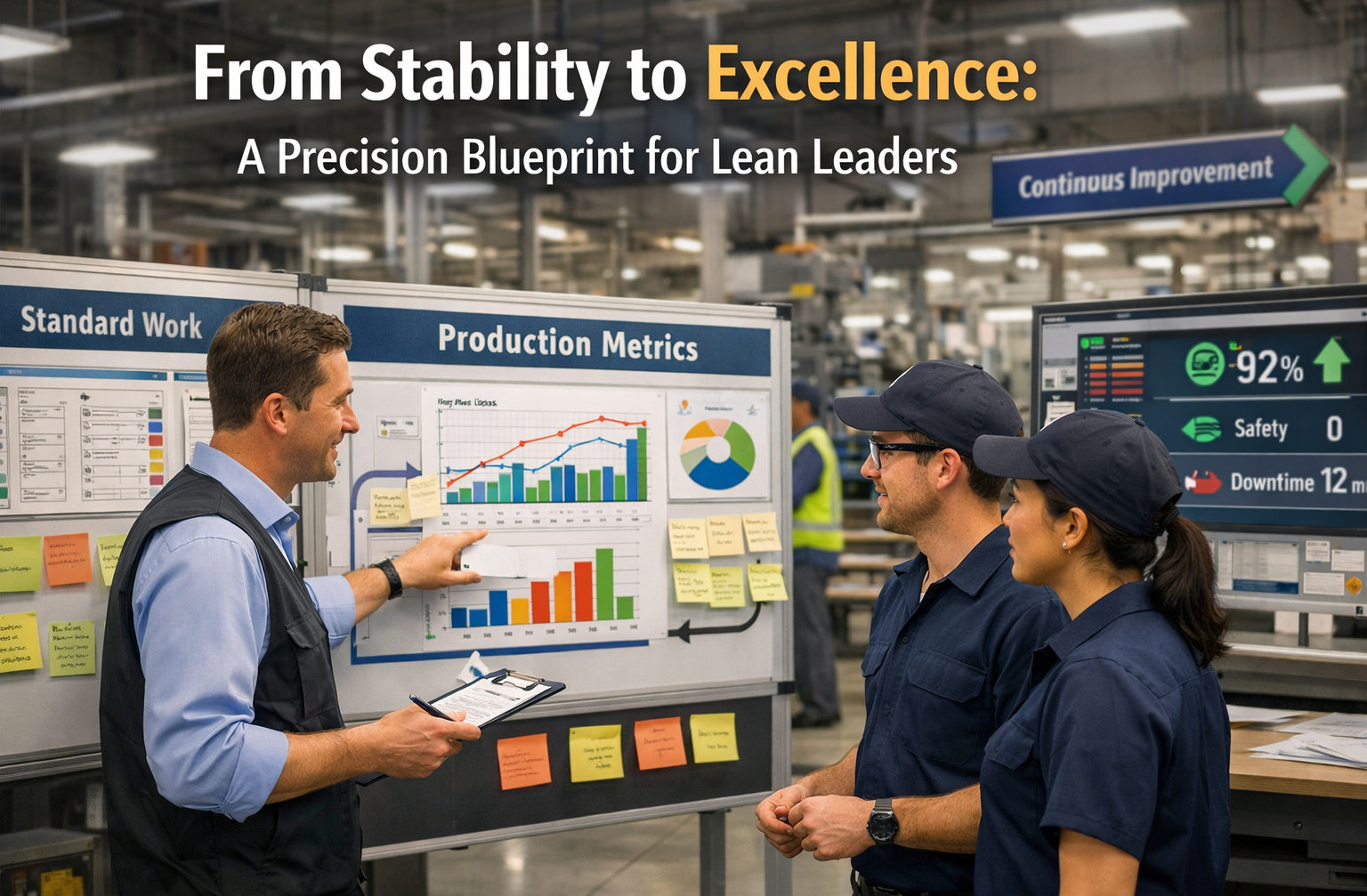
From Stability to Excellence: A Precision Blueprint for Lean Leaders

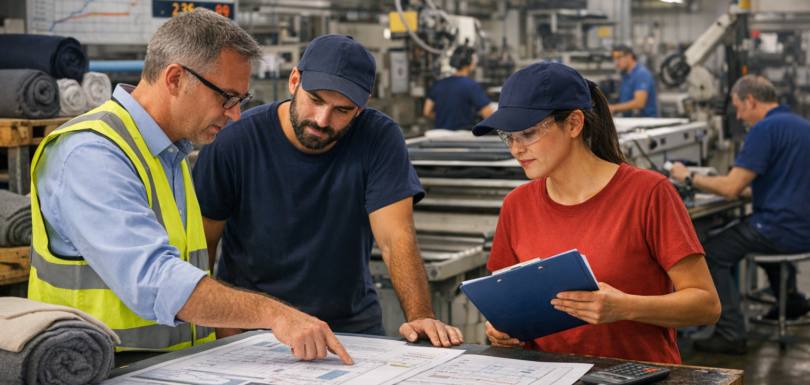
Most Lean transformations fail not in the conference room but on the shop floor, not because the strategy was wrong but because the discipline to execute it consistently was absent. Sustainable manufacturing excellence is not a destination reached through sporadic improvement events or technology investments alone. It demands something far more rigorous: daily process control, unyielding operational discipline, and relentless continuous improvement woven into the fabric of every shift, every line, every decision. The Architecture Beneath Excellence Before any organization can talk about optimization, it must be honest about its foundation. The Architecture of Excellence is built in three ascending layers: a base of Standardization, a core of Process Control and Deviation Management, and an apex of Optimization and Continuous Improvement. What drives the structure upward is not ambition, it is the PDCA loop functioning as a continuous kinetic engine, cycling learning into action and action into elevated standards. This architecture matters because excellence is not a static peak. It is an expanding loop. Organizations that attempt to leapfrog the base and land at the apex, deploying Industry 4.0 machines without first maturing their methods and manpower, do not accelerate excellence; they create expensive bottlenecks. The sequence is non-negotiable. The Three Pillars That Carry the Weight Baseline Standardization is where operational integrity begins. Standard Work Routines define the exact sequence and timing of activities, visual controls make the standard visible and anomalies immediately detectable, and the Manufacturing Operations Manual serves as the immutable playbook for execution. Without a predictable baseline, organizations cannot measure accurately, cannot improve reliably, and cannot prevent operational backsliding. The second pillar, deviation management, is where most organizations expose their true operational posture. System degradation is inevitable when deviations are tolerated rather than eradicated. A robust deviation cycle moves rapidly through three stages: Detect anomalies in real time through visual controls, Contain the fracture immediately through layered audits to protect throughput, and Eradicate the root cause permanently through structured problem-solving. The difference between a capable operation and a firefighting operation lives entirely in how quickly and decisively this cycle runs. Continuous Optimization is the third pillar and it is only credible when built on the first two. Value Stream Mapping eliminates cross-functional flow disruptions. Jishuken workshops unleash self-directed, immediate-action waste elimination from the workforce. Predictive analytics transition the organization from reactive response to algorithmic prevention. Optimization without stability is noise. Optimization on a stable foundation is competitive leverage. Diagnosing Where You Stand The Operational Posture Matrix is a frank diagnostic for leaders willing to be honest about their current state. Organizations in Reactive Management mode rely on tribal knowledge, fight fires at the point of defect, and manage through top-down directives. Those in Process Control mode have real-time dashboards, execute Standard Work, and produce stable, predictable throughput. Manufacturing Excellence organizations operate with predictive analytics, high-engagement Kaizen culture, and margin-expanding output. Most manufacturing organizations, if honest, sit between the first and second columns, capable of more, yet anchored by undisciplined execution. The Pipeline and the System The 8-Step Excellence Pipeline codifies the maturity sequence: Strategy alignment, Standards implementation, Stability, Capability, Control, Waste Reduction, Flow Optimization, and finally, Continuous Excellence. Attempting to optimize flow at Step 7 without first securing stability at Step 3 guarantees systemic failure, a principle violated in nearly every rushed transformation. Equally important is the 4Ms+E System Radar, which recognizes that isolated upgrades generate zero systemic return. Manpower, Machine, Method, Material, and Environment are interlocking nodes. Improving one while neglecting others creates imbalance, not progress. True manufacturing excellence emerges only when all five dimensions advance in concert. Excellence Is a Financial Imperative Shop floor management is not a cost center, it is a margin-protection engine. Disciplined standardization and deviation management directly drive OEE by expanding capacity utilization without capital expenditure. Root-cause eradication slashes the Cost of Poor Quality, stopping profit leakage at the source. Value stream design converts static work-in-progress into realized cash flow through accelerated inventory turns and throughput yield. The final truth that every Lean leader must internalize is this: strategy without execution discipline is organizational theater. The organizations that win in manufacturing are not those with the most sophisticated tools, they are the ones with leaders disciplined enough to hold the standard on Tuesday morning when no one is watching and humble enough to ask why the process deviated before asking who failed. Execution is the ultimate strategy. Source: Fundamentals of daily shop floor management by Philip J. Gisi
Continue Reading

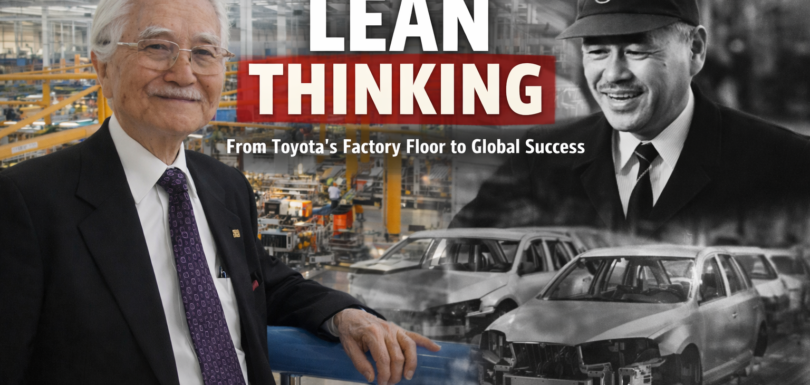
Lean Thinking Is Built on Discipline, Not Fashion

Why the pioneers of Lean continue to influence how serious organisations compete Management history is full of movements that arrive with energy and fade with equal speed. Lean, however, has endured for more than seven decades. Its longevity is not accidental. It survives because it addresses something fundamental: how work flows, how problems are solved, and how leaders behave under pressure. Lean did not begin as a corporate initiative. It began as a response to constraint. In post-war Japan, resources were scarce and survival demanded ingenuity. Within that context, Taiichi Ohno began challenging assumptions embedded in traditional mass production. Large batches and heavy inventory, he observed, created the illusion of productivity while hiding inefficiencies. If materials were piling up between processes, something was wrong. If defects were discovered late, something had been ignored earlier. Ohno’s contribution was not merely technical. He reframed efficiency as the steady removal of waste. Producing only what was needed, when it was needed, and in the quantity required was not a slogan; it was a discipline. Flow mattered. Interruptions revealed weaknesses. Waiting time exposed imbalance. Alongside him, Shigeo Shingo sharpened the system’s technical edge. He focused on reducing setup times that had long been considered unavoidable. Through systematic experimentation, he proved that hours-long changeovers could be reduced dramatically. His work on mistake-proofing reinforced a central Lean principle: quality should be built into the process, not inspected at the end. If errors recur, the system is speaking. Leaders must listen. The institutional backing of Eiji Toyoda ensured that these ideas became cultural norms rather than isolated improvements. Lean was not allowed to remain a collection of experiments; it became the operating backbone of Toyota. The philosophical roots, however, stretch even further back. Sakichi Toyoda introduced the concept of Jidoka, the idea that machines should stop automatically when abnormalities occur. This simple principle embedded responsibility into the production system. His son, Kiichiro Toyoda, reinforced the conviction that production must align closely with real customer demand. The wider world came to understand this system through the research of James P. Womack and Daniel T. Jones, who described Toyota’s approach as “Lean” in 1990. Their work highlighted that what differentiated high-performing organisations was not scale alone, but a relentless focus on value and flow. Over time, Lean travelled beyond automotive manufacturing. Hospitals applied its methods to reduce patient waiting times. Banks used it to streamline transaction processing. Logistics firms used it to stabilise supply chains. Yet as Lean spread, misinterpretation followed. In some organisations, it became synonymous with cost reduction or short-term productivity drives. Visual boards appeared. Workshops were conducted. Terminology was adopted. But without consistent leadership behaviour and daily problem-solving routines, improvements proved fragile. The pioneers of Lean never presented it as a quick fix. They emphasised observation at the workplace, structured experimentation, and respect for frontline knowledge. Lean requires leaders to ask questions rather than issue instructions. It requires teams to confront problems openly rather than conceal them behind excess inventory or overtime. In the current era of digital transformation, Lean’s relevance has arguably increased. Automation can accelerate throughput, but it cannot correct instability in upstream processes. Data analytics can reveal patterns, but they cannot replace disciplined thinking on the ground. When technology is layered onto weak systems, inefficiency merely moves faster. Lean’s endurance lies in its simplicity. It insists that organisations stabilise before they scale. It encourages clarity before complexity. It demands that improvement be continuous, not episodic. For companies seeking resilience amid volatility, the lesson remains clear. Lean is not a toolkit to deploy during difficult quarters. It is a long-term commitment to designing systems that expose problems early, empower people to solve them, and align effort with genuine customer value. The pioneers who shaped Lean were not chasing recognition. They were solving practical problems under real constraints. That practicality explains why, decades later, their thinking continues to guide organisations determined to compete with discipline rather than noise.
Continue Reading

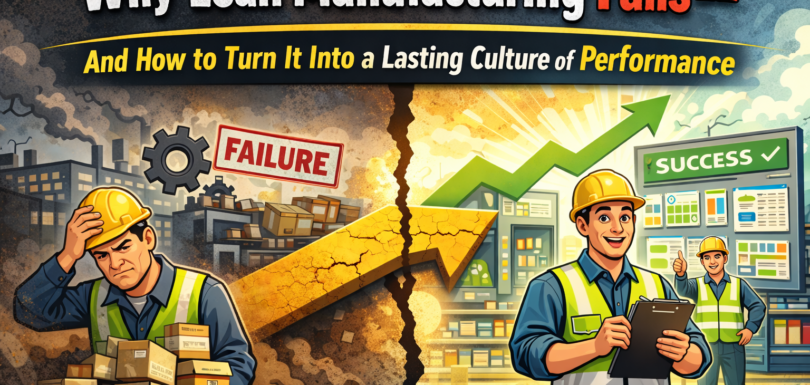
Why Lean Manufacturing Fails And How to Turn It Into a Lasting Culture of Performance

Lean manufacturing is often described as a set of tools. 5S. Kanban. Just-in-Time. Value Stream Mapping. Yet in reality, Lean is less about tools and more about behaviour. When implementation fails, it is rarely because the tools are wrong. It is usually because the mindset is missing. Across industries, from automotive to pharmaceuticals, the same pattern repeats. Leadership announces a Lean initiative. Posters go up. Training sessions are conducted. A few workshops are completed. Then, quietly, things drift back to “the way we’ve always done it.” Employees begin calling it the “flavor of the month.” Resistance grows. Momentum fades. The root of the problem is cultural resistance. In many traditional manufacturing environments, routines have been built over decades. Operators have developed their own workarounds. Supervisors manage based on experience rather than data. When Lean enters the system, it challenges habits. Standardization feels restrictive. Visual boards feel like surveillance. Continuous improvement feels like extra work. Without careful communication, people assume Lean means job cuts or unrealistic targets. When fear replaces understanding, even the best-designed Lean program struggles to survive. Another common mistake is treating Lean as a short-term project rather than a long-term philosophy. Organizations often rush to implement advanced tools like Just-in-Time without stabilizing basic processes. JIT, for example, requires reliable equipment, disciplined maintenance, and consistent quality. If machines break down frequently or tools are poorly managed, reducing inventory simply exposes chaos. What appears to be a Lean failure is actually a foundation failure. There is also the issue of inadequate training. Teaching people how to fill out a Kanban card is not the same as teaching them how to think scientifically. Lean requires problem-solving capability at every level. Without building this capability, companies copy techniques without understanding why they work. Infrastructure challenges further complicate implementation. Poorly aligned production lines create bottlenecks. Departments operate in silos. Excess inventory hides inefficiencies. When processes are disconnected, Lean tools become cosmetic rather than transformative. Case Study: Rebuilding Lean from the Ground Up Consider a mid-sized automotive components manufacturer in Western India. The company had attempted Lean twice in five years. The first effort focused on implementing Just-in-Time deliveries to reduce warehouse costs. Inventory was cut aggressively. Within months, production disruptions increased. Tool failures caused delays. Emergency purchases became frequent. Customer complaints rose. Management concluded that Lean “does not suit our environment.” Two years later, under new leadership, the company took a different approach. Instead of starting with inventory reduction, they began with 5S in one pilot area. Teams were trained not only on how to organize their workspace, but on why disorder created waste. Simple actions such as labeling tools, defining storage locations, and cleaning machines daily revealed underlying problems. Oil leaks were identified. Worn fixtures were replaced. Minor stoppages were tracked visibly. Next, they mapped process flow using spaghetti diagrams. Movement of materials and operators was analyzed. Layout adjustments reduced unnecessary travel. Maintenance routines were standardized. Only after equipment reliability improved did they gradually reintroduce Just-in-Time principles. This time, the results were different. Over eighteen months, work-in-progress inventory reduced by 28 percent. On-time delivery improved from 82 percent to 96 percent. More importantly, employee engagement scores rose significantly. Operators began suggesting improvements voluntarily. Lean was no longer a management program. It became a shared language. The difference was not the tools. It was the sequence, patience, and cultural focus. Sustainable Lean implementation demands top-down commitment combined with bottom-up participation. Leaders must model problem-solving behaviour rather than demand quick results. Supervisors must coach instead of command. Employees must feel safe to identify waste and highlight bottlenecks. Lean thrives when organizations shift from asking, “Which tool should we implement next?” to asking, “What problem are we trying to solve?” That subtle shift changes everything. When companies build a culture that values transparency, learning, and steady improvement, Lean stops being a project. It becomes the way work is done. And once that cultural foundation is in place, the tools finally begin to deliver their full potential.
Continue Reading

Getting a Production Plant Back on Its Feet

When the company shifted operations to a new facility, the mood was optimistic. The building was modern. The layout looked promising. The machines were better than before. On paper, everything suggested performance would improve. Reality was different. Production hovered around 55 percent of expected capacity. Orders were delayed. Supervisors were constantly juggling priorities. Operators were working hard, yet results did not reflect the effort. Something was clearly off, but no one could point to a single obvious cause. So instead of reacting with quick fixes, the leadership team chose to slow down and really look at what was happening. For several weeks, the focus was simple: observe, listen, and understand. Time was spent on the shop floor watching how work flowed from one station to another. Conversations were held with operators, maintenance teams, planners, and supervisors. Equipment usage was reviewed in detail. Not from reports alone, but in real time. One supervisor said it honestly: “We are busy all day, but it doesn’t feel smooth.” That sentence captured the problem perfectly. As the review progressed, a few patterns became clear. One production area was overloaded almost every shift. Work piled up there, creating pressure and delays downstream. Meanwhile, other departments had capacity they could not fully use. The imbalance was slowing the entire system. Technology told a similar story. Some advanced machines were being used for relatively simple tasks, while automated systems capable of much higher output were not consistently scheduled. It was not a competence issue. It was a coordination issue. Processes had also become more complicated than necessary. Extra steps had been added over time. Workarounds had become normal practice. Handoffs were not always clearly defined. None of these were dramatic problems on their own, but together they created friction throughout the plant. Material losses were higher than expected. When traced carefully, they were linked to unclear sequencing and inconsistent handling. Small inefficiencies, repeated daily, were quietly costing the company significant money. The improvement effort did not rely on dramatic restructuring. It focused on fundamentals. Workloads were rebalanced so that no single area carried disproportionate pressure. Tasks were better aligned with equipment capability. Process steps were simplified where possible. Clearer standards were introduced so that everyone understood how work should flow. Importantly, changes were tested with the people doing the work. Their feedback shaped the adjustments. When employees saw that practical suggestions were taken seriously, engagement improved noticeably. Within months, stability began to return. Daily output became more predictable. Firefighting reduced. Material waste dropped, resulting in annual savings of approximately USD 385,000. More than thirty quality and safety issues were identified and resolved. Equipment utilization improved without requiring new capital investment. Perhaps the most meaningful change was cultural. Conversations shifted from blame to problem solving. Teams felt more in control. Managers reported spending less time reacting and more time planning. Looking back, one executive reflected, “The move did not break us. It exposed what we had not fully understood.” The lesson is straightforward. New facilities and modern machines do not guarantee performance. Clear processes, balanced workloads, and disciplined coordination do. When those fundamentals are restored, results follow.
Continue Reading

Smart Lean and the Real Story of Digital Transformation

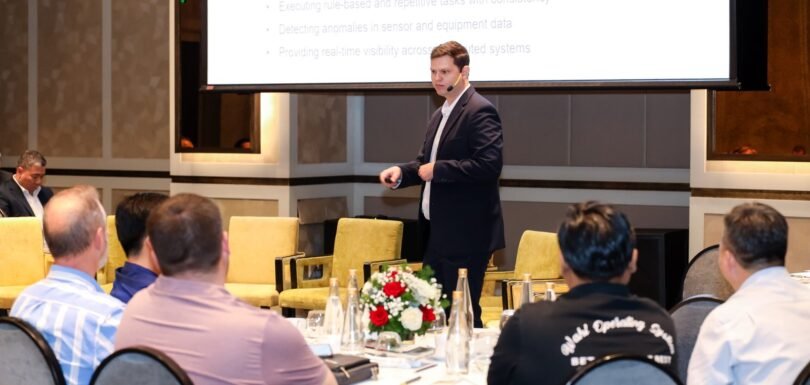
Presented by Ian Gray at the True North Lean CXO Summit Most factories today are filled with conversations about AI, dashboards, automation, and digital transformation. But if you step onto the shop floor and watch how work truly happens, the story is very different. Machines run, stop, and start again. Operators juggle tasks. Supervisors search for the right information. And amidst all this, many expensive digital tools remain untouched. That gap between ambition and reality is where most transformation efforts begin to fall apart. This was the heart of the message delivered by Ian Gray at the True North Lean CXO Summit. His session did not romanticize technology. Instead, it brought forward a truth that many leaders feel but rarely say out loud. Technology is not failing us. We are failing to prepare ourselves to use it meaningfully. The world may be excited about AI, but factories are still struggling with something as basic as accurate and consistent data. When Truth Hits Hard Ian opened his talk with numbers that made the room go quiet. Most AI initiatives stall. Many pilot projects never show financial results. And across many industries, the biggest complaint is not about algorithms or computing power. It is about unreliable data and unclear problem statements. What shocked people most was his remark that a simple Excel sheet often performs better than a sophisticated platform. Not because Excel is magical, but because operators know how to use it and trust what it tells them. This is the part leaders often forget. A tool is only as powerful as the culture, clarity, and capability of the people using it. Everything Begins at the Gemba Ian repeatedly emphasised the importance of the gemba. The real work happens beside machines, not in meeting rooms. If a digital tool does not solve a real pain point at the gemba, it becomes another abandoned experiment. When operators do not find it useful, it disappears quickly. When supervisors cannot rely on the information, it loses value. And when frontline teams do not feel ownership, no transformation will ever last. The foundation of Smart Lean is simple. Start by understanding the real problem deeply. Determine if it actually needs technology. And if it does, choose the simplest digital tool that supports the work without complicating it. Quality of Data Matters More Than Quantity One of the points that resonated strongly with many attendees was Ian’s perspective on data. In many factories, leaders believe collecting more data will automatically help them make better decisions. But without structure and discipline, more data only creates more confusion. Ian shared the example of downtime tracking. Before the digital solution, operators filled out manual sheets that often got lost or filled incorrectly. Supervisors waited too long for insights. By the time the data was compiled, the moment for action had already passed. A simple tablet-based capture system changed everything. Suddenly, insights were immediate. Operators could see patterns right away. Supervisors could take action before issues grew. The solution was not glamorous, but it was exactly what was needed. The Real Power of People A major theme in the session was the idea that people, not machines, remain the most intelligent part of any operation. Operators understand context. They sense irregularities. They can interpret signals that no sensor or algorithm can read. They use intuition built over years of hands-on experience. Technology has its own strength. It handles structured data at a scale no human can manage. It identifies deviations quickly. It performs repetitive tasks consistently without fatigue. Ian made it clear that smart factories are created not by replacing people, but by combining human judgement with digital assistance in a balanced way. Knowing When to Digitize Ian encouraged leaders to be thoughtful when choosing which processes should be digitized. Not every task needs AI or automation. Some tasks benefit more from simple checklists, visual controls, or manual verification. Others truly require the speed and structure that technology offers. His example of document analysis made this point clear. Reviewing large volumes of compliance documents manually took hours and carried high risk. When digital tools were introduced to ingest, translate, and extract critical information, they immediately reduced workload and improved accuracy. This was a place where digitization genuinely made sense because it amplified human capability. Early Signs a Project Is Heading in the Wrong Direction Ian shared warning signs that often show up early, long before a project officially fails. If a company buys technology before clearly identifying the problem, trouble is coming. If the data collected becomes more important than the problem it is supposed to solve, teams will lose direction. If operators do not trust the system, adoption will stop instantly. And if dashboards are created but no one looks at them, it means they were built for the wrong audience. At that point, the only wise move is to pause, return to the gemba, and rediscover what the problem really is. Each Factory Has Its Own Journey Ian reminded the audience that transformation does not follow one universal path. Some factories are still building discipline in paper-based processes. Others are ready for automated data capture or advanced analytics. The Smart Lean journey respects the maturity and readiness of each organization. It is not about rushing toward AI. It is about growing step by step, in a way that creates trust and confidence at every stage. The Principles Every Leader Should Remember Ian closed with lessons that every factory, regardless of its size or industry, can apply immediately. Always begin at the gemba. Every improvement should make life easier for the people doing the work.Treat digitalisation as a gradual journey. Start small and grow naturally.Put people first, then process, and bring technology only when it truly supports both.Reliable data always beats large but unreliable datasets.Prove value on a small scale before expanding any digital tool across the plant. These principles connect Lean thinking with modern digital transformation. Lean creates discipline. Digital tools create visibility. Together, they create factories
Continue Reading

Rediscovering the Lean Sensei: Learning Environments, Not Lecture Halls

Schools are often remembered as dreary places where curiosity struggled to survive under rigid teaching methods. Students developed a love for learning but grew skeptical of those responsible for guiding them. Teachers who preached from authority, claimed to be “gurus,” or began sentences with “Without a doubt” left little room for exploration. Only a rare few educators demonstrated that there was a different, more empowering approach to learning. This same pattern is still visible in many organizations today. Traditional management, shaped by the industrial revolution and decades of mass production, reduces people to parts of a “well-oiled machine.” Workers are treated as elements in a process rather than individuals capable of creativity, judgment, and problem-solving. The model is outdated, yet it persists in corporate training, people development, and leadership styles. Lean thinking offers a different path. At its core, lean redefines the role of the teacher, mentor, or manager. Rather than dictating from above, a lean sensei creates an environment where learning is nurtured through experimentation. The focus is on adapting to the unique circumstances of each learner and organization, equipping people with the tools to solve problems autonomously. From defining a problem to uncovering its root causes and testing solutions through small experiments, the lean approach enables growth by doing, not by following orders. “A sensei does not tell. They invite exploration.” The emphasis is not on providing ready-made solutions but on guiding individuals to discover their own answers. This approach builds confidence and independence, encouraging people to see problems as opportunities to learn rather than disruptions to routine. In this way, lean creates organizations where workers are not passive participants in a system but active problem solvers shaping the system itself. Today, this perspective is more urgent than ever. Technology has personalized almost every aspect of life. Products, services, and digital platforms are designed to fit the needs of the user. Yet education and organizational training often remain rigid, one-size-fits-all, and detached from the realities of daily work. Why should learning remain frozen in outdated models when everything else has evolved? Lean thinking suggests a shift from hierarchy to flexibility, from rigid control to openness. This does not mean chaos, but rather a balance between individual growth and organizational culture. It means embedding learning into the flow of work instead of isolating it in classrooms or training modules. “Learning should never feel separate from doing.” Global trends in leadership and development confirm this need. Organizations are moving toward hyper-personalized and immersive learning. Instead of standard training programs, there is a demand for development that is designed around personal growth, aligned with business goals, and integrated into daily practice. The future of learning lies in dialogue, mentoring, and collaboration. This aligns seamlessly with lean principles. Lean leaders are not commanders issuing orders but facilitators of learning. Their role is to co-create goals, foster ownership, encourage experimentation, and support teams as they adapt to fast-changing environments. By focusing on continuous learning, organizations develop the resilience needed to thrive in volatile markets. “Learning must be as adaptable as the systems we build.” Evidence supports this shift. Managers mentored by senseis are more likely to teach others effectively once they are confident in their practice. Lean-led organizations report stronger problem-solving capabilities and a greater ability to adapt to change. The process transforms not only performance but culture itself, shaping organizations into living systems that grow with their people. In practice, this means creating space for dialogue, encouraging curiosity, and making mentoring a cornerstone of culture. It also means resisting the temptation to provide quick, universal answers. A useful solution must be grounded in the present reality, shaped by the experiences and needs of workers in the field. Lean thinking teaches that problems are not obstacles but mirrors reflecting where learning must happen. “If all one ever does is put out fires, there will only be more fires.” What emerges is a learning organization that is flexible, innovative, and deeply human. Growth is not imposed from the top but cultivated at every level. Leaders step back from the illusion of control and instead build trust, creating conditions where people can act with autonomy and purpose. In an age of artificial intelligence and automation, this human dimension is more valuable than ever. Machines can process data and execute tasks, but they cannot replicate the creativity, empathy, and judgment of people. Human beings remain the strongest foundation of innovation and adaptability. When organizations place learning at the center of their strategy, they unlock potential that no algorithm can replicate. So why are so few leaders willing to embrace this path? Fear often plays a role. Letting go of control feels risky. The habits of mass production, deeply ingrained over generations, are hard to release. Yet clinging to outdated methods carries the greatest risk of all: irrelevance. The future belongs to organizations that dare to become learning environments rather than lecture halls. To those willing to replace rigid hierarchies with cultures of dialogue, curiosity, and trust. To leaders who recognize that true strength lies not in issuing commands but in nurturing growth. Lean thinking is more than a management method. It is an invitation to reimagine learning and leading in a way that honors people as the heartbeat of every system. By creating environments where experimentation, autonomy, and mentoring thrive, organizations not only survive change but turn it into opportunity. The most successful organizations of tomorrow will not be those that run like perfect machines. They will be those that learn like human beings.
Continue Reading

Categories

  • No categories

Latest Posts

Subscribe Newsletter

Sign up to receive notifications about the latest news and events from us!

    x

    Inspiring Your Team to Continuous Growth and Sustainable Excellence.

    Address Business
    11 Bakheng Street, Svay Dangkum,
    Siem Reap, Cambodia
    Contact With Us
    +855 10 983138
    info@truenorthlean.com
    Select the fields to be shown. Others will be hidden. Drag and drop to rearrange the order.
    • Image
    • SKU
    • Rating
    • Price
    • Stock
    • Availability
    • Add to cart
    • Description
    • Content
    • Weight
    • Dimensions
    • Additional information
    Click outside to hide the comparison bar
    Compare