11 Bakheng Street, Svay Dangkum,
Siem Reap, Cambodia
Email our experts:
info@truenorthlean.com
11 Bakheng Street, Svay Dangkum,
Siem Reap, Cambodia
Email our experts:
info@truenorthlean.com

Blog

Deming’s 14 Principles: A Management System Built on Quality, Trust and Continuous Improvement

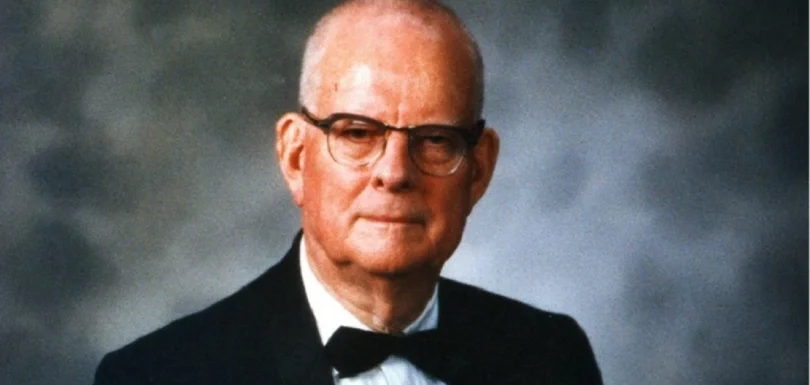
Many organisations pursue improvement through new technology, ambitious targets, tighter controls or frequent inspections. Dr. W. Edwards Deming challenged this approach. He believed that lasting improvement does not come from isolated tools or pressure on employees. It comes from transforming the entire management system. Deming’s 14 Points for Management, introduced in Out of the Crisis, remain highly relevant because they address the conditions that shape quality, productivity and human performance. They are not a checklist to be completed. They represent an interconnected philosophy of leadership. The first principle is to establish a clear and consistent purpose. An organisation should look beyond short-term financial results and commit itself to improving products, services, competitiveness and employment. When direction changes every quarter, employees struggle to understand what truly matters. Constancy of purpose provides stability and allows improvement efforts to mature. Deming also called on organisations to adopt a new management philosophy. Leadership must accept responsibility for change rather than blaming markets, suppliers or workers. Old habits based on control, inspection and individual accountability must be replaced by cooperation, learning and system improvement. One of his most powerful arguments was that quality cannot be inspected into a product or service. Inspection may detect a defect, but it does not prevent the defect from occurring. Quality must be designed into the process from the beginning. This requires reliable methods, capable equipment, clear standards and people who understand the purpose of their work. The same systems thinking applies to purchasing. Choosing suppliers purely on the lowest price may create hidden costs through poor quality, delays, rework and unstable supply. Deming encouraged long-term supplier relationships built on trust, consistency and total cost rather than price alone. Continuous improvement is another central theme. Every system of production or service can be improved. Management must continually examine processes, remove waste, reduce variation and create better working conditions. Higher quality often leads to greater productivity because less time is spent correcting mistakes, managing complaints and repeating work. Training and education are therefore essential. People cannot be expected to perform well if they have not been properly trained. Training should not be treated as a one-time introduction. Employees need continuing opportunities to strengthen technical skills, problem-solving ability and understanding of the organisation’s systems. Deming distinguished leadership from supervision. A leader’s responsibility is not simply to monitor numbers or identify failure. Leadership means helping people, machines and processes perform better. It involves listening, coaching, removing obstacles and creating the conditions for success. Fear is one of the greatest barriers to improvement. When employees fear criticism, punishment or embarrassment, they hide problems. Management then receives incomplete information and makes poor decisions. Driving out fear allows people to report mistakes, question ineffective methods and suggest improvements without worrying about blame. Deming also warned against departmental silos. Research, design, purchasing, production, sales and customer service must work together. A problem created in one department may only become visible much later in another. Cross-functional cooperation helps organisations anticipate difficulties before they reach the customer. Slogans and numerical demands are not substitutes for capable systems. Telling employees to “work harder”, “achieve zero defects” or “increase productivity” achieves little when the process itself is unstable. Most performance problems originate in the system, which management has the authority to change. For the same reason, Deming criticised rigid quotas, annual ratings and management by numerical objectives. Measures are necessary, but numbers without context can encourage shortcuts, internal competition and manipulation. Leadership should focus on process capability, learning and long-term improvement rather than forcing individuals to meet arbitrary targets. People also need pride in their work. Poor materials, unclear instructions, faulty equipment and constant pressure can prevent even committed employees from producing good results. Management must remove these barriers and create an environment where quality work is both possible and recognised. Finally, transformation requires education, self-improvement and participation across the entire organisation. Improvement cannot be delegated to a quality department or a small Lean team. Senior leaders, supervisors and frontline employees must all contribute. Deming’s 14 Points ultimately ask management to view an organisation as a connected system. Quality, cost, productivity, employee engagement and customer satisfaction are not separate issues. They are outcomes of how the system is designed and led. Real transformation begins when leaders stop searching for someone to blame and start improving the conditions in which people work.

Continue Reading

Indian auto dealers turn to lean methods to cut chaos and win back trust

Indian vehicle dealerships and service centres are adopting lean management techniques to tackle chronic delays, rework and customer dissatisfaction, aiming to bring factory-style discipline to noisy, overbooked workshops and crowded showrooms. For many dealer principals and service heads, the scene is familiar: bays are full, phones ring constantly, staff move at speed – yet customers still complain about long waiting times, unclear updates and repeat visits for the same issue. Activity is high, but reliability is low. Lean management, adapted from manufacturing, focuses on removing waste, smoothing workflow and aligning daily decisions with a clear long-term direction. Applied to dealerships, it aims to restore control in environments where demand is volatile and customer expectations are rising. Defining a clear “True North” The starting point is a concise statement of what “ideal” performance should look like for customers and employees. For a dealer and service centre, leaders typically frame this “True North” around three themes: jobs done right the first time and on time, transparent communication with customers, and a safe, respectful workplace for staff. Such statements are framed not as slogans but as decision rules. When a service advisor must choose between squeezing in one more car or protecting commitments already made, the True North standard pushes the decision towards reliability rather than volume. When management weighs a short-term discount campaign against potential pressure on service capacity, the same lens applies. Viewing operations as a customer journey Traditional dealer structures are built around departments – sales, service, body shop, spares and accounts. Customers, however, experience a continuous journey from enquiry or booking to final handover. Lean programmes begin by mapping this end-to-end journey. Teams document each step, wait, handover and approval from the customer’s perspective, along with the time involved. A common finding is that vehicles spend a large share of their time idle: waiting for bay allocation, technical assessment, parts, washing or billing. This exercise typically reveals that the main constraint is not staff effort but systemic waiting, rework and confusion. It provides the baseline for redesigning processes to allow vehicles and information to move more smoothly. Managing workshop flow In service operations, time and trust are the primary products. Lean methods focus on aligning bookings with real capacity, separating different types of work and defining clear physical routes for vehicles. At the planning level, dealers move away from accepting all bookings and instead build realistic daily capacity plans by bay and technician. This stabilises workloads, reduces last-minute promises and improves the accuracy of delivery commitments. Operationally, routine services and small jobs are often moved into fast-track lanes with standardised procedures, while complex diagnostics and accident repairs follow separate paths. This prevents difficult cases from blocking simpler work and reduces variability in lead times. Dealers also define standard parking and movement patterns: where cars wait before assessment, where they go after repair, and how they move to washing and delivery zones. With clear visual cues, staff can see the status of each vehicle at a glance, limiting informal tracking and repeated status checks. Using workplace organisation to expose problems Many workshops have run short-lived cleanliness campaigns. Under lean, workplace organisation is formalised through 5S – sorting, setting in order, cleaning, standardising and sustaining. Unnecessary tools, jigs and spare items are removed to free space and reduce search time. Frequently used tools and equipment are placed close to their point of use with fixed, labelled locations. Regular cleaning is used to detect leaks, wear or damage early, rather than for appearance alone. Simple visual standards define what a ready bay, parts store or washing area should look like. Deviations become easy to spot, helping supervisors and technicians identify issues before they affect customers. Standardising work without removing judgement Variation in how technicians and sales staff handle common tasks is a major source of inconsistency. Lean programmes respond with “standard work”: the best-known method for performing a job at the current level of knowledge. In service, this can include checklists for standard services, diagnostic paths for recurring complaints, rules for seeking customer approval and fixed sequences for vehicle reception and handover. In sales, standards may cover response times for leads, steps in a test drive and delivery protocols. Standard work is positioned as a baseline, not a constraint. Staff are encouraged to suggest improvements, which are tested and, if successful, incorporated into the standard. This approach supports training, stabilises quality and creates a platform for continuous improvement. Embedding daily management routines Lean becomes durable when it is embedded into daily management rather than treated as a project. Many dealers introduce short shift-start meetings at team boards in service and sales. Teams review the previous day’s performance, the current day’s load and any vehicles or customers at risk, and agree on one or two small actions. Simple visual boards display indicators such as safety incidents, rework cases, on-time delivery, ageing jobs and complaints. These boards are updated by the teams themselves and used as discussion tools, not for one-way reporting. Leaders conduct regular on-site walks through workshops and customer-facing areas. The focus is on understanding obstacles, listening to staff and supporting problem-solving, rather than fault-finding. This visibility and support are critical for sustaining new practices. Linking sales, service and digital interfaces Customer journeys now span showrooms, service desks, call centres, websites and messaging platforms. Lean implementations seek to integrate these touchpoints. Information about customer history, prior complaints and promises made at the time of sale is shared with service teams to reduce misunderstandings. Live status on bookings, vehicle progress and parts availability is made visible internally and, where feasible, to customers. Feedback from service – including patterns of usage, frequent questions and recurring issues – is routed back to sales and marketing, helping refine how features are explained and expectations are set. Pilot first, scale later Many dealers are tempted to announce network-wide lean programmes. Practitioners typically advise starting smaller, selecting one branch or a clearly defined process such as periodic maintenance for a pilot. Within that scope, teams define their
Continue Reading

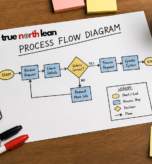
How to Draw a Process Flow Diagram Without Overthinking It

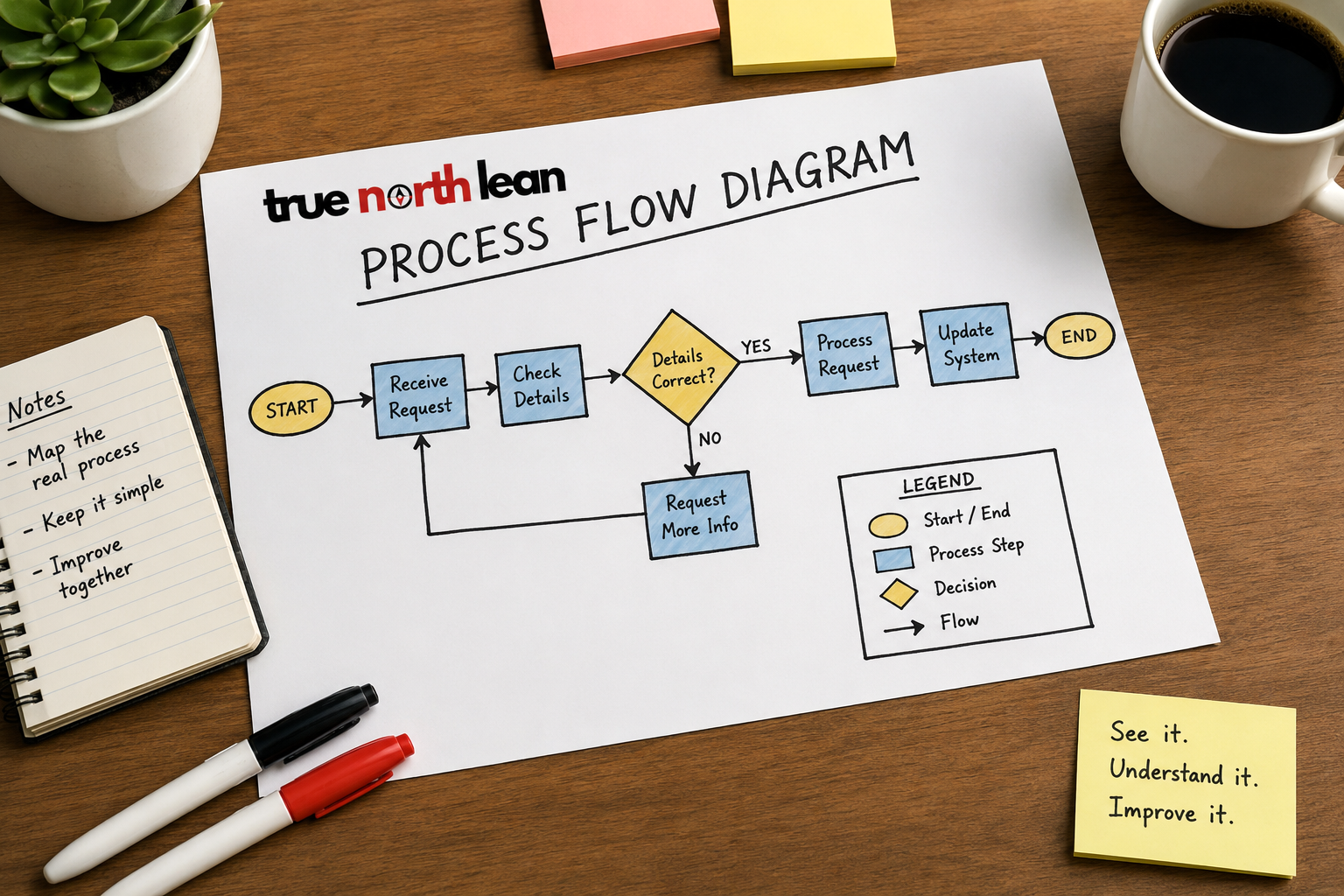
Most teams we work with already know their processes are messy. What they don’t always know is where the mess actually lives. A process flow diagram is one of the simplest ways to find out. You don’t need fancy software, a design background, or a six-week course. You just need a pen, a bit of patience, and the willingness to ask people how the work really gets done. At True North Lean, we use process flow diagrams all the time, with garment factory supervisors, hospitality managers, NGO coordinators, finance teams and other organisations. The drawing itself is rarely the hard part. The thinking behind it is what makes the difference. Here is the approach we usually recommend when someone is starting out. Pick one process, not ten Resist the urge to map everything. Choose one task with a clear beginning and a clear end. Something like: If you’re stuck, ask your team a simple question: which process do we get the most complaints, confusion, or rework about? Start there. That’s usually where the biggest gains are hiding. Walk the process before you draw it This is the step most people skip, and it’s the one that matters most. Go and see. In lean, we call it going to the gemba, the actual place where the work happens. Talk to the people who do the task every day. Watch them do it. Try it yourself if you can. You’re looking for the real process, not the version written in the SOP binder that nobody reads. While you observe, jot down: Small steps count. Waiting for an email approval is a step. Walking across the floor to get a signature is a step. These tiny gaps are often where waste hides. List the steps in plain language Before you worry about shapes and arrows, just write the steps out in order. Sticky notes on a wall work beautifully for this, because you can rearrange them as you learn more. A simple notepad works too. Include both the human actions and the system responses. For example: Make sure decision points are captured. Any moment where the path could go two ways needs to be visible on the map. Keep your tools simple You really do not need specialist software. Some of the best process maps we’ve seen at client sites were drawn with a marker on brown paper taped to the wall. Other workable options: Stick to four basic shapes and you’ll be fine: Clarity beats prettiness. Always. Draw the flow Now arrange your steps into a diagram. Most maps read well either top to bottom or left to right. Pick one direction and stay with it, because mixing directions confuses the reader. When you hit a decision point, draw both paths. What happens if the answer is yes? What happens if it’s no? Both branches need somewhere to go. If your diagram is starting to look like a plate of spaghetti, that’s a signal, not a failure. It usually means the process itself is too tangled to fit on one page, or that you’re trying to map several scenarios at once. Break it into smaller diagrams, one per scenario, and link them together. Your readers will thank you. Show it to someone who wasn’t in the room A process map only works if other people can read it. Once you have a draft, share it with: Ask them three questions. Does this match what really happens? Is anything missing? Does it make sense at a glance? You’ll almost always discover something. A hidden approval. A workaround nobody documented. A step that only happens on Fridays. That’s the point of the review. Clean it up Once the content is right, tidy the visuals: For example: “This diagram shows how a finished garment moves from the sewing line to the final packing area.” If you’re sharing it widely, add a small legend explaining your shapes. Not everyone has seen a flow diagram before. Put it somewhere people can find it A diagram that lives on your laptop helps no one. Store it where the team actually works, whether that’s SharePoint, a shared drive, a project folder, or printed and pinned next to the line. If it’s part of a bigger improvement effort, keep it alongside the related standard work sheets, problem-solving boards, or kaizen records. A few honest reminders Don’t chase perfection. A rough, accurate diagram is far more useful than a polished one that hides the real problems. The first draft is for understanding. The next versions are for improving. Also, remember why we draw these things in the first place. A process flow diagram is not the goal. The goal is to see the work clearly enough to make it better, easier, and safer for the people doing it every day. The diagram is just the tool that gets you there. If you start with one process, walk it honestly, and listen to the people who live inside it, you’ll already be doing lean work, whether you call it that or not
Continue Reading

The Quiet Foundations of Lean: What Modern Manufacturing Still Owes to Juran, Deming, and Drucker

Walk into almost any modern factory today and you will hear familiar phrases. Lean manufacturing. Continuous improvement. Quality systems. Flow. Productivity. Just-in-Time. Bottom-up problem solving. These ideas are now so deeply embedded in industrial thinking that many assume they were always there. They were not. Behind many of the manufacturing principles the world now celebrates stood a small group of thinkers who fundamentally changed how organizations viewed work, people, quality, and production itself. Among them was Dr. Joseph Juran, whose contribution to manufacturing management continues to shape industries decades later, even if his name is not always spoken loudly enough. In a remarkable conversation reflecting on the rise of Japanese manufacturing and the evolution of modern industrial systems, management thinker Peter Drucker offered a deeply human and revealing perspective on Juran’s legacy. What emerges from that discussion is not just a story about factories or productivity. It is a story about how ideas quietly transform nations. Drucker believed one of Juran’s greatest strengths was also one of his limitations. Juran was not someone obsessed with self-promotion or intellectual celebrity. He believed deeply that meaningful work would eventually speak for itself. Yet Drucker argued that ideas carry a responsibility to become visible, discussed, challenged, and understood by society. And perhaps that is exactly what happened with Juran’s work. The ideas did not explode overnight. They slowly entered the bloodstream of global manufacturing. The transformation of Japan after World War II is one of the clearest examples. Drucker explained that what the world later labeled as “Japanese management” was, in reality, an extraordinary Japanese ability to absorb ideas from elsewhere, adapt them intelligently, and improve them relentlessly. Japan’s strength was not imitation. It was disciplined adaptation. The country emerged from the war economically shattered and socially fragile. Existing leadership structures had lost credibility. Industries were desperate for answers. In that environment, Japanese companies became highly receptive to new management thinking, particularly from the United States. This is where figures like Juran, W. Edwards Deming, and Drucker himself entered the story. According to Drucker, most foreign experts who visited Japan had little long-term impact because they merely repeated conventional thinking. But a few thinkers brought something fundamentally different: concepts and systems that addressed how organizations actually worked. Juran’s contribution was profound because he changed how manufacturing itself was perceived. He helped organizations understand that manufacturing is not simply a collection of machines or departments. It is a process. A connected flow of work that must be designed, understood, and continuously improved. That idea seems obvious today. At the time, it was revolutionary. Juran pushed companies to stop viewing production from the perspective of machines and instead begin with the work itself. The process mattered more than the equipment. Human capability mattered more than rigid hierarchy. Drucker repeatedly emphasized that Juran believed manufacturing should be managed from the bottom up, not merely from the top down. The role of engineering was not to dominate the workforce, but to support people in performing meaningful and effective work. This philosophy would later become deeply associated with Lean manufacturing. Long before “Lean” became a management trend, Juran was already speaking about flow, productivity, process thinking, and quality-centered systems. He did not rely on slogans. He focused on fundamentals. One of the most fascinating insights from the discussion concerns the origins of the Toyota Production System. Today, Toyota is often treated as the gold standard of operational excellence. But Drucker explained that many of the concepts underpinning Toyota’s system became possible because thinkers like Juran shifted attention toward workflow, output, and total process design. Instead of organizing factories around what comes into the plant, organizations learned to design systems around what should come out of the plant. That subtle shift changed everything. Once manufacturers began understanding production as flow, concepts like Just-in-Time suddenly became possible. Drucker also pointed out an important truth that many organizations still struggle with today: technology alone does not create operational excellence. He criticized companies that invested billions into automation without first understanding the work process itself. Machines cannot fix broken systems. Automation placed on top of inefficient workflows simply accelerates waste. This remains one of the biggest lessons modern organizations continue to ignore. At True North Lean, we see this repeatedly across industries. Companies often rush toward software, dashboards, AI tools, and automation while foundational process problems remain unresolved. Real transformation begins with understanding work at its most practical level. Juran understood that deeply. Another striking insight from the discussion was the relationship between quality and cost. For decades, organizations assumed quality improvement increased expenses. Juran, Deming, and Drucker all challenged this assumption. Poor quality, they argued, is what truly creates enormous cost. Scrap, rework, machine downtime, delays, customer dissatisfaction, and operational instability are far more expensive than building quality into the process from the beginning. This thinking later became central to Lean systems worldwide. Perhaps most importantly, Juran recognized that quality and productivity were not separate goals. They were interconnected outcomes of a well-designed system. Improving quality improves productivity because stable processes reduce waste, confusion, and interruption. That insight still defines world-class manufacturing today. Yet beyond all the technical ideas, there is something deeply human in this story. Drucker described Japanese leaders attending seminars, hearing a concept, and immediately acting on it because they were open enough to admit their current systems were not working. There was humility. Curiosity. Urgency. A willingness to rethink assumptions. That mindset remains the real foundation of continuous improvement. Lean is not a toolkit. It is not a collection of Japanese words. It is not a certification program. At its core, Lean is the discipline of seeing work clearly, respecting people deeply, and continuously improving the system together. And in many ways, that philosophy still carries the fingerprints of Joseph Juran.
Continue Reading

The 7M Process Assessment: Why Most Operational Problems Are Hiding in Plain Sight

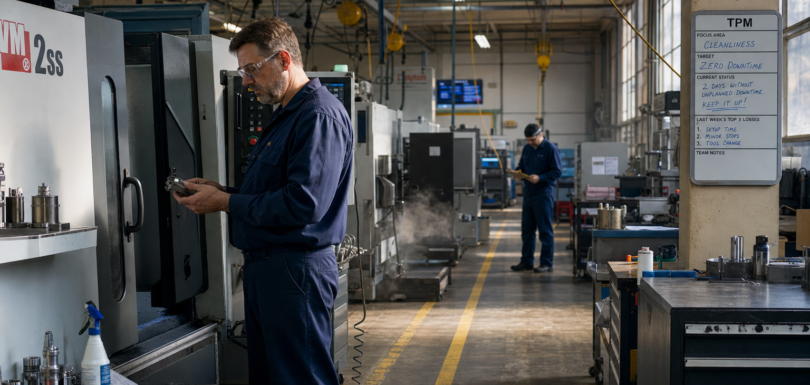
Walk into any factory on a difficult morning and you’ll hear the same conversation. A line is down, a customer is escalating, a shipment is at risk, and somewhere near the machine three people are pointing at a fourth one who isn’t in the room. The plant head wants answers in fifteen minutes. The quality manager is already drafting a containment note. And the operator, the one who actually saw what happened, is quietly waiting for someone to ask. This is where most operational problems begin. Not in the breakdown itself, but in how we look at it. After years of walking shop floors across industries, one pattern repeats almost everywhere. The visible problem is rarely the real problem. A defect is almost never just a defect. A breakdown is almost never just a breakdown. What we see on the surface is the final symptom of something that has been quietly drifting for weeks, sometimes months, across several parts of the system. This is exactly why the 7M Process Assessment matters, and why I keep coming back to it. The seven places where problems actually live The 7M framework looks at any process through seven lenses: Man, Machine, Material, Method, Measurement, Mother Nature, and Maintenance. On paper it sounds like a checklist. In practice, it’s something closer to a habit of looking. A way of refusing to accept the first explanation. Man is rarely about blame, even though that’s where most investigations begin. It’s about competency, training depth, fatigue, handover quality, and whether the operator has actually been shown the right way or simply told about it. There’s a difference, and the shop floor knows it. Machine is where overconfidence lives. We assume a machine that is running is a machine that is performing. It isn’t always true. Cycle times drift. Sensors lose sensitivity. A spindle that sounds fine to a manager sounds wrong to the operator who has stood next to it for three years. Material problems quietly travel through the supply chain long before they show up as rejections. Mixed batches, expired adhesives, moisture affected components, supplier substitutions that nobody flagged. These don’t fail loudly. They fail later, on the customer’s line. Method is the SOP question. Is the documented method the actual method? In most plants, honestly, no. Operators have improved the process informally, or worked around a broken step, or developed shortcuts that work most of the time. Until they don’t. Measurement is the silent killer. Uncalibrated gauges. Inconsistent inspection frequency. Two inspectors interpreting the same specification differently. You can’t improve what you can’t measure correctly, and most plants measure with more confidence than accuracy. Mother Nature, the environment, is the category leaders forget. Humidity, temperature, dust, vibration, lighting. These don’t appear in the FMEA but they appear in the reject bin. Maintenance is where the firefighting versus prevention culture shows itself most clearly. TPM on the wall is not TPM on the machine. Preventive maintenance done on paper is not preventive maintenance done in reality. Why we keep missing it Leadership tends to focus on what is visible, urgent, and easy to assign. A bad part, a late shipment, a customer complaint. The 7M assessment forces a slower, harder conversation: what in our system allowed this to happen, and what else is it quietly affecting? Most organizations don’t avoid root cause analysis because they don’t believe in it. They avoid it because honest root causes are uncomfortable. They point at decisions, not just people. A case from the floor A mid sized auto component plant I worked with was losing roughly 6% of monthly output to a recurring surface defect on a machined housing. Customer complaints had crossed the line from polite to serious. Leadership was convinced it was an operator handling issue, specifically on the second shift where most rejections appeared. The proposed fix was retraining and a warning memo. We ran a 7M assessment instead. Under Man, second shift operators were indeed less experienced, but the handover from first shift was the real gap. Informal, verbal, no written log of process adjustments made during the day. Under Machine, the coolant pressure on one of the two CNCs had dropped about 12% over six months; nobody had noticed because the machine “ran fine.” Under Material, the raw casting supplier had silently changed a sub vendor three months earlier, and hardness variation had increased. Under Method, the SOP still referenced an older fixture that had been replaced fourteen months ago. Under Measurement, the surface roughness gauge was overdue for calibration by nine months. Under Mother Nature, the second shift coincided with the warmest part of the day in a non air conditioned bay, and thermal expansion was nudging tolerances. Under Maintenance, the PM schedule existed but the last three cycles had been signed off without actually being performed. No single cause. Seven small drifts, stacked. The corrections were unglamorous. A structured shift handover log, coolant system overhaul, supplier requalification, SOP rewrite with the current fixture, gauge recalibration cycle, exhaust ventilation in the bay, and a TPM audit with teeth. Within three months, the defect rate dropped from 6% to under 0.8%. Unplanned downtime on those CNCs fell by roughly 40%. The second shift, the one that had been blamed, became the better performing shift. The honest conclusion Sustainable operational excellence doesn’t come from heroic recoveries or louder accountability meetings. It comes from disciplined systems, honest observation, and a culture that is more interested in understanding than in assigning. The 7M assessment is not a tool you use once during a crisis. It’s a way of looking at your own operation with the humility to assume that something, somewhere, is already drifting, and the discipline to find it before the customer does. The best plants I’ve seen are not the ones without problems. They’re the ones that see problems earlier, talk about them honestly, and fix the system rather than the symptom. That, more than any tool, is what Lean really is.
Continue Reading

The Wartime Training Method Quietly Powering Today’s Lean Factories

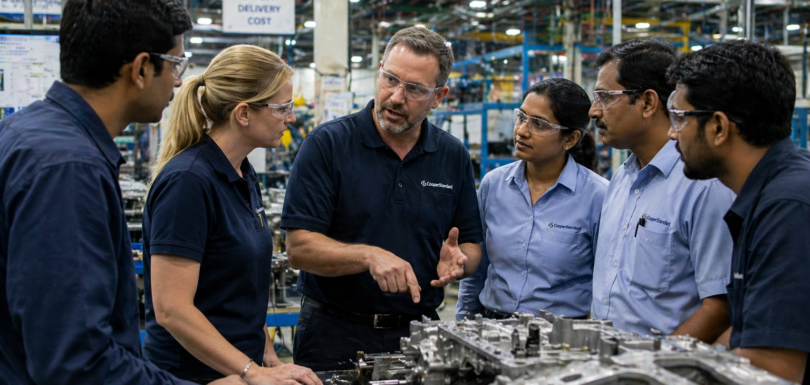
On factory floors, a training method born inside the United States War Department in the 1940s is once again teaching supervisors how to cut defects, raise output and keep their best people. It is called Training Within Industry, or TWI, and after eight decades, its ideas still feel surprisingly modern. When France fell in the summer of 1940, American industry faced an emergency. Skilled workers were being drafted into the military just as Washington was placing massive orders for tanks, ships and aircraft. The National Defense Advisory Commission set up the TWI Service in August 1940, and by the time it closed in the fall of 1945, more than 1.6 million workers in over 16,500 plants had been certified through its programmes, according to the official TWI Report archived by the U.S. Government Publishing Office (GovInfo). The architects of the programme, a group of industrial veterans later nicknamed the Four Horsemen, distilled supervision into three short courses, each ten hours long and delivered in five two-hour sessions. They became known simply as the J programmes: Job Instruction, Job Methods and Job Relations. A fourth, Program Development, was added for internal trainers (Wikipedia). After the war, TWI was carried into Japan as part of the post-war reconstruction effort. Toyota absorbed it deeply, and many lean practitioners now regard the J programmes as the missing human layer beneath the more famous tools of the Toyota Production System. What the three modules actually do Job Instruction, or JI, teaches a supervisor how to train an operator so the job is done correctly, safely and conscientiously. The trainer breaks the work into important steps, key points and reasons, then follows a four-step pattern: prepare the worker, present the operation, try out performance and follow up. It sounds simple, but it kills the habit of telling a new hire to “watch Ramesh for a week and you will pick it up.” Job Methods, or JM, gives supervisors a structured way to improve the work itself. Each step of a job is questioned with a disciplined sequence of why, what, where, when, who and how, and then ideas are eliminated, combined, rearranged or simplified. This is the original kaizen worksheet, drafted long before the word kaizen entered English. Job Relations, or JR, is the part most companies skip and most regret skipping. It treats people problems as preventable production problems. Supervisors are trained to know each worker as an individual, to give credit when due, to inform people in advance of changes, and to make best use of ability. When trouble surfaces, they follow four steps: get the facts, weigh and decide, take action and check results. Why the method still works Recent evidence suggests the wartime gains were not a fluke. A 2022 study published in the Journal of Political Economy tracked all 11,575 U.S. firms that applied to the TWI programme. It found that productivity at trained firms rose 6 percent within a year and 27 percent after a decade, with positive spillovers to suppliers and customers (PMC). Modern adopters report similar numbers. Cooper Standard Automotive, working across 20 European plants, raised labour productivity by an average of 17.55 percent and cut defects by 35.83 percent after deploying TWI (LeanTrix). The Supervisor Academy, reviewing more than 600 case studies, says it is common for committed adopters to see improvements of 50 percent or more in target metrics (Supervisor Academy). How to roll it out A practical sequence works best for plants in India and across Asia. Begin with Job Relations. Supervisors who do not have the trust of their teams cannot teach standard work, no matter how good their breakdowns are. Run the ten-hour JR course for every front-line and middle manager. Next, write Job Breakdown Sheets for the top 20 percent of operations that drive 80 percent of safety, quality or output risk. Keep each sheet to important steps, key points and reasons. Avoid bloated SOPs that nobody reads. Then deliver Job Instruction. Certify a small number of internal trainers first, let them train supervisors, and let supervisors train operators. Audit the four-step method on the shop floor weekly for the first quarter. Skill comes from repetition, not slides. Bring in Job Methods last, once standards are stable. There is no point improving a method that is not yet being followed. Connect the whole effort to a daily management routine. A short morning huddle in front of a board that tracks safety, quality, delivery and people issues turns TWI from a training event into a habit. A reminder from the lean world John Shook, a senior advisor at the Lean Enterprise Institute and one of the first Americans to work inside Toyota, captured the point in a single line. “I like to say that the Toyota Way is a socio-technical system on steroids. A test for all our lean systems is the question of how well we integrate people with process. Nowhere does that come together more than in the form of standardized work and kaizen,” he wrote (Lean Enterprise Institute). That, in the end, is the quiet promise of TWI. Tools alone will not save a factory. A trained supervisor, who can teach a job, improve a method and lead a team, almost always will.
Continue Reading

Categories

  • No categories

Latest Posts

Subscribe Newsletter

Sign up to receive notifications about the latest news and events from us!

    x

    Inspiring Your Team to Continuous Growth and Sustainable Excellence.

    Address Business
    11 Bakheng Street, Svay Dangkum,
    Siem Reap, Cambodia
    Contact With Us
    +855 10 983138
    info@truenorthlean.com
    Select the fields to be shown. Others will be hidden. Drag and drop to rearrange the order.
    • Image
    • SKU
    • Rating
    • Price
    • Stock
    • Availability
    • Add to cart
    • Description
    • Content
    • Weight
    • Dimensions
    • Additional information
    Click outside to hide the comparison bar
    Compare