11 Bakheng Street, Svay Dangkum,
Siem Reap, Cambodia
Email our experts:
info@truenorthlean.com
11 Bakheng Street, Svay Dangkum,
Siem Reap, Cambodia
Email our experts:
info@truenorthlean.com

Surya Narayan

  • Home
  • Author: Surya Narayan
  • Page 3

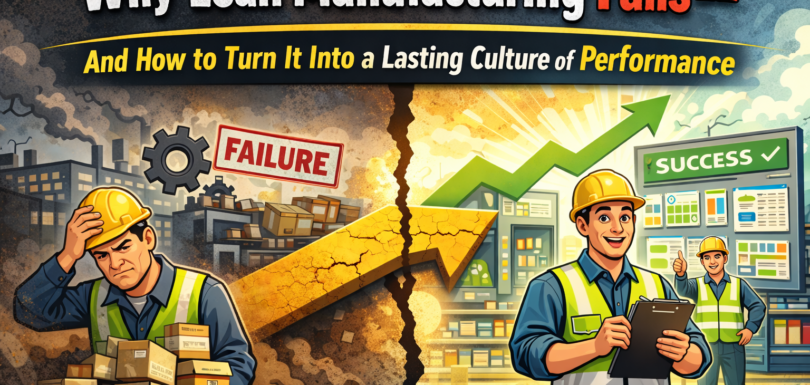
Why Lean Manufacturing Fails And How to Turn It Into a Lasting Culture of Performance

Lean manufacturing is often described as a set of tools. 5S. Kanban. Just-in-Time. Value Stream Mapping. Yet in reality, Lean is less about tools and more about behaviour. When implementation fails, it is rarely because the tools are wrong. It is usually because the mindset is missing. Across industries, from automotive to pharmaceuticals, the same pattern repeats. Leadership announces a Lean initiative. Posters go up. Training sessions are conducted. A few workshops are completed. Then, quietly, things drift back to “the way we’ve always done it.” Employees begin calling it the “flavor of the month.” Resistance grows. Momentum fades. The root of the problem is cultural resistance. In many traditional manufacturing environments, routines have been built over decades. Operators have developed their own workarounds. Supervisors manage based on experience rather than data. When Lean enters the system, it challenges habits. Standardization feels restrictive. Visual boards feel like surveillance. Continuous improvement feels like extra work. Without careful communication, people assume Lean means job cuts or unrealistic targets. When fear replaces understanding, even the best-designed Lean program struggles to survive. Another common mistake is treating Lean as a short-term project rather than a long-term philosophy. Organizations often rush to implement advanced tools like Just-in-Time without stabilizing basic processes. JIT, for example, requires reliable equipment, disciplined maintenance, and consistent quality. If machines break down frequently or tools are poorly managed, reducing inventory simply exposes chaos. What appears to be a Lean failure is actually a foundation failure. There is also the issue of inadequate training. Teaching people how to fill out a Kanban card is not the same as teaching them how to think scientifically. Lean requires problem-solving capability at every level. Without building this capability, companies copy techniques without understanding why they work. Infrastructure challenges further complicate implementation. Poorly aligned production lines create bottlenecks. Departments operate in silos. Excess inventory hides inefficiencies. When processes are disconnected, Lean tools become cosmetic rather than transformative. Case Study: Rebuilding Lean from the Ground Up Consider a mid-sized automotive components manufacturer in Western India. The company had attempted Lean twice in five years. The first effort focused on implementing Just-in-Time deliveries to reduce warehouse costs. Inventory was cut aggressively. Within months, production disruptions increased. Tool failures caused delays. Emergency purchases became frequent. Customer complaints rose. Management concluded that Lean “does not suit our environment.” Two years later, under new leadership, the company took a different approach. Instead of starting with inventory reduction, they began with 5S in one pilot area. Teams were trained not only on how to organize their workspace, but on why disorder created waste. Simple actions such as labeling tools, defining storage locations, and cleaning machines daily revealed underlying problems. Oil leaks were identified. Worn fixtures were replaced. Minor stoppages were tracked visibly. Next, they mapped process flow using spaghetti diagrams. Movement of materials and operators was analyzed. Layout adjustments reduced unnecessary travel. Maintenance routines were standardized. Only after equipment reliability improved did they gradually reintroduce Just-in-Time principles. This time, the results were different. Over eighteen months, work-in-progress inventory reduced by 28 percent. On-time delivery improved from 82 percent to 96 percent. More importantly, employee engagement scores rose significantly. Operators began suggesting improvements voluntarily. Lean was no longer a management program. It became a shared language. The difference was not the tools. It was the sequence, patience, and cultural focus. Sustainable Lean implementation demands top-down commitment combined with bottom-up participation. Leaders must model problem-solving behaviour rather than demand quick results. Supervisors must coach instead of command. Employees must feel safe to identify waste and highlight bottlenecks. Lean thrives when organizations shift from asking, “Which tool should we implement next?” to asking, “What problem are we trying to solve?” That subtle shift changes everything. When companies build a culture that values transparency, learning, and steady improvement, Lean stops being a project. It becomes the way work is done. And once that cultural foundation is in place, the tools finally begin to deliver their full potential.
Continue Reading

Getting a Production Plant Back on Its Feet

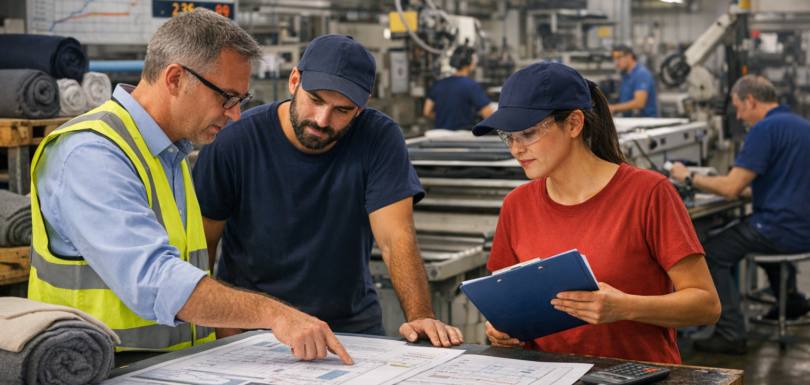
When the company shifted operations to a new facility, the mood was optimistic. The building was modern. The layout looked promising. The machines were better than before. On paper, everything suggested performance would improve. Reality was different. Production hovered around 55 percent of expected capacity. Orders were delayed. Supervisors were constantly juggling priorities. Operators were working hard, yet results did not reflect the effort. Something was clearly off, but no one could point to a single obvious cause. So instead of reacting with quick fixes, the leadership team chose to slow down and really look at what was happening. For several weeks, the focus was simple: observe, listen, and understand. Time was spent on the shop floor watching how work flowed from one station to another. Conversations were held with operators, maintenance teams, planners, and supervisors. Equipment usage was reviewed in detail. Not from reports alone, but in real time. One supervisor said it honestly: “We are busy all day, but it doesn’t feel smooth.” That sentence captured the problem perfectly. As the review progressed, a few patterns became clear. One production area was overloaded almost every shift. Work piled up there, creating pressure and delays downstream. Meanwhile, other departments had capacity they could not fully use. The imbalance was slowing the entire system. Technology told a similar story. Some advanced machines were being used for relatively simple tasks, while automated systems capable of much higher output were not consistently scheduled. It was not a competence issue. It was a coordination issue. Processes had also become more complicated than necessary. Extra steps had been added over time. Workarounds had become normal practice. Handoffs were not always clearly defined. None of these were dramatic problems on their own, but together they created friction throughout the plant. Material losses were higher than expected. When traced carefully, they were linked to unclear sequencing and inconsistent handling. Small inefficiencies, repeated daily, were quietly costing the company significant money. The improvement effort did not rely on dramatic restructuring. It focused on fundamentals. Workloads were rebalanced so that no single area carried disproportionate pressure. Tasks were better aligned with equipment capability. Process steps were simplified where possible. Clearer standards were introduced so that everyone understood how work should flow. Importantly, changes were tested with the people doing the work. Their feedback shaped the adjustments. When employees saw that practical suggestions were taken seriously, engagement improved noticeably. Within months, stability began to return. Daily output became more predictable. Firefighting reduced. Material waste dropped, resulting in annual savings of approximately USD 385,000. More than thirty quality and safety issues were identified and resolved. Equipment utilization improved without requiring new capital investment. Perhaps the most meaningful change was cultural. Conversations shifted from blame to problem solving. Teams felt more in control. Managers reported spending less time reacting and more time planning. Looking back, one executive reflected, “The move did not break us. It exposed what we had not fully understood.” The lesson is straightforward. New facilities and modern machines do not guarantee performance. Clear processes, balanced workloads, and disciplined coordination do. When those fundamentals are restored, results follow.
Continue Reading

Lean Never Fails, People Simply Stop Practicing

Across industries, it has become common to hear that most Lean transformations fail. Some say half of them do. Others say nearly all. These claims circulate widely, shaping a belief that Lean somehow does not deliver what it promises. Yet reality tells a different story. In factories, hospitals, service centers, and offices, every Lean journey leaves behind something valuable. Sometimes the gains are visible in numbers. Other times they are quiet and cultural. People begin to speak differently about problems, listen more carefully to one another, and take pride in small improvements. That is not failure. That is growth. Lean was never meant to be a project with a start and finish. It was designed as a way of thinking, a habit of learning together. When people stop seeing Lean as a checklist and start seeing it as a mindset, transformation becomes continuous. In one Southeast Asian manufacturing unit, Lean enthusiasm began high. Charts were printed, boards were placed, and meetings filled calendars. After a few months, the energy faded. Results seemed slow. Many assumed the effort had ended unsuccessfully. But on one production line, a supervisor began asking a simple daily question: “What can be made easier tomorrow?” The question spread quietly through the workshop. Within months, ideas began to flow. Tools were repositioned, workstations reorganized, and communication improved. There was no single breakthrough moment, yet performance rose steadily and morale returned. This example reflects a truth often forgotten. Lean does not fail when results come slowly. It only falters when learning stops. As W. Edwards Deming once reminded the world, learning is not compulsory, but neither is survival. Lean does not demand perfection. It asks for persistence. It thrives in patience, curiosity, and honest reflection. The strongest Lean cultures share one thing in common: leaders who listen. Not the loud kind of leadership that demands results overnight, but the steady kind that trusts teams to learn their way forward. When leaders value progress over perfection, Lean becomes part of daily life rather than a temporary initiative. Jeffrey Liker described Lean as being “better than yesterday.” That simple phrase captures the essence of continuous improvement. Every small adjustment, every reflection, every shared lesson adds to a larger story of growth. Lean never fails. It changes pace, it takes detours, and it evolves with people. It breathes through daily routines, through quiet observations, and through the courage to keep improving. The only time Lean seems to fail is when people stop practicing it. And the moment someone asks again, “How can this be done better?” Lean begins anew. In every organization that keeps learning, Lean remains alive. It does not fail. It simply continues to grow through people who care.
Continue Reading

Thailand’s Quiet Revolution in PCB Manufacturing

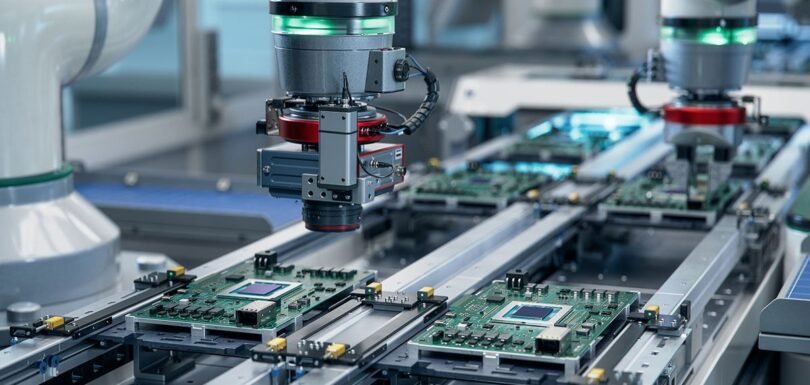
In a world electrified by the promise of artificial intelligence, a quiet transformation is unfolding in Southeast Asia. While headlines often focus on chip design and semiconductor breakthroughs, another part of the supply chain is taking center stage. Thailand is emerging as a critical hub for printed circuit board (PCB) manufacturing, an industry that forms the backbone of every device powering the AI era. From AI Demand to PCB Expansion PCBs may not carry the same glamour as chips, but they are indispensable. They serve as the foundation where chips, capacitors, resistors, and connectors are mounted. Without PCBs, smartphones, electric vehicles, AI servers, and supercomputers could not function. As global demand for AI hardware surges, so does the need for more advanced PCBs. Thailand has become a magnet for PCB investment. Victory Giant Technology, a major Chinese PCB manufacturer and a key supplier for Nvidia, has already expanded operations in Ayutthaya. Taiwan’s Gold Circuit Electronics, another supplier linked to Nvidia’s networking equipment, is running full production at its Thai facility. Global leaders such as Zhen Ding Tech and Unimicron are also setting up shop in the country. This shift is not coincidental. It reflects the “Taiwan plus one” strategy, where manufacturers diversify outside Taiwan to reduce geopolitical and supply chain risks. Following heightened US China tensions and concerns about security around Taiwan, Southeast Asia has emerged as a safer alternative. In less than three years, nearly 60 PCB manufacturers from China and Taiwan have established operations in Thailand. Government Support and Policy Push The Thai government is not standing on the sidelines. Through the Thailand Board of Investment (BOI) and agencies such as the Ministry of Higher Education, Science, Research, and Innovation, the government has been rolling out policies to attract high tech investors. From 2022 to mid 2025, Thailand approved more than 500 electronics investment projects valued at about 19.5 billion US dollars. Around 180 of those projects are in the PCB sector, contributing roughly 200 billion Thai baht to the economy. The government has also launched Thailand Electronics Circuit Asia (THECA), a dedicated exhibition platform designed to highlight the country’s role as a PCB hub. It brings together global manufacturers, suppliers, and investors under one roof. At THECA 2025, Thailand declared its ambition to capture 10 percent of global PCB exports and cement its position as the leading hub in ASEAN. Beyond attracting factories, Thailand is tackling a crucial challenge: skilled manpower. Industry experts predict that the PCB sector will need an additional 80,000 trained workers by 2027. To meet this demand, the Thailand Electronics Circuit Center has been established to provide workforce development, training, and certification. The government has also pledged to train 280,000 people across semiconductors, electric vehicles, and AI over the next five years. This includes tax incentives, scholarships, and collaboration between universities and industry. The Strategic Location Advantage Thailand’s position in ASEAN is also a strength. It offers connectivity to neighboring manufacturing powerhouses such as Vietnam, Malaysia, and Singapore. Many PCB components produced in Thailand are integrated into assembly lines in these countries before being exported worldwide. This creates a regional ecosystem that makes Thailand more resilient to external shocks. At the same time, the government is promoting industrial estates and science parks, such as Thailand Science Park and the National Electronics and Computer Technology Center. These hubs foster research, collaboration, and technology transfer between companies and academic institutions. They provide the infrastructure needed to support advanced PCB and semiconductor-related industries. Lean Thinking as a Competitive Edge Despite its advantages, Thailand faces challenges. Rising labor costs, infrastructure gaps, and fluctuating global demand could slow progress. This is where Lean manufacturing becomes a game changer. Lean is not simply a set of tools to reduce waste. It is a philosophy that empowers people, streamlines processes, and creates a culture of continuous improvement. In the PCB industry, where precision and efficiency determine profitability, Lean can deliver significant impact. Key benefits of Lean in PCB manufacturing include: Lean is particularly relevant for Thailand’s PCB sector because many companies are starting with small production lines. With Lean, these firms can expand more smoothly, reaching economies of scale while keeping costs under control. True North Lean’s Role in Southeast Asia One consulting firm well positioned to support this transformation is True North Lean. As one of the prominent Lean consulting firms in South and Southeast Asia, True North Lean has built a reputation for guiding companies through cultural and operational change. Unlike firms that provide one-off training, True North Lean embeds its consultants into organizations, working alongside management and shop floor teams to build sustainable systems. In the context of Thailand’s PCB industry, True North Lean can help companies: For new entrants to Thailand, particularly companies relocating from China or Taiwan, Lean consulting also provides a soft landing. It enables them to integrate into Thailand’s ecosystem more effectively, aligning local workforce practices with global standards. A Human Story of Transformation Consider a PCB factory in Ayutthaya. Rows of machines hum as workers assemble boards for AI servers. Overhead, AI-powered inspection systems flag potential defects, reducing waste by 30 percent. Production supervisors gather daily in short meetings, using Lean tools to track progress and solve issues in real time. Employees on the line suggest layout improvements that reduce material travel and speed up output. This is not a futuristic vision but a practical reality when Lean practices are adopted. The benefits are felt not only in higher profitability but also in greater pride among the workforce. For Thailand, a country investing heavily in its people, Lean provides a framework to unlock human potential. Looking Ahead By 2030, Thailand aims to become the second-largest PCB hub in the world, just behind China. To achieve this, it must continue attracting investment, building talent pipelines, and embedding operational excellence. Global companies are betting on Thailand because of its stability, location, and policy support. Lean consulting can ensure that this wave of investment turns into long-term competitive advantage rather than short-term gains. The
Continue Reading

Rediscovering the Lean Sensei: Learning Environments, Not Lecture Halls

Schools are often remembered as dreary places where curiosity struggled to survive under rigid teaching methods. Students developed a love for learning but grew skeptical of those responsible for guiding them. Teachers who preached from authority, claimed to be “gurus,” or began sentences with “Without a doubt” left little room for exploration. Only a rare few educators demonstrated that there was a different, more empowering approach to learning. This same pattern is still visible in many organizations today. Traditional management, shaped by the industrial revolution and decades of mass production, reduces people to parts of a “well-oiled machine.” Workers are treated as elements in a process rather than individuals capable of creativity, judgment, and problem-solving. The model is outdated, yet it persists in corporate training, people development, and leadership styles. Lean thinking offers a different path. At its core, lean redefines the role of the teacher, mentor, or manager. Rather than dictating from above, a lean sensei creates an environment where learning is nurtured through experimentation. The focus is on adapting to the unique circumstances of each learner and organization, equipping people with the tools to solve problems autonomously. From defining a problem to uncovering its root causes and testing solutions through small experiments, the lean approach enables growth by doing, not by following orders. “A sensei does not tell. They invite exploration.” The emphasis is not on providing ready-made solutions but on guiding individuals to discover their own answers. This approach builds confidence and independence, encouraging people to see problems as opportunities to learn rather than disruptions to routine. In this way, lean creates organizations where workers are not passive participants in a system but active problem solvers shaping the system itself. Today, this perspective is more urgent than ever. Technology has personalized almost every aspect of life. Products, services, and digital platforms are designed to fit the needs of the user. Yet education and organizational training often remain rigid, one-size-fits-all, and detached from the realities of daily work. Why should learning remain frozen in outdated models when everything else has evolved? Lean thinking suggests a shift from hierarchy to flexibility, from rigid control to openness. This does not mean chaos, but rather a balance between individual growth and organizational culture. It means embedding learning into the flow of work instead of isolating it in classrooms or training modules. “Learning should never feel separate from doing.” Global trends in leadership and development confirm this need. Organizations are moving toward hyper-personalized and immersive learning. Instead of standard training programs, there is a demand for development that is designed around personal growth, aligned with business goals, and integrated into daily practice. The future of learning lies in dialogue, mentoring, and collaboration. This aligns seamlessly with lean principles. Lean leaders are not commanders issuing orders but facilitators of learning. Their role is to co-create goals, foster ownership, encourage experimentation, and support teams as they adapt to fast-changing environments. By focusing on continuous learning, organizations develop the resilience needed to thrive in volatile markets. “Learning must be as adaptable as the systems we build.” Evidence supports this shift. Managers mentored by senseis are more likely to teach others effectively once they are confident in their practice. Lean-led organizations report stronger problem-solving capabilities and a greater ability to adapt to change. The process transforms not only performance but culture itself, shaping organizations into living systems that grow with their people. In practice, this means creating space for dialogue, encouraging curiosity, and making mentoring a cornerstone of culture. It also means resisting the temptation to provide quick, universal answers. A useful solution must be grounded in the present reality, shaped by the experiences and needs of workers in the field. Lean thinking teaches that problems are not obstacles but mirrors reflecting where learning must happen. “If all one ever does is put out fires, there will only be more fires.” What emerges is a learning organization that is flexible, innovative, and deeply human. Growth is not imposed from the top but cultivated at every level. Leaders step back from the illusion of control and instead build trust, creating conditions where people can act with autonomy and purpose. In an age of artificial intelligence and automation, this human dimension is more valuable than ever. Machines can process data and execute tasks, but they cannot replicate the creativity, empathy, and judgment of people. Human beings remain the strongest foundation of innovation and adaptability. When organizations place learning at the center of their strategy, they unlock potential that no algorithm can replicate. So why are so few leaders willing to embrace this path? Fear often plays a role. Letting go of control feels risky. The habits of mass production, deeply ingrained over generations, are hard to release. Yet clinging to outdated methods carries the greatest risk of all: irrelevance. The future belongs to organizations that dare to become learning environments rather than lecture halls. To those willing to replace rigid hierarchies with cultures of dialogue, curiosity, and trust. To leaders who recognize that true strength lies not in issuing commands but in nurturing growth. Lean thinking is more than a management method. It is an invitation to reimagine learning and leading in a way that honors people as the heartbeat of every system. By creating environments where experimentation, autonomy, and mentoring thrive, organizations not only survive change but turn it into opportunity. The most successful organizations of tomorrow will not be those that run like perfect machines. They will be those that learn like human beings.
Continue Reading

Overcoming Kanban Scalability Challenges through Digitalization

Lean Digitalization | Kanban | Lean Technology CASE STUDY – Reference from Planet Lean: How a manufacturing firm used digitalization to overcome the limits of manual kanban while preserving its pull-based lean culture. From Push Planning to Pull Flow Many organizations begin with a traditional push system, relying on centralized planning and forecast-driven scheduling. While this approach can work in stable environments, it often creates excess inventory, long lead times, and a lack of responsiveness to changing customer demand. As part of its lean transformation, one company recognized the need to abandon push logic in favor of pull principles. By introducing kanban, it placed flow at the center of its operations. The change improved material management, reduced overproduction, and provided greater visibility across the shop floor. More importantly, it fostered a culture where continuous improvement became part of everyday work. Kanban quickly became one of the organization’s lean cornerstones, enabling responsiveness and setting the stage for further improvement. The Scalability Problem of Manual Kanban In the early stages, manual kanban worked effectively. Employees were well trained, and the company maintained a strong lean culture. However, as production expanded and complexity increased, scalability issues emerged. Maintaining the manual system became labor-intensive. Every few months, teams had to dedicate several days to update parameters, resize items, reprint cards, and redistribute them across production lines. This created administrative waste and consumed valuable time. To cope with the workload, the company reduced the number of part numbers managed through kanban. This decision helped manage the burden but limited lean’s broader potential across the business. Transition to Electronic Kanban The turning point came with the decision to digitalize kanban rather than replace it. The company implemented an electronic kanban platform that preserved its pull-based logic while addressing maintenance challenges. The digital solution introduced two critical capabilities: This meant the company could keep the same lean principles while significantly reducing the effort required to maintain the system. A Scalable, Future-Ready System With electronic kanban in place, the organization could finally manage all part numbers and production lines without limitations. Administrative work that once took days could be completed in a fraction of the time, allowing teams to redirect energy toward continuous improvement. Real-time visibility into kanban cards also became a powerful strategic tool. Managers could quickly track the flow of materials, identify bottlenecks, and use accurate data when mapping value streams at both the component and departmental levels. Opportunities for Integration Beyond solving the immediate scalability challenge, digital kanban opened the door to broader opportunities. Integration with ERP systems, RFID portals, AGVs, and automated storage could create a fully connected production environment. Extending the system to suppliers and customers would allow pull principles to flow seamlessly across the entire supply chain. Lessons for Lean Practitioners This case study, adapted as a reference from Planet Lean, demonstrates that digitalization is not about replacing lean systems but strengthening them. By introducing technology carefully, the organization maintained the integrity of its pull system while solving a fundamental scalability issue. For practitioners, the key lesson is that lean and digitalization are not in conflict. When applied thoughtfully, digital tools can remove barriers, eliminate waste, and allow continuous improvement to reach its full potential.
Continue Reading

Categories

  • No categories

Latest Posts

Subscribe Newsletter

Sign up to receive notifications about the latest news and events from us!

    x

    Inspiring Your Team to Continuous Growth and Sustainable Excellence.

    Address Business
    11 Bakheng Street, Svay Dangkum,
    Siem Reap, Cambodia
    Contact With Us
    +855 10 983138
    info@truenorthlean.com
    Select the fields to be shown. Others will be hidden. Drag and drop to rearrange the order.
    • Image
    • SKU
    • Rating
    • Price
    • Stock
    • Availability
    • Add to cart
    • Description
    • Content
    • Weight
    • Dimensions
    • Additional information
    Click outside to hide the comparison bar
    Compare