11 Bakheng Street, Svay Dangkum,
Siem Reap, Cambodia
Email our experts:
info@truenorthlean.com
11 Bakheng Street, Svay Dangkum,
Siem Reap, Cambodia
Email our experts:
info@truenorthlean.com

Surya Narayan

  • Home
  • Author: Surya Narayan
  • Page 4

Driving Operational Excellence in Financial Services with True North Lean

For decades, lean was considered a manufacturing playbook. It belonged to assembly lines, production floors, and factories. Banks, insurers, and asset managers often dismissed it as irrelevant to their world of transactions, credit approvals, and investment strategies. But those perceptions are changing. Financial services firms are discovering what manufacturers realized long ago: lean is not just about cost-cutting; it is about creating smarter, faster, and more resilient systems. As global competition intensifies and customer expectations rise, the financial services sector is slowly embracing lean practices. The journey is not without resistance, but the results show that adoption is no longer optional; it is inevitable. The Promise of Lean in Finance The financial sector is fundamentally process-driven. Transactions, approvals, reconciliations, and reporting all follow structured workflows. This makes it fertile ground for lean applications. According to industry experts, banks that successfully adopt lean can expect efficiency improvements of 15% to 25%. Gains in cycle times are often even greater, sometimes improving by as much as 60%. Examples are already emerging: The benefits extend beyond efficiency. Lean principles help banks understand customer value more deeply, distinguishing which services matter most, and where investments in speed or accuracy will yield the highest returns. Why Adoption Has Been Slow Despite the potential, financial services have been slower than manufacturing to embrace lean. Part of the reluctance is cultural. Many executives perceive lean as a “factory-floor discipline” that does not apply to their high-value, knowledge-based work. Some fear it reduces complex jobs to a set of rigid rules. Others assume lean is just another name for cost-cutting. This mindset is gradually shifting. As more banks observe that their competitors are gaining advantages through lean practices, their attitudes are evolving. Still, change is difficult. Like adopting a healthier diet, leaders often know what they should do but struggle with follow-through. Old habits of siloed thinking, redundant processes, and slow customer response times continue to hold back progress. From Waste to Value The foundation of lean lies in eliminating the “seven deadly wastes”: overproduction, waiting, poor logistics, rework, over-processing, suboptimal inventory, and unnecessary movement. These wastes are just as present in finance as they are in manufacturing. For example, a loan underwriting department may spend weeks processing applications that will eventually be rejected, or analysts may duplicate reconciliation efforts using inconsistent tools and standards. In such cases, much of the work fails to add value for the customer or the business. Lean helps expose these inefficiencies, making room for smarter workflows. Importantly, lean is not about standardizing everything. It is about focusing on what truly matters to the customer and removing everything else. By doing so, organizations speed up service, reduce risk, and lower costs, all while improving customer satisfaction. The Human Side of Lean Implementing lean is as much about culture as it is about process. Successful transformation requires employees to be directly engaged in identifying waste and suggesting improvements. When frontline staff are empowered to challenge old routines, the organization benefits from practical insights that executives may overlook. However, this cultural shift is often the hardest part. Many managers are accustomed to top-down decision-making and are hesitant to invite feedback from all levels. Yet, without this engagement, lean risks becoming just another cost-cutting initiative rather than a sustainable way of working. The most successful lean programs balance top-down leadership commitment with bottom-up involvement from employees. Leaders set the vision and governance, while staff drive day-to-day innovation in how processes are simplified and executed. Managing Risks Some critics argue that lean creates fragility by removing slack from the system. In banking, the risks of an error can be significant, from regulatory penalties to reputational damage. This makes quality control and risk management critical components of lean in finance. Standardization, when applied thoughtfully, reduces such risks. For instance, instead of multiple teams performing reconciliations using different systems, lean encourages creating a unified process. This not only cuts costs but also minimizes errors and exposure. In fact, rather than increasing risk, lean often mitigates it by reducing errors at the frontline and creating more reliable processes. Lean as a Strategic Advantage The financial industry is approaching a critical juncture. As digital transformation accelerates and customers demand faster, error-free service, lean is emerging as a strategic advantage. It is no longer confined to back-office processing. Increasingly, banks are applying lean to customer-facing functions, investment decision-making, and even post-merger integration strategies. Done right, lean becomes more than an operational tool; it becomes a culture of continuous improvement. Employees begin to see their work not as routine tasks, but as opportunities to deliver greater value. Leaders shift from crisis management to proactive problem-solving. The organization as a whole becomes more agile, efficient, and customer-centric. Lean thinking has already reshaped industries from automotive to healthcare. Now, its influence is spreading across the financial sector. While adoption may have been slow, the evidence is clear: banks and financial institutions that embrace lean can cut waste, improve speed, enhance customer satisfaction, and reduce risk. The journey requires cultural change, leadership commitment, and employee engagement. But for organizations that persevere, lean is not just about doing more with less; it is about creating smarter, more resilient financial systems. For financial services firms looking to explore the next level of operational excellence, True North Lean (www.truenorthlean.org) offers guidance, expertise, and proven methods to make lean transformation a lasting success.
Continue Reading

Lean Manufacturing Demands Agile Production and Support in South and Southeast Asia

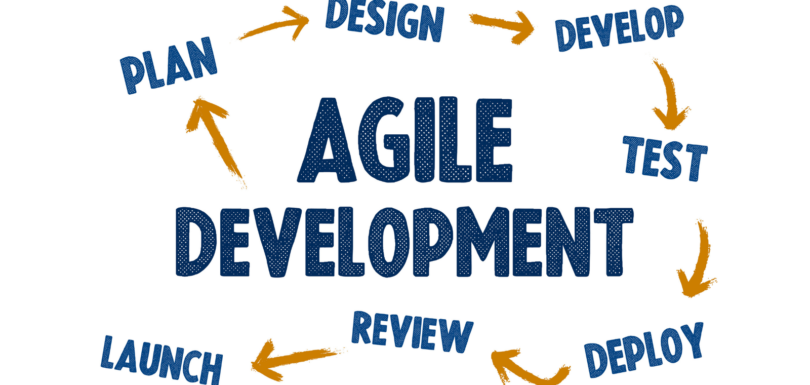
For more than three decades, lean manufacturing has been the backbone of industrial growth across South and Southeast Asia. It has been the philosophy behind India’s rise as a global pharmaceutical hub, Vietnam’s ascent in electronics, Thailand’s dominance in automotive supply chains, and Bangladesh’s leadership in textile exports. By relentlessly focusing on waste reduction, process optimization, and standardized work, lean has transformed the factory floor into a space of precision, predictability, and efficiency. Yet, as global competition grows fiercer and customer demands more unpredictable, the question arises: is lean enough to carry Asian manufacturing into its next era of growth? The answer increasingly appears to be no. Lean, by its very nature, thrives in environments where the objective is to perfect standardized processes. It creates stability and delivers consistency, which is why so many factories in Asia have achieved global benchmarks for cost and quality. However, stability can become rigidity when markets are in flux. In today’s manufacturing landscape, order sizes shrink and expand without notice, supply chain shocks ripple across borders, and customers request product modifications at a speed never seen before. Under such conditions, lean systems alone begin to show their limitations. Support functions, from procurement and logistics to HR and compliance, often struggle to keep pace with rapidly changing production needs. These functions now represent nearly a third of total factory costs, and in many Asian companies, those costs are rising. The pressing need is for factories to not just be lean but agile—able to adapt quickly, collaborate across silos, and solve problems in real time. Agility is not an abstract management concept; it is a practical operating model that can turn support functions from cost centers into value creators. In South and Southeast Asia, where industries are racing to capture global market share, the adoption of agile ways of working may prove to be the differentiator between those that remain suppliers of low-cost goods and those that rise to become strategic manufacturing partners on the global stage. Consider the case of Vietnam’s fast-growing electronics sector. Many of its manufacturers supply to global giants who frequently adjust their orders in line with consumer demand cycles. A factory may be asked to increase output by 30 percent in a single quarter or change the specifications of a device to meet shifting design trends. Traditional lean processes, with their reliance on sequential handoffs and rigid planning, often fail to cope with such swings. An agile approach, on the other hand, creates cross-functional teams that bring together design engineers, procurement specialists, and production supervisors. Together, they can implement changes directly on the shop floor while ensuring supplier readiness. This dramatically reduces lead times and positions Vietnamese exporters as flexible partners rather than inflexible suppliers. India provides another telling example, particularly in its pharmaceutical industry. Regulatory approvals are often the biggest bottleneck, and communication between compliance, production, and logistics is traditionally fragmented. When European regulators issue new requirements, Indian manufacturers sometimes face costly delays while different departments exchange memos and approvals. By adopting agile structures—where compliance officers, production managers, and supply chain experts work together as a single empowered team—the approval process can be shortened dramatically. This not only lowers costs but also strengthens India’s reputation as a dependable and responsive pharmaceutical exporter at a time when global supply chains are searching for reliability. In Bangladesh, which relies heavily on garment exports, agility is increasingly becoming a survival strategy. Western retailers frequently place orders with tight lead times and then introduce last-minute design modifications. Factories operating under rigid lean systems may find themselves forced into overtime shifts, rush shipping, or expensive rework just to meet deadlines. An agile operating model, however, would integrate designers, customer service staff, procurement teams, and line managers into collaborative squads. These squads could prioritize changes in real time, assess feasibility against available production capacity, and implement modifications without throwing entire schedules off track. For an industry where margins are razor thin, the ability to adapt quickly can mean the difference between profitability and loss. The promise of agility also extends beyond the traditional export giants. Cambodia, still emerging as a manufacturing destination, has ambitions to climb the value chain from basic garments to electronics assembly and automotive components. If Cambodian factories leapfrog directly into agile manufacturing models, they could differentiate themselves from competitors by offering responsiveness as a core capability. Foreign investors seeking not just cost advantages but also operational flexibility may find Cambodia an attractive destination precisely because of its ability to combine lean efficiency with agile adaptability. Agile is built on four pillars—customer focus, output orientation, adaptability, and team empowerment—all of which resonate deeply with the challenges faced by Asian manufacturers. Customer focus is crucial in export-driven industries where relationships with global buyers determine long-term stability. Instead of negotiating every detail upfront and then rigidly sticking to the plan, agile teams can adjust and resolve issues in real time, strengthening trust. Output orientation is vital in fast-moving sectors such as consumer electronics, where the priority is to get a functional product onto the market quickly, with refinements made in subsequent iterations. Adaptability is the backbone of industries vulnerable to external shocks, whether it be raw material price swings in India’s steel sector or geopolitical disruptions in Southeast Asia’s shipping lanes. And team empowerment is especially relevant in cultures where hierarchical decision-making often slows down operations. By giving authority to cross-functional squads, factories can unlock the problem-solving capacity of their workforce at every level. To be clear, agile is not about increasing raw productivity per unit. A factory will not necessarily produce more T-shirts per hour or assemble more circuit boards per shift simply by being agile. The real benefit lies in how the factory responds to unusual situations and problems. It is about cutting the lead time of solving a customer complaint from months to weeks, reducing the time it takes to modify a product design from quarters to months, or speeding up the ramp-up of a new production line from half a
Continue Reading

Built-in Quality – Why Doing It Right the First Time Always Wins

When you walk through a modern factory floor, it’s easy to get impressed by the speed of machines, the rhythm of assembly lines, and the sheer volume of output. However, behind all that movement, there is something far more important that keeps everything together: quality. This is not the kind of quality that is checked at the end with a red stamp; rather, it is the kind that is quietly built into every step of the process. This idea of built-in quality is what really separates world-class operations from the rest. We’ve all seen what happens when quality is treated like an afterthought. Ignoring a small problem early can lead to a larger issue later. A machine keeps running even though something feels “a little off”, and before you know it, hundreds or thousands of products need to be fixed or worse, recalled. That’s not just wasteful. It’s stressful, costly, and damaging to a company’s reputation. Now imagine the opposite. A place where everyone from the newest worker to the most senior manager believes they have the right and the responsibility to stop and say, “Something’s not right here.” That’s built-in quality in action. It’s a culture, not a tool. It’s about care, attention, and pride in the work. Take the example of a small packaging unit that was producing medicine cartons. One afternoon, a worker noticed that the printed labels weren’t lining up perfectly. To most people, it would’ve seemed minor, just a millimetre off. But this worker trusted her training and instincts. She hit the stop button. A team quickly gathered to check it out. They found that the guide rollers had loosened slightly, causing a drift in alignment. A tiny mechanical issue, if left unchecked, would’ve ruined the entire batch and possibly ended up in pharmacies with unreadable dosage information. That worker saved the company thousands of dollars and protected patient safety. This principle is not about being extraordinary; rather, it emphasises following a simple rule: if something doesn’t look right, don’t let it pass. This is what built-in quality is really about. It’s about noticing the small things before they become big problems. It’s about teaching and encouraging people to act, not just obey instructions. It’s about treating quality not as a department, but as a daily habit. Built-in quality thrives when people feel safe to speak up and take action. In traditional workplaces, stopping the line might get you yelled at. In a lean workplace, stopping the line earns you respect. It means you care. You noticed something. You protected the customer. A quote that always sticks in my mind is from Dr. W. Edwards Deming, one of the great thinkers in quality management: “Quality is everyone’s responsibility.” Simple words. However, it holds immense potential. When we stop seeing quality as someone else’s job and start owning it ourselves, things change. Teams become tighter. Products become better. And customers feel the difference. Let’s discuss another story. This story originates from a factory that manufactures metal components for the aviation industry. An apprentice, just a few weeks into the job, heard a strange vibration from one of the machines. It wasn’t loud. Most experienced staff had tuned it out. But he mentioned it anyway. The supervisor listened, shut down the equipment, and called for maintenance. It turned out that a bearing was about to fail. Early detection would have prevented damage to the machine, delayed deliveries, and created a ripple effect throughout the plant. However, a new team member’s empowerment to speak up prevented the disaster. Stories like this don’t make the news. They don’t go viral. But they’re the real wins that make or break a business. They’re a reminder that quality isn’t about perfection; it’s about awareness, action, and teamwork. Built-in quality is supported by tools like error-proofing (poka-yoke), standardised work, and visual signals like Andon lights. But those tools are only useful when the people using them believe in their purpose. You can install a fancy alarm to detect problems, but if no one responds when it goes off, it’s just noise. The real magic happens when teams work in a culture where catching and resolving problems is the norm—not an exception. Of course, not every problem can be prevented. However, a built-in quality system catches errors early. And when they’re caught early, they’re easier and cheaper to correct. That’s not just beneficial for the company. It’s less stressful for the team, and it builds trust with customers who know they’re getting the best. People often ask, “Isn’t it expensive to stop the line?” The truth is, failing to address issues now is far more expensive later. Every defect that moves forward becomes harder to detect, harder to remediate, and more damaging in the long run. Resolving a problem now is always cheaper than fixing it later. And fixing it for good is even better. Built-in quality also gives people pride in their work. Nobody wants to be part of a system that just pushes problems down the line. You don’t just build products when you have the tools and trust to make the right decisions and stop when necessary. You build confidence. In yourself. You also build confidence in your team. In the brand you’re helping shape. There’s a quiet power in doing things right the first time. In taking your time when it matters. When something doesn’t feel right, trust your instincts. This approach highlights the understanding that quality is something you create, not merely something you inspect. To close with a quote from John Ruskin: “Quality is never an accident; it is always the result of intelligent effort.” Built-in quality is an intelligent effort. It distinguishes companies with built-in quality from those that are merely surviving. It’s not flashy. It’s not complicated. But it works because at its heart, it’s about people doing the right thing every day. And in the end, that’s what true quality is made of.
Continue Reading

Why the Smartest Startups Think Lean from Day One

By the Editorial Team | True North Leanwww.truenorthlean.org Most startups don’t fail because they lack vision. They fail because they chase that vision without a system for learning, alignment, and execution. We romanticize the lone founder—the genius in the garage, sketching a billion-dollar idea on a whiteboard. But in reality, great startups aren’t built on gut instinct alone. They’re built on disciplined thinking, relentless experimentation, and a deep understanding of what customers actually value. This is where Lean Product and Process Development (LPPD) comes in. And if you’re building a startup today, the question isn’t if you should embrace LPPD. The question is: Can you afford not to? Startups Aren’t Just Building Products—They’re Building Systems Startups are often described as a race against time and money. But we’d argue they’re actually a race for knowledge. You’re not just trying to get to market quickly—you’re trying to figure out what your customers want, how to deliver it, and how to do that repeatably and sustainably. And if you think of your startup as a learning engine, then Lean Product and Process Development gives you the operating system to run it well. Let’s be clear: LPPD is not a checklist or a process overlay. It’s a way of thinking. A way of organizing your work, your team, and your resources around a singular mission: delivering long-term value to your customer. And it’s never too early to start. The Myth of “We’ll Get to Process Later” Talk to enough early-stage founders, and you’ll hear some version of this excuse: “We’re still figuring things out—we’ll focus on process once we grow.” But by then, it’s usually too late. Startups that defer structured learning and product-process alignment often pay the price in rework, missed opportunities, and a product that can’t scale. They confuse hustle with progress and guesswork with strategy. LPPD isn’t about slowing down your innovation. It’s about shaping it, focusing it, and making it repeatable. You don’t need a 100-page playbook to get started. You just need the mindset that says: We will build with purpose. We will learn fast. We will put the customer at the center of everything we do. What Lean Product and Process Development Looks Like in a Startup Here are five foundational shifts that happen when a startup embraces LPPD early: 1. From Assumptions to Customer-Driven Design LPPD begins with deep customer understanding. This isn’t about surveys or second-hand research—it’s about going to the gemba (where the customer lives and works), seeing the problem firsthand, and shaping a solution that delivers real value. The concept paper is a key tool here. It forces clarity around the problem, the opportunity, and the criteria for success. It gives teams a clear target and makes customer value visible from the start. Startups don’t have time to be wrong for long. LPPD helps you be right sooner. 2. From Single Solutions to Set-Based Exploration Most startups put all their chips on one product idea. That’s risky. LPPD teaches us to explore multiple alternatives early—not to hedge, but to learn. This is called set-based concurrent engineering. Instead of racing toward a single outcome, you create multiple design paths, test them quickly, and converge only when you have data and insight. It’s a smarter way to innovate. Your goal isn’t to guess the answer. It’s to discover it efficiently. 3. From Brilliant Products to Deliverable Value Streams A great product means nothing if you can’t build and deliver it reliably. That’s why LPPD focuses not just on the product, but on the value stream—the entire process of bringing an idea to life and into the customer’s hands. Designing the value stream alongside the product helps you anticipate constraints, reduce friction, and avoid the all-too-common “we’ll fix it in operations” trap. Startups scale best when the product and the process grow together. 4. From Silos to Cross-Functional Unity Even in small teams, silos form quickly—especially when stress rises and deadlines loom. LPPD emphasizes cross-functional collaboration as a core habit, not a reaction to failure. Building an obeya room—a shared visual space where issues are surfaced, decisions are made, and progress is tracked—creates alignment, transparency, and accountability. Innovation is a team sport. LPPD gives your team a shared playbook. 5. From Heroic Decision-Making to Knowledge-Driven Strategy Early-stage startups often rely on founder intuition. And while that can get you started, it won’t scale. LPPD introduces knowledge-based decision-making—a way to make better, faster, and more strategic choices based on facts, not guesswork. By mapping decisions, identifying knowledge gaps, and using rapid learning cycles, startups build resilience and clarity. Your real IP isn’t your code or your patent. It’s the learning you accumulate. Build Your Startup Like You Plan to Succeed We know what you’re thinking: “This all sounds great. But I’ve got ten fires to fight, three features to ship, and a demo next week.” We get it. Startup life is intense. But the best founders don’t just work hard—they work smart. LPPD isn’t extra work. It’s better work. It’s the difference between chasing success and building it. The companies that change the world don’t just launch fast. They learn relentlessly, build systematically, and scale sustainably. They don’t treat Lean as an afterthought. They treat it as a foundation. So ask yourself: If the answer is “not yet”—that’s okay. The best time to get Lean was yesterday. The second-best time is today. One Final Thought As Lean thinkers, we’ve seen how powerful LPPD can be inside billion-dollar enterprises. But we believe its greatest potential lies with entrepreneurs—the makers, the dreamers, the builders of what’s next. If you’re a startup founder, now is your chance to build not just a product, but a learning organization. One that doesn’t just chase trends, but creates lasting value. Lean Product and Process Development isn’t about perfection. It’s about progress—with purpose. So start now. Start small. But start Lean. 📩 Ready to embed LPPD into your startup journey? Reach out at www.truenorthlean.org. Let’s build smarter, together.
Continue Reading

Total Productive Maintenance: The Forgotten Discipline Behind World-Class Manufacturing

Special Editorial In the endless pursuit of faster, leaner, and more profitable manufacturing, there’s one practice that continues to quietly power some of the world’s most efficient factories. It doesn’t rely on cutting-edge AI, complex robotics, or flashy dashboards. Instead, it rests on something far simpler: ownership, discipline, and daily care. It’s called Total Productive Maintenance (TPM)—a deceptively simple system that, when applied correctly, can be transformative. Yet despite its proven track record, TPM remains one of the least understood tools in modern industry. Too many factories adopt new software or equipment without addressing the human and mechanical foundations that TPM so carefully nurtures. In essence, TPM is not a maintenance strategy. It’s a mindset. And if manufacturers are serious about eliminating waste and raising performance, it’s a mindset they can’t afford to ignore. What Is TPM, Really? Total Productive Maintenance was born out of Japan’s post-war manufacturing revival, at a time when efficiency wasn’t optional—it was existential. At its core, TPM is built on a radical idea: that equipment reliability is everyone’s responsibility. The goal is ambitious: zero breakdowns, zero defects, zero accidents. To get there, TPM breaks down the traditional barriers between production and maintenance. Machine operators are trained not just to use the equipment but to care for it—to clean, inspect, and detect early signs of trouble. Maintenance teams shift from reactive firefighting to proactive and preventative planning. Managers become coaches, not overseers. It’s a cultural shift—one that puts trust in the hands of those closest to the machines. The 5S Foundation: Cleanliness as a Competitive Advantage TPM begins with 5S, a deceptively basic housekeeping method that ensures the workplace is organized, safe, and inspection-ready. In an age of automation, it’s easy to dismiss 5S as cosmetic. But that would be a mistake. In factories where TPM thrives, 5S is not just about cleanliness—it’s about visibility. A spill under a press, a loose bolt on a conveyor, or a worn-out label on a control panel becomes visible only in an environment that is orderly. And visibility is what gives rise to accountability. The five pillars—Sort, Set in order, Shine, Standardize, and Sustain—form the daily rhythm of TPM. And like all rhythms, their power lies in repetition. Eight Pillars Holding Up the Factory Once the environment is stable, TPM introduces its structural elements—eight “pillars” that address every aspect of manufacturing equipment’s life cycle. 1. Autonomous Maintenance Here, operators become the first line of defense. They clean, inspect, and perform basic upkeep. The result? Problems are caught early, and technicians are freed to focus on deeper issues. 2. Planned Maintenance Gone are the days of machines breaking down mid-shift. Maintenance is now planned based on data—failure patterns, usage hours, wear-and-tear—all designed to prevent surprises. 3. Quality Maintenance Defects don’t just happen—they come from overlooked signals. TPM uses tools like root cause analysis and error-proofing to stop defects at the source. 4. Focused Improvement TPM thrives on small wins. Cross-functional teams tackle recurring issues—from vibration faults to recurring jams—chipping away at inefficiencies. 5. Early Equipment Management Lessons from existing equipment are used to design better machines. The people who run the lines get a voice in how future assets are built. 6. Training and Education Skill is everything. TPM requires operators to be more than button-pushers. So, it invests in them—training them to see, think, and act. 7. Safety, Health, and Environment A plant can’t be productive if it’s unsafe. TPM insists that risk reduction and safety audits be built into the daily routine, not treated as add-ons. 8. TPM in Administration Even offices aren’t immune. TPM principles are extended to procurement, scheduling, and invoicing—cutting down errors that choke production lines. Together, these pillars aren’t just about fixing things—they’re about changing how people interact with their work. Measuring Success: OEE and the Six Big Losses No improvement effort can succeed without measurement. That’s why TPM is often paired with Overall Equipment Effectiveness (OEE)—a simple but powerful metric that asks one question: how much of your scheduled production time is actually productive? OEE is calculated using three components: A perfect score of 100% means no stops, no slowdowns, and no scrap. It’s a theoretical ideal—most plants never reach it—but that’s not the point. The point is to benchmark reality and drive it higher. Digging deeper, OEE reveals the Six Big Losses that plague nearly every factory: By attacking these categories, TPM doesn’t just boost numbers—it transforms cultures. A Realistic Path to TPM If TPM sounds overwhelming, that’s understandable. But it doesn’t have to be. Many successful implementations start with a single machine, a single line, or even a single shift. What matters is not scale—but discipline. Here’s how it begins: Step 1: Select a Pilot Area Choose a machine with frequent stoppages or high visibility. Avoid the temptation to fix the most complicated asset first—momentum is built on quick wins. Step 2: Clean and Inspect Bring in the 5S team. Photograph the equipment before and after. Identify lubrication points. Replace worn components. Involve the operators. Step 3: Track OEE Don’t wait for a software rollout. Use a whiteboard if necessary. Record downtimes, defects, and output. Just measuring performance often improves it. Step 4: Solve One Big Problem Use OEE data to pick a major loss—maybe it’s frequent belt breaks or inconsistent alignment. Form a small team and attack it together. Celebrate the win. Step 5: Move to Planned Maintenance Start simple. Identify high-risk parts. Schedule replacements before they fail. Monitor component life. Adjust the schedule over time. In just weeks, the difference can be profound—not just in metrics, but in morale. Why TPM Fails (and How to Prevent It) TPM is not a silver bullet. Many companies adopt its language without adopting its discipline. Here are the most common traps: The Human Side of TPM For all its technical rigor, TPM is about people. When an operator says, “I noticed something strange with the feeder,” and it prevents a breakdown—that’s TPM. When a mechanic revises a maintenance schedule based on
Continue Reading

Lean Without Borders: Lessons from Two Teams, Two Countries, One Spirit

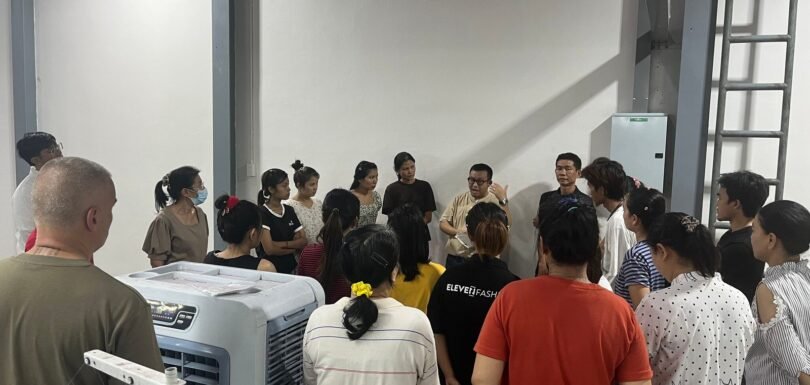
In recent weeks, the True North Lean team had the opportunity to work with two distinctly different organizations—on paper. One was a Dutch-Thai joint venture in Bangkok, with a predominantly Burmese frontline. The other, an American multinational operating in Cambodia, where a U.S.-led leadership team works alongside Chinese middle managers and a fully Cambodian operations team. Different nationalities. Different structures. Different languages. Different organizational cultures. And yet—beneath all that—the same spark. Both teams shared a hunger for improvement. A quiet discipline to challenge the status quo. A genuine respect for people. A curiosity to solve problems not in isolation, but together. That’s when it hit us again: Lean and Kaizen are not bound by geography, ownership, or language. These principles aren’t Japanese exports. They’re human instincts—the desire to improve, to contribute, and to leave things better than we found them. You don’t need to speak the same language to run a meaningful kaizen. What you need is trust. The ability to observe, listen, and believe in people’s ability to make things better. When workers feel heard and respected, they do more than their job—they become changemakers. At True North Lean, we’ve seen this across industries and continents. From textile factories in South Asia to electronics plants in Southeast Asia, the common denominator is not the tools we bring—it’s the people we work with. Lean is not about Japanese terminology or rigid tools. It’s about creating a system that honours people and challenges waste. It’s about building capability, fostering teamwork, and delivering real results through collaboration—not command. Whether it’s in Bangkok or Phnom Penh, the same truth holds: excellence has no nationality. And when you tap into the spirit of continuous improvement, amazing things happen—anywhere in the world. At True North Lean, we don’t just teach Lean.We build belief.In people. In possibility. In progress.
Continue Reading

Categories

  • No categories

Latest Posts

Subscribe Newsletter

Sign up to receive notifications about the latest news and events from us!

    x

    Inspiring Your Team to Continuous Growth and Sustainable Excellence.

    Address Business
    11 Bakheng Street, Svay Dangkum,
    Siem Reap, Cambodia
    Contact With Us
    +855 10 983138
    info@truenorthlean.com
    Select the fields to be shown. Others will be hidden. Drag and drop to rearrange the order.
    • Image
    • SKU
    • Rating
    • Price
    • Stock
    • Availability
    • Add to cart
    • Description
    • Content
    • Weight
    • Dimensions
    • Additional information
    Click outside to hide the comparison bar
    Compare