11 Bakheng Street, Svay Dangkum,
Siem Reap, Cambodia
Email our experts:
info@truenorthlean.com
11 Bakheng Street, Svay Dangkum,
Siem Reap, Cambodia
Email our experts:
info@truenorthlean.com

Blog

Know Your Lean Guru: Genichi Taguchi’s Quiet Revolution in Quality Thinking

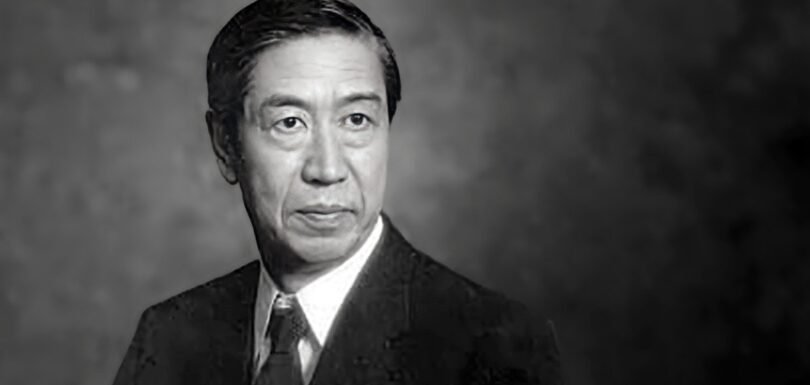
Every once in a generation, someone steps into an industry and quietly rewrites the rules. Genichi Taguchi did exactly that. He was not a loud reformer, nor did he chase spotlight or status. Yet the ripple of his ideas still shapes how companies design products, develop systems and think about variation. In many ways, the modern emphasis on building quality into the earliest stages of design traces straight back to him. Taguchi’s life began far away from the factories and laboratories where he would later leave his mark. Born in Tokamachi, a textile town known for its kimono heritage, he grew up surrounded by craftsmanship and precision. His first ambition was to join the family business. But the turbulence of the 1940s pushed him in another direction when he was assigned to the Astronomical Department of the Imperial Japanese Navy. This unexpected detour exposed him to measurement, data and the discipline of scientific thinking. When the war ended, Japan was rebuilding almost everything—from infrastructure to industry. Taguchi found himself working at the Ministry of Public Health and Welfare, where he met one of the most important influences of his life, statistician Matosaburo Masuyama. Their conversations opened Taguchi’s eyes to the potential of designing experiments rather than relying on trial and error. His later work at the Institute of Statistical Mathematics and his involvement in improving penicillin production gave him practical experience in applying statistical ideas to real problems. Everything accelerated in the early 1950s when he joined the Electrical Communications Laboratory of Nippon Telegraph and Telephone. Japan at that time was hungry for industrial revival, and Taguchi found himself in an environment where every improvement mattered. Influenced by the teachings of W. Edwards Deming and surrounded by engineers trying to match Western innovation, Taguchi began refining the ideas that would later carry his name across the world. It was here that he realised something simple but profound: real quality is created long before a product reaches the assembly line. His international collaborations strengthened these ideas even further. During his fellowship at the Indian Statistical Institute, he worked closely with C. R. Rao and learned about orthogonal arrays, a concept that allowed engineers to run sophisticated experiments without drowning in complexity. His later interactions with John Tukey at Princeton and the eventual acceptance of his methods at Bell Labs turned what was once considered unconventional into a global practice. Companies like Ford, Xerox, Boeing and ITT became strong adopters once they discovered the cost savings and performance improvements Taguchi’s system could deliver. His Contributions That Changed the World of Industrial Quality Taguchi’s work often appears technical when explained formally, but the heart of it is surprisingly intuitive. A few of his major ideas include: The Taguchi Loss FunctionInstead of thinking that a product is fine as long as it sits “within tolerance,” Taguchi argued that any movement away from the ideal target creates a loss to society. Quality is not a pass-or-fail event; it has a cost curve. Off-line Quality ControlHe pushed industries to focus on the design stage rather than relying on inspection at the factory floor. When a product is designed correctly, everything downstream becomes smoother. Innovations in the Design of ExperimentsHis use of orthogonal arrays made experimentation faster, efficient and accessible to engineers who were not statisticians. He also introduced the idea of using an outer array to represent uncontrollable real-world factors, allowing engineers to test robustness before the product ever existed. These ideas helped organisations reduce variation, simplify decision-making and build products that performed consistently despite unpredictable environments. Recognitions and Honours Across the World Taguchi never worked for fame, yet recognition followed him throughout his career. His honours paint a clear picture of his global influence: • Deming Prize for Individuals (1960)• Willard F. Rockwell Medal of the International Technology Institute (1986)• Indigo Ribbon from the Emperor of Japan (1989)• Recognised as a “Quality Guru” by the British Department of Trade and Industry (1990)• Honorary member of the Japanese Society of Quality Control (1995)• Honorary Fellow of the Institute of Directors, India (1996)• Automotive Hall of Fame Inductee (1997)• Honorary member of the American Society for Quality and the American Society of Mechanical Engineers (1998)• Honorary President of the Robust Quality Engineering Society of Japan (1999) Each honour represents a different industry, yet all of them point toward one truth: Taguchi’s thinking broke through borders and languages because it solved universal problems. Books That Carried His Ideas Into New Generations Taguchi wrote and co-authored several influential works that helped thousands of engineers and quality leaders understand his methods more deeply. A few of his well-known titles include: Introduction to Quality Engineering (1986)Taguchi on Robust Technology Development (1992)Robust Engineering (1999)The Mahalanobis-Taguchi System (2000)The Mahalanobis-Taguchi Strategy (2002)Computer-Based Robust Engineering (2004)Taguchi’s Quality Engineering Handbook (2005) These books did not just teach techniques. They encouraged a mindset—one that challenges noise, variation and inconsistency by approaching design with calm, structured thinking. A Legacy That Still Shapes How We Build and Improve Genichi Taguchi’s influence continues to live inside every modern quality system, even when people using those systems may never have heard his name. His legacy is not simply statistical tables or formulas. It is an idea:Quality is created with intention, not by chance. And that single belief has helped industries save billions, improve reliability, protect consumers and shape the philosophy that Lean practitioners apply every day. Taguchi remains one of the most important pioneers of quality engineering, a quiet mind who changed how the world thinks about designing for excellence.
Continue Reading

Building a Culture of Sustainable Excellence: Insights from Dave Becnel at the True North Lean CXO Summit, Ho Chi Minh City

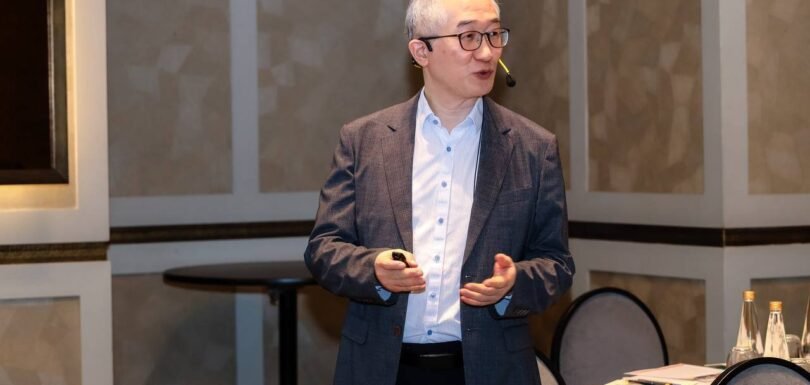
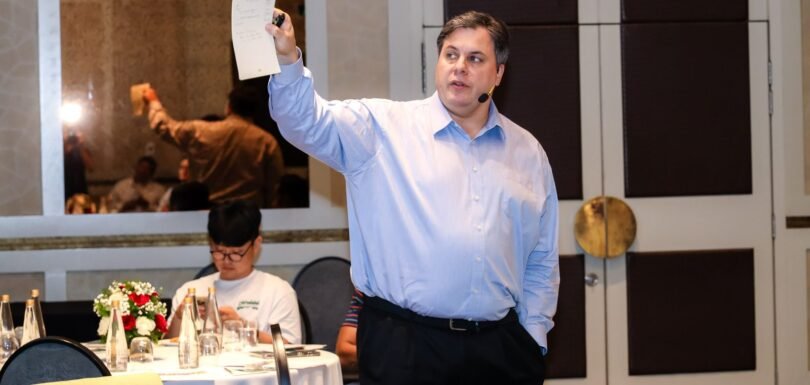
There are speakers who share concepts, and then there are speakers who share clarity. When Dave Becnel, VP Quality Vietnam at Techtronic Industries TTi, addressed the audience at the True North Lean CXO Summit in Ho Chi Minh City, he offered something far more valuable than theory. He shared a grounded perspective on how sustainable excellence is truly built inside an organisation. His message was simple but powerful. Lasting performance comes from people who are capable, confident, and trusted to take ownership of their work. Dave’s long journey through engineering, production, Lean promotion, manufacturing, and quality leadership has given him a deep understanding of what makes operations thrive. His experience is not academic. It comes from years of supporting teams, fixing processes, and building systems that continue working even when no one is watching. Self Reliance The Heart of Sustainability Dave began by highlighting one of the most overlooked truths in manufacturing. Production teams must be able to manage their own lines. In many factories, support departments become crutches. Lean teams, quality controllers, and engineers often step in to solve issues that the frontline should be capable of handling. This does not empower people. It weakens the culture. True sustainability starts when production teams understand their process and can control quality, safety, cost, delivery, and improvement on their own. This mindset builds responsibility. It builds pride. And over time, it builds a culture where problems are solved at the source instead of being passed from one department to another. Highly Capable Lines The Foundation of Operational Excellence Dave emphasised that sustainable excellence depends on building highly capable production lines. These are lines where flow makes sense, ergonomics protect workers, equipment is reliable, and quality is designed to be right the first time. When these elements come together, the line becomes stable. Operators feel in control. Leaders stop firefighting and begin focusing on real improvement. But achieving this capability rarely happens if improvement begins only after mass production starts. Many organisations wait for problems to appear before looking for solutions. By then, waste is expensive and change becomes disruptive. 3P A Better Way to Build Excellence Dave introduced a concept that many organisations underestimate. The Production Preparation Process or 3P. Instead of separating design, industrialisation, and mass production into different phases, 3P brings everyone together early. Designers, engineers, pilot teams, and frontline operators sit together, explore options, and shape the process before it becomes permanent. This early collaboration eliminates waste before it ever reaches the production floor. It helps teams design processes that are safer, simpler, more ergonomic, and more cost effective. It also helps operators feel deeply connected to the process because they helped create it. Dave shared that real margin growth happens here, not after the line is already running. When waste is prevented instead of corrected, operational excellence becomes much easier to sustain. Leadership Sets the Tone At one point in his session, Dave pointed out something that every senior leader should reflect on. Frontline sustainability mirrors the discipline of the boardroom. If leaders do not prioritise stability, clarity, and support, the frontline will struggle to maintain improvement. But when leaders consistently model the behaviours they expect, the entire organisation follows that example. A culture of excellence needs strong expectations from the top and strong empowerment at the bottom. When those two forces meet, sustainability becomes natural. Problem Solving Keep It Simple Keep It Together One of the most human parts of Dave’s presentation was his reminder that problem solving does not need to be complicated. Fancy tools and complex methodologies are not the answer. What matters most is getting the right people in the same room and working through the issue with discipline and honesty. Simple formats like 4C or RCCA are often enough to solve even serious problems when they are used correctly. The key is clarity. Teams must understand the real problem. They must understand the real root cause. And they must agree on how to prevent it from returning. When organisations commit to this kind of simple, shared thinking, improvement becomes much faster and far more consistent. Three Lessons That Stay With You Dave wrapped up his presentation with three lessons that apply to any organisation striving for lasting excellence. Empower people first Self reliant teams build ownership and pride. When people feel capable, sustainability follows naturally. Build production friendly designs Cross functional collaboration during preparation and design prevents waste, improves quality, and creates margins before production begins. Use simple problem solving Strong teamwork and simple tools used with discipline can solve most issues faster than complex methods used without understanding. A Message That Will Influence Leaders For Years The True North Lean CXO Summit brought together leaders from across Asia who are shaping the next chapter of operational excellence. Dave Becnel’s message stood out because it was real. It was practical. And it reminded everyone that improvement begins and ends with people. In today’s world of technology and automation, his presentation was a timely reminder. Sustainable excellence does not come from tools. It comes from cultures built on trust, clarity, and shared ownership. When people are empowered to control their work and leaders support them with discipline and consistency, organisations do more than improve. They transform.
Continue Reading

When Nike Met Toyota: A Human Story About Lean, Leadership, and the Courage to Change

Based on the presentation by DJ Kim, presented at the True North Lean CXO Summit, Ho Chi Minh City There are moments in business history when two worlds collide and something quietly revolutionary begins. When Nike met Toyota, it wasn’t just a meeting of a sportswear giant and the world’s most respected manufacturing system. It was a meeting between ambition and humility, between rapid growth and thoughtful discipline, between a company in crisis and a philosophy forged through generations of learning. Nike’s story, as shared by DJ Kim, is not a tale of a brand chasing perfection. It’s the story of a company stumbling, questioning itself, and rediscovering what it means to solve problems at their root. In the early days, Nike’s success was unmistakable, yet beneath the surface lay cracks: exploding supplier networks, inconsistent quality, delivery failures, labor and compliance issues, media backlash, and financial decline. In 1998, the world’s most iconic sports brand found itself asking a question that would change its trajectory: Why is this happening, and how do we fix it? That question eventually led them to Toyota. With Toyota came a new lens, one not focused on tools, but on thinking. Nike embarked on what DJ Kim describes as “Lean 1.0,” a decade defined by the Age of the Tool. Factories shifted from batch to flow, lead times were cut dramatically, inventories fell, quality improved, and more than 700,000 team members felt the impact of Lean transformation. The numbers were impressive, but something wasn’t sticking. Gains plateaued. Some teams treated Lean as a compliance exercise rather than a living system. Improvement became an activity, not a habit. This is where the real learning began, what DJ Kim calls Lean 2.0. Lean 2.0 isn’t about tools. It’s about people, leadership, and culture. It’s about understanding that no amount of standardization will ever replace the need for engaged minds and empowered workers. Toyota’s wisdom echoed through the transformation: “We do the same work as other companies, but we do it very thoroughly.” What makes the difference is depth – thinking deeply, engaging honestly, and turning important actions into disciplined habits. Nike’s journey highlights the profound truth that factories do not improve because tools are deployed. They improve because leaders learn how to see. Leader Standard Work, visual control, daily accountability, and leadership discipline formed the four interdependent pillars of Nike’s Lean Management System. These were not checklists, but commitments, daily, lived expressions of leadership. Yet transformation did not stop on the factory floor. It expanded into product development, modernization, and the realization that making shoes is one of the hardest manufacturing challenges on the planet. Flexible materials, endless design variations, and complex assembly meant that automation alone could never be the answer. True modernization required thinking differently about design, engineering, and the development process itself, just as Toyota did when it reduced its vehicle development cycle from 48 months to 12. The future of competitiveness would depend not on machines but on minds. And in an age where AI looms large, DJ Kim delivers a grounding truth: AI will not replace Lean. AI will accelerate it. It will shorten learning cycles, deepen insight, and open new pathways for discovery. But the heart of Lean, problem-solving, remains profoundly human. The courage to ask why. The humility to see problems as gifts. The discipline to return, again and again, to the root cause. Ultimately, Nike’s story is not about footwear. It is not even about Lean. It is about organizations choosing to evolve. It is about the belief that every business, at its core, is a continuous journey of designing, producing, coordinating, selling, and leading with clarity and purpose. It is about leaders who choose to learn rather than command, and teams who choose to think rather than comply. When Nike met Toyota, the real gift wasn’t a new system. It was a new way of seeing. And in that way of seeing lies the future of every organization that wants to thrive, not by running faster, but by learning deeper.
Continue Reading

Case Study: Transforming a Fresh-Produce Business Through Lean Agribusiness Management

Maintaining consistent quality and ensuring on-time delivery is crucial in the competitive world of fresh produce. A medium-sized farm and processing enterprise specializing in ready-to-eat salads recently discovered how structured agribusiness management and Lean practices could completely change the game. The Challenge The company dispersed its operations across several farms and two processing plants. Despite strong demand, recurring inefficiencies were holding them back. The company was experiencing issues such as poor coordination between harvesting and packing, frequent breakdowns of packaging machines, inconsistent productivity, and crop waste due to overproduction. With thin margins and perishable goods, every delay meant real losses. Mapping the Process The improvement journey began with a complete mapping of the end-to-end process from receiving seeds and seedlings to delivering finished salad packs to customers. This exercise revealed bottlenecks across farming, processing, and logistics. By visualizing every step of the value chain, managers could identify precisely where waste was being created and how to tackle it. Lean Implementation in action. The first wave of change focused on the packing process. Using Lean tools like 5S (Sort, Set in order, Shine, Standardize, Sustain) and Standard Work, teams reorganized workspaces, optimized line layouts, and eliminated unnecessary movements. Equipment downtime, once a daily headache, dropped sharply after technicians and operators began analyzing problems systematically instead of reacting to them. At the farm level, the focus shifted to harvesting. Previously, each worker followed a different method, causing unpredictable yields and variable quality. The introduction of standard harvesting procedures brought uniformity and boosted productivity. Organized pickup schedules also ensured that harvested produce wasn’t left in the field to degrade under the sun, a simple change that prevented significant product loss. Embedding Continuous Improvement Next came improvements in sowing and growing practices. The team applied 5S principles to daily crop checks, irrigation routines, and record-keeping. Visual management tools helped farmers monitor plant health and respond quickly to issues. Over time, this established a pattern of continuous improvement, identifying minor issues before they escalated into costly failures. The final step was in supply-chain planning. Demand forecasting and production scheduling were aligned more closely to reduce surplus and avoid shipping products long distances just to balance supply. By treating logistics as part of the value chain — not a separate afterthought — the company reduced waste from spoiled or excess crops. Results That Speak for Themselves Within months, the transformation produced remarkable outcomes: Lessons for Agribusiness Leaders This case shows that effective agribusiness management is more than just beneficial farming; it’s about strategic thinking, data-driven decisions, and empowering people to improve every day. By combining agricultural expertise with Lean management principles, even a mid-sized enterprise can achieve world-class performance. For other agribusinesses, the message is clear: success grows from the soil up, but sustainability, profitability, and scalability come from disciplined management and continuous improvement.
Continue Reading

Lean Thinking Beyond the Factory Walls

For many years, Lean was seen as a philosophy designed only for factories. It belonged to the world of machines, assembly lines, and production targets. But today, a quiet revolution is taking place. The same Lean ideas that once transformed manufacturing are now reshaping offices, schools, banks, and even hospitals. The essence of Lean has never been about where it is applied but how it helps people see waste, understand value, and make work flow better. At its core, Lean teaches us to see what is often invisible. In an office or a classroom, inefficiency hides in emails waiting for responses, forms that require multiple approvals, or meetings without clear outcomes. Once people begin to recognize these delays and distractions as waste, they realize Lean is not a factory method at all—it is a way of thinking. Organizations that once believed improvement belonged only on the shop floor are learning that their biggest opportunities exist in their everyday business processes. Financial departments, customer service units, and HR teams are discovering that the same principles used to cut defects or reduce cycle times in production can also improve how they handle paperwork, decisions, and communication. One of the most important steps in this journey is learning to make office work visible. In a factory, a process can be seen, touched, and measured. In a service environment, work is often buried inside computers and conversations. Many companies begin by mapping their processes—making each step clear so that delays, bottlenecks, and rework can be exposed. When employees see their workflow laid out on a wall or a digital board, improvement stops being abstract. It becomes real, measurable, and achievable. Leaders play a central role in expanding Lean beyond production. The most successful organizations start with small projects, learn from them, and then grow. They do not impose Lean; they demonstrate it. When a finance manager or a school dean personally leads a Lean improvement, it signals that the method is not a passing trend but a commitment to better work. In education, Lean is helping teachers rethink how courses are structured and delivered. Some educators now treat students as valued customers, focusing on what students truly need to learn and how to make that learning more effective. Lessons are redesigned for clarity, assignments are balanced to avoid overload, and feedback loops are built so improvements happen continuously. The result is a better learning experience and a culture that respects both time and effort. In service industries, Lean has shown that the path to efficiency is not about working faster but working smarter. A large insurance company, for example, applied Lean principles to its agent licensing process. By studying the steps involved, they realized that half of the work added no value to the customer. Simplifying forms, setting clear approval rules, and introducing pull systems reduced delays from weeks to days. Employees could focus on helping customers instead of chasing paperwork. One of the toughest challenges in any non-manufacturing environment is the belief that professional work cannot be standardized. Many people assume that creativity and standardization cannot coexist. In reality, standardization frees creative minds to focus on meaningful problem solving instead of repeating routine mistakes. Just as a painter arranges brushes before beginning a portrait, professionals benefit from stable processes that allow them to concentrate on value creation. The real strength of Lean beyond production lies in respect for people. It invites everyone to participate in improvement. It encourages leaders to listen to the people closest to the work and act on their ideas. When staff realize that their suggestions lead to visible change, motivation grows naturally. The organization becomes a learning system, not a control system. Lean also changes how companies view technology. Instead of automating bad processes, they first simplify and stabilize them. Only after the work flows smoothly do they bring in digital tools to make it faster or more flexible. This mindset prevents the common trap of using software to hide inefficiency rather than solve it. The results of applying Lean in offices and institutions are often dramatic. Lead times drop, customer satisfaction improves, and teams feel a new sense of ownership. Yet, the most lasting benefit is cultural. People begin to question why things are done a certain way. They stop accepting problems as normal and start looking for causes and countermeasures. Lean is no longer the language of production engineers. It is the language of improvement, collaboration, and respect. Whether used in an insurance office, a university, or a hospital, it helps people see clearly, think deeply, and act with purpose. When applied with sincerity and patience, Lean becomes more than a method—it becomes a shared way of working that connects people through the pursuit of better results every day.
Continue Reading

Lean Never Fails, People Simply Stop Practicing

Across industries, it has become common to hear that most Lean transformations fail. Some say half of them do. Others say nearly all. These claims circulate widely, shaping a belief that Lean somehow does not deliver what it promises. Yet reality tells a different story. In factories, hospitals, service centers, and offices, every Lean journey leaves behind something valuable. Sometimes the gains are visible in numbers. Other times they are quiet and cultural. People begin to speak differently about problems, listen more carefully to one another, and take pride in small improvements. That is not failure. That is growth. Lean was never meant to be a project with a start and finish. It was designed as a way of thinking, a habit of learning together. When people stop seeing Lean as a checklist and start seeing it as a mindset, transformation becomes continuous. In one Southeast Asian manufacturing unit, Lean enthusiasm began high. Charts were printed, boards were placed, and meetings filled calendars. After a few months, the energy faded. Results seemed slow. Many assumed the effort had ended unsuccessfully. But on one production line, a supervisor began asking a simple daily question: “What can be made easier tomorrow?” The question spread quietly through the workshop. Within months, ideas began to flow. Tools were repositioned, workstations reorganized, and communication improved. There was no single breakthrough moment, yet performance rose steadily and morale returned. This example reflects a truth often forgotten. Lean does not fail when results come slowly. It only falters when learning stops. As W. Edwards Deming once reminded the world, learning is not compulsory, but neither is survival. Lean does not demand perfection. It asks for persistence. It thrives in patience, curiosity, and honest reflection. The strongest Lean cultures share one thing in common: leaders who listen. Not the loud kind of leadership that demands results overnight, but the steady kind that trusts teams to learn their way forward. When leaders value progress over perfection, Lean becomes part of daily life rather than a temporary initiative. Jeffrey Liker described Lean as being “better than yesterday.” That simple phrase captures the essence of continuous improvement. Every small adjustment, every reflection, every shared lesson adds to a larger story of growth. Lean never fails. It changes pace, it takes detours, and it evolves with people. It breathes through daily routines, through quiet observations, and through the courage to keep improving. The only time Lean seems to fail is when people stop practicing it. And the moment someone asks again, “How can this be done better?” Lean begins anew. In every organization that keeps learning, Lean remains alive. It does not fail. It simply continues to grow through people who care.
Continue Reading

Categories

  • No categories

Latest Posts

Subscribe Newsletter

Sign up to receive notifications about the latest news and events from us!

    x

    Inspiring Your Team to Continuous Growth and Sustainable Excellence.

    Address Business
    11 Bakheng Street, Svay Dangkum,
    Siem Reap, Cambodia
    Contact With Us
    +855 10 983138
    info@truenorthlean.com
    Select the fields to be shown. Others will be hidden. Drag and drop to rearrange the order.
    • Image
    • SKU
    • Rating
    • Price
    • Stock
    • Availability
    • Add to cart
    • Description
    • Content
    • Weight
    • Dimensions
    • Additional information
    Click outside to hide the comparison bar
    Compare