11 Bakheng Street, Svay Dangkum,
Siem Reap, Cambodia
Email our experts:
info@truenorthlean.com
11 Bakheng Street, Svay Dangkum,
Siem Reap, Cambodia
Email our experts:
info@truenorthlean.com

The Better Cambodia

  • Home
  • Author: The Better Cambodia
  • Page 2

Case Study: Transforming a Fresh-Produce Business Through Lean Agribusiness Management

Maintaining consistent quality and ensuring on-time delivery is crucial in the competitive world of fresh produce. A medium-sized farm and processing enterprise specializing in ready-to-eat salads recently discovered how structured agribusiness management and Lean practices could completely change the game. The Challenge The company dispersed its operations across several farms and two processing plants. Despite strong demand, recurring inefficiencies were holding them back. The company was experiencing issues such as poor coordination between harvesting and packing, frequent breakdowns of packaging machines, inconsistent productivity, and crop waste due to overproduction. With thin margins and perishable goods, every delay meant real losses. Mapping the Process The improvement journey began with a complete mapping of the end-to-end process from receiving seeds and seedlings to delivering finished salad packs to customers. This exercise revealed bottlenecks across farming, processing, and logistics. By visualizing every step of the value chain, managers could identify precisely where waste was being created and how to tackle it. Lean Implementation in action. The first wave of change focused on the packing process. Using Lean tools like 5S (Sort, Set in order, Shine, Standardize, Sustain) and Standard Work, teams reorganized workspaces, optimized line layouts, and eliminated unnecessary movements. Equipment downtime, once a daily headache, dropped sharply after technicians and operators began analyzing problems systematically instead of reacting to them. At the farm level, the focus shifted to harvesting. Previously, each worker followed a different method, causing unpredictable yields and variable quality. The introduction of standard harvesting procedures brought uniformity and boosted productivity. Organized pickup schedules also ensured that harvested produce wasn’t left in the field to degrade under the sun, a simple change that prevented significant product loss. Embedding Continuous Improvement Next came improvements in sowing and growing practices. The team applied 5S principles to daily crop checks, irrigation routines, and record-keeping. Visual management tools helped farmers monitor plant health and respond quickly to issues. Over time, this established a pattern of continuous improvement, identifying minor issues before they escalated into costly failures. The final step was in supply-chain planning. Demand forecasting and production scheduling were aligned more closely to reduce surplus and avoid shipping products long distances just to balance supply. By treating logistics as part of the value chain — not a separate afterthought — the company reduced waste from spoiled or excess crops. Results That Speak for Themselves Within months, the transformation produced remarkable outcomes: Lessons for Agribusiness Leaders This case shows that effective agribusiness management is more than just beneficial farming; it’s about strategic thinking, data-driven decisions, and empowering people to improve every day. By combining agricultural expertise with Lean management principles, even a mid-sized enterprise can achieve world-class performance. For other agribusinesses, the message is clear: success grows from the soil up, but sustainability, profitability, and scalability come from disciplined management and continuous improvement.

Continue Reading

Case Study: Transforming a Food Manufacturing Facility Through Lean Thinking

In the competitive world of food manufacturing, where margins are tight and customer demands are high, one company discovered that operational excellence does not have to come at the cost of employee well-being. This case study explores how a mid-sized packaged foods producer improved profitability and created a more fulfilling work environment by applying Lean principles and empowering its frontline workforce. Industry ContextThe food manufacturing industry faces seasonal fluctuations in demand, rising raw material prices, and stringent quality standards. Many companies struggle to maintain efficiency during production peaks without overburdening staff or increasing waste. This organization faced a similar challenge: growing production costs, especially in labor and material waste, were eroding profits despite steady sales. Identifying the Core ProblemThe leadership team noticed that overtime expenses surged during high-demand months. Workers arrived hours early to prepare ingredients, perform equipment setup, and organize raw materials. Despite this extra effort, production delays and inconsistencies persisted. The assumption was that more labor and longer hours were necessary to maintain output. A deeper examination revealed the true issue lay not in workforce capability but in inefficient processes. Going to the SourceInstead of making quick decisions from the boardroom, the management team decided to observe work directly on the factory floor. By mapping out each operator’s movement during a full shift, they discovered excessive time spent walking to fetch tools, materials, or packaging supplies. Valuable production time was lost to disorganization and repetitive motion. Workers often left their stations to restock components or assist others, disrupting flow and increasing fatigue. Redesigning the Work ProcessThe company’s first major shift came from reorganizing the factory into self-contained production cells. Each cell was equipped with an on-demand supply system that replenished ingredients and materials continuously, eliminating the need for operators to leave their stations. A new “support runner” role was introduced to circulate between work areas, restock materials, and remove finished goods. The process also integrated a real-time production tracking board. Operators used visual signals to request assistance or materials without stopping their work. These small but impactful changes reduced motion waste, improved product flow, and stabilized daily output. Continuous Flow and Just-in-Time ProductionA just-in-time replenishment model replaced the traditional batch-prep system. Rather than preparing large quantities of semi-finished goods in advance, the facility shifted to producing smaller batches based on real-time demand. For example, dough preparation, previously done in bulk at the start of the day, was scheduled in intervals aligned with packaging and dispatch requirements. This prevented overproduction, reduced spoilage, and freed up valuable storage space. Testing and Scaling the SolutionThe results of the pilot implementation exceeded expectations. During an unexpected surge in orders, the existing workforce managed production without additional temporary hires or extended shifts. Productivity increased by 15 percent, and overtime costs dropped by nearly 30 percent. The streamlined layout and standardized procedures also improved safety, reducing incidents of strain and fatigue among workers. Empowering Employees as Problem SolversPerhaps the most transformative change came from the shift in leadership behavior. Supervisors transitioned from giving directives to coaching their teams. Daily stand-up meetings encouraged workers to raise problems and propose solutions. A simple problem-tracking sheet helped identify recurring issues, such as material shortages or machine setup delays, which were then addressed collaboratively. Over time, this participative culture fostered ownership among employees. Team members began suggesting process improvements on their own, from better tool placement to more efficient cleaning routines. Absenteeism declined, and morale improved significantly. Results and ImpactWithin a year, the company achieved measurable gains across financial and human performance indicators. Profit margins increased by 4 percent due to lower waste and optimized labor utilization. Quality defects were reduced by 18 percent, and customer satisfaction scores improved. More importantly, the workplace atmosphere shifted from one of stress and blame to one of collaboration and purpose. Key TakeawaysThis transformation in the food manufacturing industry illustrates that sustainable profitability stems from developing people, not just refining processes. By enabling employees to focus on value creation and eliminating unnecessary burdens, organizations can unlock both operational excellence and a positive work culture. What began as a cost-reduction initiative evolved into a mindset revolution where every worker became a problem-solver, every manager became a coach, and every improvement built a stronger foundation for the future.
Continue Reading

Lean Thinking Beyond the Factory Walls

For many years, Lean was seen as a philosophy designed only for factories. It belonged to the world of machines, assembly lines, and production targets. But today, a quiet revolution is taking place. The same Lean ideas that once transformed manufacturing are now reshaping offices, schools, banks, and even hospitals. The essence of Lean has never been about where it is applied but how it helps people see waste, understand value, and make work flow better. At its core, Lean teaches us to see what is often invisible. In an office or a classroom, inefficiency hides in emails waiting for responses, forms that require multiple approvals, or meetings without clear outcomes. Once people begin to recognize these delays and distractions as waste, they realize Lean is not a factory method at all—it is a way of thinking. Organizations that once believed improvement belonged only on the shop floor are learning that their biggest opportunities exist in their everyday business processes. Financial departments, customer service units, and HR teams are discovering that the same principles used to cut defects or reduce cycle times in production can also improve how they handle paperwork, decisions, and communication. One of the most important steps in this journey is learning to make office work visible. In a factory, a process can be seen, touched, and measured. In a service environment, work is often buried inside computers and conversations. Many companies begin by mapping their processes—making each step clear so that delays, bottlenecks, and rework can be exposed. When employees see their workflow laid out on a wall or a digital board, improvement stops being abstract. It becomes real, measurable, and achievable. Leaders play a central role in expanding Lean beyond production. The most successful organizations start with small projects, learn from them, and then grow. They do not impose Lean; they demonstrate it. When a finance manager or a school dean personally leads a Lean improvement, it signals that the method is not a passing trend but a commitment to better work. In education, Lean is helping teachers rethink how courses are structured and delivered. Some educators now treat students as valued customers, focusing on what students truly need to learn and how to make that learning more effective. Lessons are redesigned for clarity, assignments are balanced to avoid overload, and feedback loops are built so improvements happen continuously. The result is a better learning experience and a culture that respects both time and effort. In service industries, Lean has shown that the path to efficiency is not about working faster but working smarter. A large insurance company, for example, applied Lean principles to its agent licensing process. By studying the steps involved, they realized that half of the work added no value to the customer. Simplifying forms, setting clear approval rules, and introducing pull systems reduced delays from weeks to days. Employees could focus on helping customers instead of chasing paperwork. One of the toughest challenges in any non-manufacturing environment is the belief that professional work cannot be standardized. Many people assume that creativity and standardization cannot coexist. In reality, standardization frees creative minds to focus on meaningful problem solving instead of repeating routine mistakes. Just as a painter arranges brushes before beginning a portrait, professionals benefit from stable processes that allow them to concentrate on value creation. The real strength of Lean beyond production lies in respect for people. It invites everyone to participate in improvement. It encourages leaders to listen to the people closest to the work and act on their ideas. When staff realize that their suggestions lead to visible change, motivation grows naturally. The organization becomes a learning system, not a control system. Lean also changes how companies view technology. Instead of automating bad processes, they first simplify and stabilize them. Only after the work flows smoothly do they bring in digital tools to make it faster or more flexible. This mindset prevents the common trap of using software to hide inefficiency rather than solve it. The results of applying Lean in offices and institutions are often dramatic. Lead times drop, customer satisfaction improves, and teams feel a new sense of ownership. Yet, the most lasting benefit is cultural. People begin to question why things are done a certain way. They stop accepting problems as normal and start looking for causes and countermeasures. Lean is no longer the language of production engineers. It is the language of improvement, collaboration, and respect. Whether used in an insurance office, a university, or a hospital, it helps people see clearly, think deeply, and act with purpose. When applied with sincerity and patience, Lean becomes more than a method—it becomes a shared way of working that connects people through the pursuit of better results every day.
Continue Reading

Driving Vietnam’s Industrial Evolution: A Lean–Digital–Green Transformation for Sustainable Growth

Vietnam’s manufacturing sector is undergoing a quiet but powerful transformation. As global competition intensifies and supply chains demand greater transparency, resilience, and sustainability, Vietnamese small and medium-sized enterprises (SMEs) are responding—not with fragmented solutions, but through structured, integrated transformation built on three essential pillars: Lean, Digital, and Green. Across the country, this approach is helping manufacturers move from tactical improvements to strategic change—positioning them not just as suppliers, but as world-class industrial partners. The Case for Integrated Transformation Vietnamese SMEs have long been recognised for their adaptability and work ethic. Over the past several years, many have achieved encouraging gains through lean implementation, delivering 20–30% efficiency improvements in operations. However, these gains often plateau when companies lack a broader roadmap. Digitalisation is frequently introduced without clear alignment to business objectives, leading to underutilised tools and fragmented systems. Green initiatives remain at a surface level—rooftop solar panels and energy-saving measures—without deeper integration into core strategy. Meanwhile, standardised benchmarking remains elusive, limiting cross-company comparisons and strategic planning. What’s needed is not more isolated projects—but a unified model to guide sustainable, measurable, and scalable transformation. A Practical Framework: The 5-Element Lighthouse Model To address these gaps, industry leaders are championing a new framework that places Lean thinking at its foundation while weaving in complementary elements critical for long-term success. Known as the 5-Element Lighthouse Model, this framework supports total enterprise transformation through: This model is not theoretical—it is already proving effective. On-the-Ground Impact: Real Results in Precision Manufacturing Consider the transformation journey of a Vietnamese precision machining enterprise supplying high-end components to FDI clients and global markets. With operations running 24/6 and annual revenue of US$10 million, the company began by adopting lean practices on the shop floor. Progress accelerated when the company expanded transformation efforts across departments. It introduced digital dashboards powered by Power BI, rolled out enterprise resource planning (ERP), and improved in-line quality assurance through advanced measurement systems. They also invested in renewable energy, installing a 0.5 MWh rooftop solar system and tracking GHG emissions through digital tools. Perhaps most significantly, the company invested in people. By applying a KMI–KPI–KAI framework and launching internal leadership development programs, it qualified five new project managers and aligned strategic goals throughout the organisation. The results speak volumes: This transformation wasn’t just about processes—it was about people, purpose, and performance. Ecosystem Thinking: Scaling Success Through Collaboration No company transforms in isolation. Recognising this, forward-thinking networks across Vietnam are now forming collaborative alliances to serve as “industrial labs” and “learning ecosystems.” These alliances connect manufacturers, technical advisors, software providers, and public institutions to share best practices, test innovations, and deploy them across sectors. This kind of structured collaboration allows for faster scaling, broader adoption, and ultimately, more inclusive industrial growth. It also builds resilience—helping SMEs prepare for regulatory shifts, climate-related risks, and technological disruption. The Lean Movement Grows: Hanoi, Here We Come Following the momentum from transformative initiatives in southern Vietnam, the movement for sustainable manufacturing excellence is heading north. From Saigon’s spark to Hanoi’s horizon—True North Lean is on the move.After the resounding success in Ho Chi Minh City, where minds opened and momentum soared, we carry the torch of lean thinking northward—toward new energy, new stories, and new change. Next stop: Hanoi.📍 May 5–7, 2025📚 Lean Foundations Training Program🎟 Only 25 seats—because true transformation is personal. This three-day immersion will explore the fundamentals of Lean—from value stream mapping and standard work to leadership mindsets and culture-building. Participants won’t just learn tools—they’ll learn how to build systems that last and how to lead change that sticks. Whether you’re at the beginning of your Lean journey or refining your approach, this program offers the knowledge, connection, and inspiration to build a better future. “Great processes build great people—and great people build great companies.” 📩 Interested in Hanoi?Contact Chinh Nguyễn Đức✉️ chinh.nguyen@truenorthlean.org📞 +84 90 891 31 54 Vietnam’s Manufacturing Future: Resilient, Digital, and Green Vietnam is at a critical inflection point. As global supply chains look for trusted partners that can deliver quality, speed, and sustainability, the country’s SMEs must rise to the occasion. The path forward is clear. Through structured transformation built on Lean principles, enabled by smart technology, and anchored in sustainability, Vietnamese manufacturers are poised not only to compete—but to lead. It’s not just about doing things better.It’s about doing better things—for people, for business, and for the planet. Let’s Lean, Hanoi. ✅
Continue Reading

Lean in the Age of Disruption: Building Agile and Resilient Manufacturing

The modern manufacturing landscape is a tempestuous sea of fluctuating demand, supply chain disruptions, and rapid technological advancements. In this environment, the traditional rigidities of mass production are proving increasingly inadequate. Lean manufacturing, however, offers a powerful framework for building agile and resilient operations, capable of navigating these turbulent waters. Beyond Waste Reduction: Lean as a Strategic Imperative While the elimination of waste remains a cornerstone of Lean, its application must extend beyond mere operational efficiency. Today, Lean is a strategic imperative, enabling manufacturers to adapt quickly to changing market conditions and build long-term resilience. As W. Edwards Deming, a pioneer of quality management, stated, “It is not necessary to change. Survival is not mandatory.” In the current market, however, change is inevitable, and Lean provides the tools to not only survive but thrive. Digital Lean: Leveraging Technology for Enhanced Agility The integration of digital technologies, such as the Internet of Things (IoT), artificial intelligence (AI), and cloud computing, is transforming Lean manufacturing, creating what is often called “Digital Lean” or “Lean 4.0.” The implementation of digital lean, allows for the speed that modern markets demand. For example, Bosch, a global technology company, has implemented Industry 4.0 solutions across its manufacturing plants, using IoT and AI to optimize production processes and improve quality. The Human Element: Empowering the Workforce for Adaptability While technology plays a crucial role in enhancing agility, the human element remains paramount. Empowering the workforce to adapt to change and embrace continuous learning is essential for building a resilient organization. By prioritizing the human element, manufacturers can build a workforce that is not only skilled and adaptable but also engaged and motivated. This is crucial for navigating the challenges of a rapidly changing market. Building a Culture of Resilience Lean manufacturing, when implemented strategically and integrated with digital technologies, provides a powerful framework for building agile and resilient operations. By adopting demand-driven production, investing in flexible manufacturing systems, building robust supply chains, leveraging digital tools, and empowering the workforce, manufacturers can navigate the challenges of a volatile market and achieve sustainable success. The key is to build a culture of resilience, where adaptability and continuous improvement are deeply ingrained in the organization’s DNA.
Continue Reading

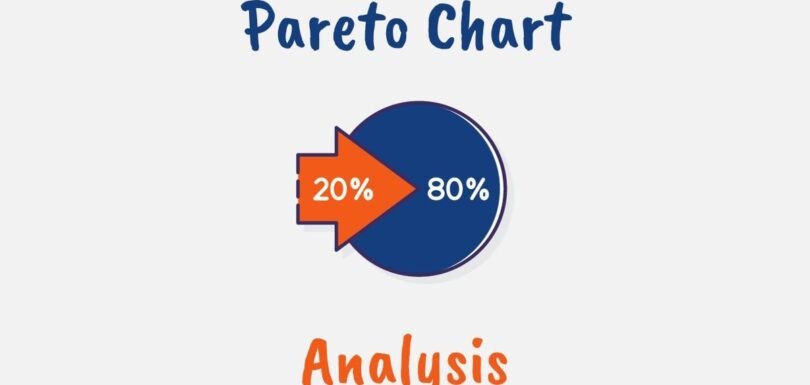
Leveraging the 80/20 Rule: Using Pareto Charts to Enhance Efficiency in Lean and Six Sigma

Businesses are constantly seeking new strategies to optimize their processes, eliminate inefficiencies, and improve customer satisfaction as part of their continuous improvement efforts. Among the most effective tools is the Pareto Chart, a simple yet impactful graphical representation that helps organizations identify areas that require attention based on their significance. Rooted in the Pareto Principle—often called the 80/20 rule—the Pareto Chart is a staple in Lean and Six Sigma methodologies, providing clear insights into where companies should focus their improvement efforts. The Pareto Chart enables businesses to prioritize the most significant issues, ultimately driving improvements that deliver maximum value to both customers and the organization. It is an essential component of continuous improvement initiatives, helping teams pinpoint the root causes of defects, delays, and other inefficiencies. Origins of the Pareto Principle: The Legacy of Vilfredo Pareto The Pareto Principle, which forms the foundation of the Pareto Chart, originated from the observations of Italian economist and sociologist Vilfredo Pareto. Born in Paris on July 15, 1848, Pareto pursued mathematics and physics at the University of Turin, graduating in 1869. After completing his studies, Pareto worked as an engineer and later became the director of an Italian railway and a manager at a major ironworks company. His interest in economics led him to study philosophical and political concepts, and by 1893, he was appointed to the chair of political economy at the University of Lausanne, Switzerland, succeeding the renowned economist Léon Walras. It was during his career as an economist that Pareto made a groundbreaking observation. In 1896, Pareto published his work “Cours d’économie politique,” where he introduced the concept that 80% of Italy’s land was owned by 20% of its population. He later expanded this observation, noting that wealth distribution followed similar patterns across various societies and time periods. This revelation became the cornerstone of the Pareto Principle. Pareto’s principle was later developed into the concept of Pareto-optimality, laying the groundwork for modern welfare economics. He also made significant contributions to sociology through his work “Mind and Society” (1916), where he analyzed social structures and class dynamics. Although he passed away in 1923, Pareto’s legacy continues to impact both economics and quality management, especially through the Pareto Chart. Joseph Juran and the Pareto Chart: From Theory to Business Practice While Vilfredo Pareto provided the foundation, it was Joseph Juran, a leading figure in quality management, who transformed the Pareto Principle into a practical tool for business improvement. Juran, often considered the father of quality control, expanded Pareto’s insights into the realm of process optimization. In the mid-20th century, Juran coined the phrase “the vital few and trivial many,” referring to the idea that 20% of causes typically lead to 80% of the problems in business processes. While Vilfredo Pareto provided the foundation, it was Joseph Juran, a leading figure in quality management, who transformed the Pareto Principle into a practical tool for business improvement. Juran, often considered the father of quality control, expanded Pareto’s insights into the realm of process optimization. In the mid-20th century, Juran coined the phrase “the vital few and trivial many,” referring to the idea that 20% of causes typically lead to 80% of the problems in business processes. Juran developed the Pareto Chart to help businesses identify and prioritize the “vital few” issues that have the most significant impact on overall performance. This tool allowed organizations to focus on resolving the most critical problems, leaving the “trivial many” issues for later attention. Juran’s contributions made the Pareto Chart a core component of quality improvement initiatives, especially in the Lean and Six Sigma methodologies. Understanding the Structure of the Pareto Chart The Pareto Chart is a specialized type of bar chart that organizes data from highest to lowest based on frequency or impact. It allows businesses to quickly identify the areas that contribute the most to a particular issue. Each bar in the chart represents a category of data—such as customer complaints, defects in a manufacturing line, or sales from different products—with the height of the bar reflecting its relative contribution to the overall problem or outcome. What sets the Pareto Chart apart from standard bar charts is its organization. While standard bar charts may list data alphabetically or by another logical sequence, the Pareto Chart is specifically ordered by the magnitude of impact. This makes it easier for teams to focus on the most pressing problems. Additionally, a cumulative frequency line is often included to visually represent the total impact of all categories combined. Applications of Pareto Charts in Lean and Six Sigma Methodologies The Pareto Chart is an integral tool in Lean and Six Sigma, both of which focus on improving business processes. Lean methodology aims to eliminate waste and deliver value from the customer’s perspective, while Six Sigma focuses on reducing defects and minimizing variability in processes. When these two methodologies are combined in Lean Six Sigma, the Pareto Chart plays a vital role in identifying root causes of inefficiencies and prioritizing improvements. In Lean manufacturing, Pareto Charts are often used to analyze defects in production lines. For example, a team might use a Pareto Chart to discover that 80% of product defects stem from just 20% of the manufacturing issues. With this information, they can focus on resolving those key issues, improving product quality and efficiency. In Six Sigma, the Pareto Chart is used to identify the most significant sources of variability in a process. By quantifying the impact of each source of variability, teams can prioritize efforts to reduce defects and improve process stability. This method aligns perfectly with the Six Sigma goal of achieving near-perfect processes by eliminating waste and minimizing errors. Practical Examples of Pareto Charts in Various Industries The Pareto Chart’s versatility allows it to be applied across many industries, from manufacturing to healthcare to customer service. In manufacturing, the chart helps identify the most common sources of defects, enabling teams to focus their improvement efforts on areas that will have the greatest impact on product quality. For
Continue Reading

Categories

  • No categories

Latest Posts

Subscribe Newsletter

Sign up to receive notifications about the latest news and events from us!

    x

    Inspiring Your Team to Continuous Growth and Sustainable Excellence.

    Address Business
    11 Bakheng Street, Svay Dangkum,
    Siem Reap, Cambodia
    Contact With Us
    +855 10 983138
    info@truenorthlean.com
    Select the fields to be shown. Others will be hidden. Drag and drop to rearrange the order.
    • Image
    • SKU
    • Rating
    • Price
    • Stock
    • Availability
    • Add to cart
    • Description
    • Content
    • Weight
    • Dimensions
    • Additional information
    Click outside to hide the comparison bar
    Compare