11 Bakheng Street, Svay Dangkum,
Siem Reap, Cambodia
Email our experts:
info@truenorthlean.com
11 Bakheng Street, Svay Dangkum,
Siem Reap, Cambodia
Email our experts:
info@truenorthlean.com

Vietnam

Vietnam Navigates the Tariff Trap: Diplomacy, Manufacturing, and a Balancing Act Between Superpowers

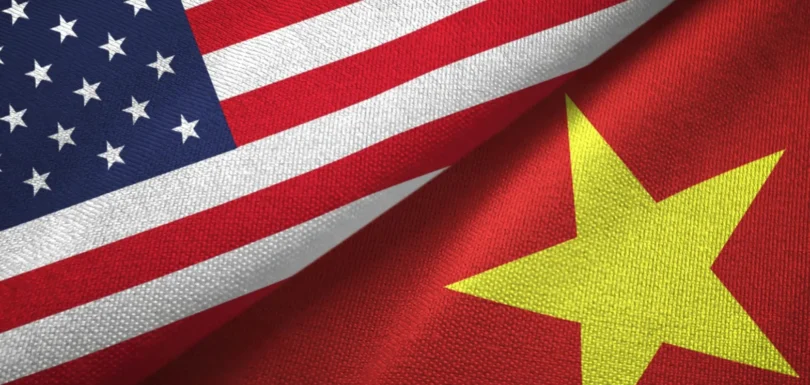
Vietnam’s recent trade agreement with the United States marks a pivotal moment in its economic and diplomatic trajectory. As only the third country—after the UK and China—to strike a deal with President Donald Trump following his shock announcement of sweeping “reciprocal tariffs” on April 2, Vietnam has once again shown the speed and pragmatism that have defined its economic policy in recent years. Originally slapped with a 46% tariff—one of the steepest among the tariffs announced—Vietnam has now managed to reduce that burden to 20%, with a higher 40% reserved for goods suspected of being “transshipped” from other countries, particularly China. While questions remain about how “transshipment” will be defined and enforced, this diplomatic success is no small feat. At the heart of this maneuvering lies an essential truth: Vietnam’s economy cannot afford to alienate the US, which accounts for nearly a third of its total exports. In 2024 alone, Vietnam recorded a $123 billion trade surplus with the US. This overwhelming dependency meant that any extended trade disruption would risk serious domestic economic consequences—just months before the Communist Party of Vietnam (CPV) holds its five-yearly Congress. For General-Secretary To Lam, ensuring uninterrupted access to the US market is not just a matter of trade policy—it is a political imperative. His development vision for Vietnam, which includes deepening private sector reforms and shelving the CPV’s previous anti-corruption dragnet, hinges on sustained economic growth. Achieving the goal of becoming a high-income country by 2045 requires 8% annual growth. That target is ambitious, and one key to reaching it is keeping export engines running at full speed. But this deal is not without costs. In agreeing to lower its own tariffs and offer preferential treatment to US products—such as large American SUVs, oddly out of place in Vietnam’s narrow urban streets—the Vietnamese government is making painful trade-offs. These concessions, while diplomatically strategic, will do little to erase the core imbalance: a $10 billion purchase commitment versus a trade surplus over 12 times that size. At the business level, Vietnamese manufacturers are scrambling to respond. A recent PwC pulse survey revealed that 86% of companies—many without even direct exports to the US—expressed serious concern about the fallout. Whether it’s cost inflation, reduced demand, or fears of supply chain disruption, the anxiety is real. In response, companies are adapting with admirable agility. Many are diversifying supply chains beyond China, automating operations to cut costs, and exploring new markets to reduce overreliance on the US. Some are renegotiating supplier terms, while others are investing in leaner operations or even considering moving part of their production elsewhere. It’s a full-court press to preserve competitiveness in a volatile landscape. Yet much remains unclear. Will the 20% tariff replace existing duties or be added on top? What precisely constitutes transshipment? These questions carry significant financial weight, especially for sectors like garments, electronics, and footwear—Vietnam’s strongest export performers. The stakes are even higher in the long term. If these tariffs persist, Vietnam’s position as the go-to alternative to China in global manufacturing could weaken. While the current deal avoids the worst-case scenario, prolonged uncertainty could lead investors to reassess Vietnam’s value proposition. Companies that relocated from China to Vietnam to hedge against US-China tensions might not be keen on relocating again—but if production costs rise sharply or market access erodes, they will have no choice. Vietnam’s leadership understands this. That’s why Hanoi has been aggressive in addressing US concerns—cracking down on counterfeit goods, promising multi-billion-dollar purchases, and even floating the idea of buying American fighter jets, a dramatic shift for a country long cautious of US military entanglements. But in threading the needle between Washington and Beijing, Vietnam is walking a diplomatic tightrope. Closer ties with the US can’t come at the cost of antagonizing China, Vietnam’s giant neighbor and an increasingly important economic partner. Chinese firms are investing heavily in Vietnamese assembly lines as part of broader supply chain diversification, bolstered by the Regional Comprehensive Economic Partnership (RCEP), which both countries are part of. For Beijing, the US-Vietnam agreement brings mixed feelings. On one hand, Chinese exporters can continue to use Vietnam as a partial assembly hub. On the other, the 40% transshipment penalty signals Washington’s determination to plug what it sees as loopholes in trade flows. There may also be discomfort in Beijing over the potential for deeper US–Vietnam security cooperation—even if Hanoi remains publicly non-aligned. This balancing act is now part of Vietnam’s economic DNA: open to all, aligned with none. Hanoi wants to be a hub, not a pawn. Europe and other multipolar actors could play a stabilizing role in this unfolding dynamic. But their support should come with expectations. Vietnam’s backsliding on environmental commitments—building new coal and gas plants, for example—and its failure to curb illegal migration to Europe are legitimate concerns. If Hanoi wants to benefit from open trade, it must also deliver on its broader obligations under EU and UK free trade and partnership agreements. Still, none of this should distract from the broader story: Vietnam is doing what many countries cannot. It is managing a high-stakes power struggle between two giants while keeping its eye firmly on economic development. The new US-Vietnam trade deal, flawed as it may be, is a symbol of Vietnam’s maturity as a global economic player—ambitious, adaptable, and keenly aware of its strategic importance. If implementation is handled well, and if both sides commit to transparency and stability, this agreement could become a blueprint for how mid-sized economies can survive and even thrive amid great power competition. Vietnam has earned a temporary reprieve from the tariff threat—now comes the hard part: proving it can sustain growth without losing balance. As Vietnam steps into this uncertain new phase, one thing is clear: economic diplomacy is no longer a sideshow. It is the main event.
Continue Reading

Driving Vietnam’s Industrial Evolution: A Lean–Digital–Green Transformation for Sustainable Growth

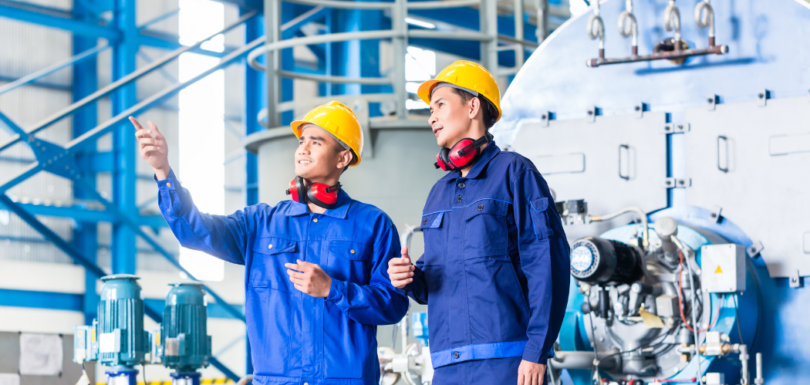
Vietnam’s manufacturing sector is undergoing a quiet but powerful transformation. As global competition intensifies and supply chains demand greater transparency, resilience, and sustainability, Vietnamese small and medium-sized enterprises (SMEs) are responding—not with fragmented solutions, but through structured, integrated transformation built on three essential pillars: Lean, Digital, and Green. Across the country, this approach is helping manufacturers move from tactical improvements to strategic change—positioning them not just as suppliers, but as world-class industrial partners. The Case for Integrated Transformation Vietnamese SMEs have long been recognised for their adaptability and work ethic. Over the past several years, many have achieved encouraging gains through lean implementation, delivering 20–30% efficiency improvements in operations. However, these gains often plateau when companies lack a broader roadmap. Digitalisation is frequently introduced without clear alignment to business objectives, leading to underutilised tools and fragmented systems. Green initiatives remain at a surface level—rooftop solar panels and energy-saving measures—without deeper integration into core strategy. Meanwhile, standardised benchmarking remains elusive, limiting cross-company comparisons and strategic planning. What’s needed is not more isolated projects—but a unified model to guide sustainable, measurable, and scalable transformation. A Practical Framework: The 5-Element Lighthouse Model To address these gaps, industry leaders are championing a new framework that places Lean thinking at its foundation while weaving in complementary elements critical for long-term success. Known as the 5-Element Lighthouse Model, this framework supports total enterprise transformation through: This model is not theoretical—it is already proving effective. On-the-Ground Impact: Real Results in Precision Manufacturing Consider the transformation journey of a Vietnamese precision machining enterprise supplying high-end components to FDI clients and global markets. With operations running 24/6 and annual revenue of US$10 million, the company began by adopting lean practices on the shop floor. Progress accelerated when the company expanded transformation efforts across departments. It introduced digital dashboards powered by Power BI, rolled out enterprise resource planning (ERP), and improved in-line quality assurance through advanced measurement systems. They also invested in renewable energy, installing a 0.5 MWh rooftop solar system and tracking GHG emissions through digital tools. Perhaps most significantly, the company invested in people. By applying a KMI–KPI–KAI framework and launching internal leadership development programs, it qualified five new project managers and aligned strategic goals throughout the organisation. The results speak volumes: This transformation wasn’t just about processes—it was about people, purpose, and performance. Ecosystem Thinking: Scaling Success Through Collaboration No company transforms in isolation. Recognising this, forward-thinking networks across Vietnam are now forming collaborative alliances to serve as “industrial labs” and “learning ecosystems.” These alliances connect manufacturers, technical advisors, software providers, and public institutions to share best practices, test innovations, and deploy them across sectors. This kind of structured collaboration allows for faster scaling, broader adoption, and ultimately, more inclusive industrial growth. It also builds resilience—helping SMEs prepare for regulatory shifts, climate-related risks, and technological disruption. The Lean Movement Grows: Hanoi, Here We Come Following the momentum from transformative initiatives in southern Vietnam, the movement for sustainable manufacturing excellence is heading north. From Saigon’s spark to Hanoi’s horizon—True North Lean is on the move.After the resounding success in Ho Chi Minh City, where minds opened and momentum soared, we carry the torch of lean thinking northward—toward new energy, new stories, and new change. Next stop: Hanoi.📍 May 5–7, 2025📚 Lean Foundations Training Program🎟 Only 25 seats—because true transformation is personal. This three-day immersion will explore the fundamentals of Lean—from value stream mapping and standard work to leadership mindsets and culture-building. Participants won’t just learn tools—they’ll learn how to build systems that last and how to lead change that sticks. Whether you’re at the beginning of your Lean journey or refining your approach, this program offers the knowledge, connection, and inspiration to build a better future. “Great processes build great people—and great people build great companies.” 📩 Interested in Hanoi?Contact Chinh Nguyễn Đức✉️ chinh.nguyen@truenorthlean.org📞 +84 90 891 31 54 Vietnam’s Manufacturing Future: Resilient, Digital, and Green Vietnam is at a critical inflection point. As global supply chains look for trusted partners that can deliver quality, speed, and sustainability, the country’s SMEs must rise to the occasion. The path forward is clear. Through structured transformation built on Lean principles, enabled by smart technology, and anchored in sustainability, Vietnamese manufacturers are poised not only to compete—but to lead. It’s not just about doing things better.It’s about doing better things—for people, for business, and for the planet. Let’s Lean, Hanoi. ✅
Continue Reading

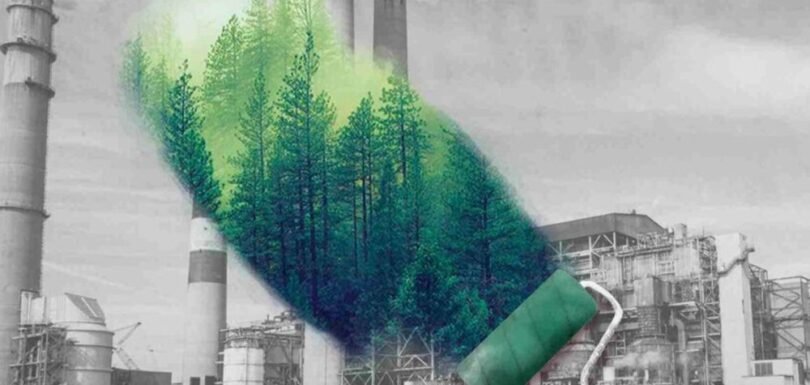
The Rise of Eco-Friendly Textiles in Vietnam: A Story of Adaptation and Innovation

“Vietnam’s textile enterprises are leading the way in green production, demonstrating their resilience and creativity in the face of global challenges.” Did you know that many textile enterprises in Vietnam are moving towards green production processes? This shift is driven by increasing consumer awareness in key export markets and the development of standards for imported textiles and apparel, particularly in the European market. To export to the EU, Vietnamese textile firms must meet strict standards around product safety and the environmental impacts of their supply chains. This has forced Vietnamese firms to take action and adapt, leading to significant changes in the industry. According to the General Statistics Office, textile and apparel exports in the first four months of 2023 experienced a decline of 19.3% compared to the previous year. This decline can be attributed to the challenges brought about by the Russia-Ukraine conflict, which has impacted the global economy and caused inflation among Vietnam’s major trading partners. However, this decline has been transformative for the garment and textile sector. Businesses have swiftly adapted to the economic challenges by reorganizing their production lines, adopting new technologies, and adjusting their business models. Green production has become increasingly important in response to the rising demand for durable and long-lasting goods. Several important export destinations for Vietnamese textiles and apparel, including the US, the EU, Japan, and South Korea, have laws and regulations governing environmentally responsible manufacturing practices. Additionally, higher standards for product quality are embedded in many of the trade agreements Vietnam is part of. These factors are driving a push towards more environmentally friendly textile production in Vietnam. By embracing green practices, textile enterprises are not only meeting regulatory requirements but also appealing to environmentally-conscious consumers. Vietnam’s textile industry is a shining example of how environmental sustainability and economic growth can go hand in hand.
Continue Reading

Categories

  • No categories

Latest Posts

Subscribe Newsletter

Sign up to receive notifications about the latest news and events from us!

    x

    Inspiring Your Team to Continuous Growth and Sustainable Excellence.

    Address Business
    11 Bakheng Street, Svay Dangkum,
    Siem Reap, Cambodia
    Contact With Us
    +855 10 983138
    info@truenorthlean.com
    Select the fields to be shown. Others will be hidden. Drag and drop to rearrange the order.
    • Image
    • SKU
    • Rating
    • Price
    • Stock
    • Availability
    • Add to cart
    • Description
    • Content
    • Weight
    • Dimensions
    • Additional information
    Click outside to hide the comparison bar
    Compare