11 Bakheng Street, Svay Dangkum,
Siem Reap, Cambodia
Email our experts:
info@truenorthlean.com
11 Bakheng Street, Svay Dangkum,
Siem Reap, Cambodia
Email our experts:
info@truenorthlean.com

Surya Narayan

  • Home
  • Author: Surya Narayan
  • Page 6

20 Quotes to Inspire Lean Thinking and Manufacturing Excellence

At True North Lean, we believe that achieving excellence in manufacturing is about more than just cutting waste—it’s about aligning with the principles of lean thinking to create value at every step. Lean manufacturing emphasizes continuous improvement, efficient processes, and fostering innovation to sustain long-term success. To help guide your journey toward operational excellence, we’ve curated 20 powerful quotes that reflect the core values of lean manufacturing. These quotes are organized into three key focus areas: Whether you’re on the shop floor or in the boardroom, these words of wisdom will inspire and motivate your team to strive for a true north direction. Increasing Production Efficiency Efficiency is at the heart of lean manufacturing. It’s not just about doing more with less but about ensuring every action adds value. 1. “Without standards, there can be no improvement.” – Taiichi Ohno Application: Establishing clear processes and standards provides the foundation for continuous improvement. Use standards to identify gaps and find opportunities for better efficiency. 2. “You can’t manage what you don’t measure.” – W. Edwards Deming Application: Lean thinking relies on data-driven decisions. Regularly track key metrics to identify inefficiencies and take action. 3. “The journey of a thousand miles begins with one step.” – Lao Tzu Application: Start small. Incremental changes in your production process can lead to transformative results over time. 4. “Progress lies not in enhancing what is, but in advancing toward what will be.” – Khalil Gibran Application: Don’t settle for current efficiency levels. Always look ahead for opportunities to refine and optimize. 5. “What gets scheduled gets done.” – Michael Hyatt Application: Structure and planning are essential in lean manufacturing. Create realistic schedules to ensure production efficiency and accountability. 6. “Machines take me by surprise with great frequency.” – Alan Turing Application: Technology can be a powerful ally. Leverage modern tools and machinery to enhance efficiency and uncover new capabilities. 7. “Energy and persistence conquer all things.” – Benjamin Franklin Application: Lean manufacturing is not a one-time effort. It requires sustained focus and commitment to continuously improve processes. Decreasing Time Waste in Manufacturing Time is one of the most valuable resources in manufacturing. Reducing time waste is a critical step in lean operations, ensuring every second is spent creating value. 8. “Take time to deliberate, but when the time for action comes, stop thinking and go in.” – Napoleon Bonaparte Application: Don’t let indecision stall progress. Identify inefficiencies quickly and implement solutions without delay. 9. “The bad news is time flies. The good news is you’re the pilot.” – Michael Altshuler Application: Take control of how time is used in your production process. Avoid time-wasting activities that don’t contribute to customer value. 10. “A wise person does at once what a fool does at last.” – Baltasar Gracián Application: Address inefficiencies as soon as they are identified. Delaying action only compounds time waste. 11. “It’s not enough to be busy; so are the ants. The question is: What are we busy about?” – Henry David Thoreau Application: Focus on meaningful tasks that add value. Avoid getting caught up in activities that don’t contribute to your goals. 12. “The shorter way to do many things is to only do one thing at a time.” – Wolfgang Amadeus Mozart Application: Multitasking often leads to inefficiency. Prioritize tasks and work on them sequentially to avoid wasted effort. 13. “The secret of getting ahead is getting started.” – Mark Twain Application: Don’t overcomplicate your lean initiatives. Start with one small improvement and build momentum from there. Fostering Innovation in Manufacturing Innovation is a cornerstone of lean manufacturing. It’s about challenging the status quo and continuously seeking better ways to deliver value. 14. “Creativity is thinking up new things. Innovation is doing new things.” – Theodore Levitt Application: Encourage your team to not just brainstorm ideas but also implement them. Action is what drives innovation. 15. “Change is hard at first, messy in the middle, and gorgeous at the end.” – Robin Sharma Application: Embrace the challenges that come with innovation. The rewards of improved processes and systems will make the effort worthwhile. 16. “The best way to escape from a problem is to solve it.” – Alan Saporta Application: Use innovation to tackle persistent challenges. Creative solutions can transform obstacles into opportunities. 17. “If you’re not prepared to be wrong, you’ll never come up with anything original.” – Ken Robinson Application: Foster a culture where your team feels safe to experiment. Failure is often the first step toward groundbreaking success. 18. “Do not go where the path may lead, go instead where there is no path and leave a trail.” – Ralph Waldo Emerson Application: Don’t just follow industry norms. Forge your own path by embracing innovative lean practices. 19. “Nothing is more dangerous than an idea when it is the only one you have.” – Émile Chartier Application: Avoid tunnel vision. Always consider multiple perspectives and alternative approaches in your quest for innovation. 20. “In the middle of every difficulty lies opportunity.” – Albert Einstein Application: Challenges in manufacturing are often the perfect breeding ground for innovative solutions. Stay open to discovering hidden opportunities. At True North Lean, we know that the road to lean manufacturing excellence is not always easy, but it is always worth it. By focusing on efficiency, eliminating time waste, and fostering innovation, your organization can deliver greater value to customers while building a sustainable future. Let these 20 quotes inspire your team to continuously improve and embrace the principles of lean thinking. As you navigate your lean journey, always remember your true north: creating value without compromise. Ready to learn more? Explore the resources and expertise at vijay@TrueNorthLean.org to take the next step in your lean transformation.
Continue Reading

Lean Inventory Management: Insights from Tata Motors for Continuous Improvement

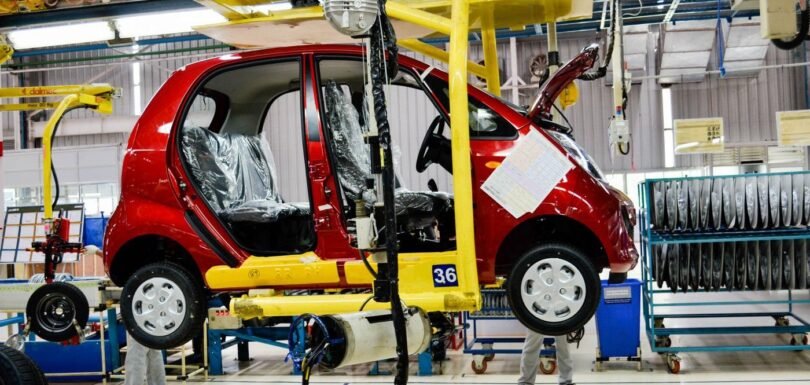
Effective inventory management is a critical component of lean manufacturing, enabling organizations to balance cost efficiency with operational effectiveness. Tata Motors, a leader in the automotive industry, exemplifies how lean principles can transform inventory practices, ensuring minimal waste and maximum productivity. This article highlights Tata Motors’ inventory management strategies and their broader implications for businesses adopting lean methodologies. The Significance of Inventory Management in Lean Practices Inventory management ensures the availability of materials in the right quantity, at the right time, and at the right place, which is fundamental to smooth operations. In lean manufacturing, the focus shifts to optimizing inventory levels to reduce waste while meeting production and customer demands. Key objectives of inventory management at Tata Motors include: Lean Tools Used by Tata Motors Tata Motors utilizes a combination of traditional and advanced inventory control techniques aligned with lean principles to optimize their operations. 1. ABC Analysis for Inventory PrioritizationABC analysis categorizes inventory based on its impact on total inventory value: This prioritization allows Tata Motors to focus resources on critical items while maintaining overall efficiency. 2. KANBAN: Visualizing and Controlling Inventory FlowKANBAN, a signaling tool integral to lean inventory systems, helps Tata Motors manage inventory within production: KANBAN’s emphasis on minimizing excess inventory supports the lean principle of waste reduction. 3. Just-in-Time (JIT): Synchronizing Supply with DemandTata Motors employs JIT to deliver materials only when needed in the production process. The benefits of this approach include: JIT aligns inventory management with actual production needs, enhancing efficiency. Advanced Inventory Models: Economic Order Quantity (EOQ) Tata Motors leverages the EOQ model to calculate the optimal order quantity for minimizing the combined costs of ordering and holding inventory. While the model requires stable demand and consistent lead times, it helps maintain inventory levels at an economically optimal point. Challenges and Adaptability in Lean Inventory Practices While tools like ABC analysis, KANBAN, and JIT have proven effective, Tata Motors continuously adapts these methods to overcome challenges such as fluctuating demand, variable lead times, and supplier inconsistencies. By fostering a culture of flexibility and continuous improvement, the company ensures its inventory practices remain aligned with its operational goals. Implications for Lean Practitioners Businesses seeking to adopt lean inventory practices can draw several lessons from Tata Motors: Tata Motors’ inventory management practices embody the essence of lean principles: reducing waste, optimizing resources, and ensuring efficiency. By integrating tools like ABC analysis, KANBAN, and JIT, the company has achieved a balanced approach to inventory control. Businesses can replicate this success by embracing lean strategies tailored to their unique operational contexts, paving the way for sustainable growth and innovation. References:
Continue Reading

“Defining the Problem: The Cornerstone of Lean Manufacturing Excellence”

Steve Jobs once remarked, “If you define the problem correctly, you almost have the solution.” This philosophy, so central to his approach to innovation at Apple, resonates deeply with the principles of lean manufacturing. In a world where industries face mounting pressure to reduce waste, optimize resources, and deliver quality products, the ability to clearly define problems has become a linchpin for success. Lean manufacturing, a practice born from the Toyota Production System, has revolutionized industries across the globe. Yet, its success often hinges on one critical factor: accurately identifying the root cause of inefficiencies. Missteps in this fundamental stage can lead to wasted effort, misguided strategies, and lost opportunities for improvement. This editorial delves into the indispensable role of problem definition in lean manufacturing, showcasing its impact through a compelling case study and exploring its relevance in today’s dynamic industrial landscape. The Power of Defining the ProblemLean manufacturing is guided by five core principles: defining value, mapping the value stream, creating flow, establishing pull, and pursuing perfection. Each of these relies on understanding problems at their root. Vague or misidentified issues can lead to counterproductive efforts, undermining the essence of lean—delivering maximum value with minimal waste. Defining the problem is not a cursory step; it is an art that requires a blend of analytical tools, team collaboration, and an unyielding commitment to clarity. It’s the difference between merely treating symptoms and addressing the underlying cause. Lean Tools for PrecisionLean manufacturing offers a suite of tools designed to aid in identifying problems effectively. Among these, the Five Whys technique stands out for its simplicity and effectiveness. By repeatedly asking “Why?” teams can peel back layers of symptoms to uncover the root cause. Similarly, the Ishikawa (Fishbone) Diagram helps visualize potential causes of a problem, ensuring no aspect is overlooked. Other methods, like Value Stream Mapping, provide a holistic view of processes, enabling organizations to identify inefficiencies with pinpoint accuracy. These tools embody the essence of Steve Jobs’ insight: with the right lens, the solution often reveals itself. Case Study: Eliminating Production Delays in Automotive ManufacturingA leading automotive manufacturer faced persistent delays in its production line, threatening its ability to meet delivery deadlines. The delays not only strained relationships with suppliers and distributors but also impacted customer satisfaction. The initial diagnosis pointed to inefficiencies in assembly operations. However, a deeper dive using the Five Whys technique revealed the true root cause: misaligned production schedules that led to inventory shortages. Parts were often unavailable when needed, disrupting the entire workflow. With the problem clearly defined, the company implemented a Just-In-Time (JIT) system, ensuring that parts arrived precisely when required. This approach minimized inventory carrying costs while eliminating delays. Furthermore, enhanced collaboration with suppliers established reliable delivery schedules. The intervention reduced production delays by 80%, improved on-time delivery rates by 65%, and strengthened customer trust. More importantly, the case underscored the importance of defining problems before jumping to solutions. Lessons for Modern IndustriesIn today’s fast-paced industrial environment, the stakes for effective problem-solving have never been higher. As competition intensifies and customer expectations soar, organizations must prioritize precision in identifying inefficiencies. A clearly defined problem ensures that resources—time, manpower, and capital—are directed efficiently. This principle holds true across industries, from automotive to healthcare, where vague problem statements often lead to resource drain. When problems are defined with clarity, cross-functional teams can align their efforts seamlessly. This alignment fosters creativity and innovation, paving the way for solutions that may have otherwise been overlooked. Lean manufacturing thrives on the pursuit of perfection. Accurate problem definition not only resolves immediate issues but also sets the stage for ongoing improvements, fostering a culture of excellence. The Digital Edge in Problem DefinitionThe advent of digital technologies is revolutionizing lean practices. Tools like predictive analytics, powered by Artificial Intelligence (AI), allow organizations to identify inefficiencies with unprecedented precision. Internet of Things (IoT) devices provide real-time data, enabling proactive problem-solving before inefficiencies escalate. These advancements align seamlessly with the lean philosophy, offering new ways to define and solve problems while staying true to the principles of waste reduction and value creation. A Call for Focused Problem-SolvingSteve Jobs’ insight into problem definition is not merely a reflection of his genius; it is a call to action for industries striving for excellence. Lean manufacturing, at its core, is a testament to this principle. It demonstrates that the path to efficiency, quality, and customer satisfaction begins with asking the right questions and identifying the true nature of challenges. As industries evolve, the importance of this foundational step will only grow. Whether through traditional lean tools or cutting-edge digital solutions, the journey toward operational excellence hinges on defining the problem correctly. Takeaway“If you define the problem correctly, you almost have the solution.” In the world of lean manufacturing, this wisdom rings truer than ever. The success of lean is not measured by the number of tools implemented or the complexity of strategies employed, but by the precision with which problems are identified and resolved. As we strive for greater efficiency and innovation, let us remember that the first step—defining the problem—is often the most critical. It is the foundation upon which every great solution is built, a principle that transcends industries and time. Closing Quote“Quality is never an accident; it is always the result of intelligent effort.” – John RuskinLet us adopt the intelligent effort of problem definition to drive lean excellence and shape a better, more efficient future.
Continue Reading

Shojinka: Adapting Manpower for Efficiency and Demand Fluctuations

In the modern manufacturing landscape, customer demands and market dynamics shift rapidly. Businesses must respond with agility, ensuring operations meet production targets without incurring unnecessary costs. Shojinka, a lean manufacturing principle translating to “flexible manpower line,” provides a strategic framework for this adaptability. By focusing on aligning workforce allocation with fluctuating production requirements, Shojinka ensures efficiency, agility, and customer satisfaction. Unlike traditional systems that maximize machine efficiency at the expense of demand-driven operations, Shojinka prioritizes human resource flexibility to balance workloads and maintain production flow in alignment with Takt Time—the pace of production needed to meet customer demand. Understanding Shojinka: Key Principles and Benefits Shojinka is built around three fundamental principles: flexibility, demand alignment, and efficiency. These principles foster a more resilient and agile manufacturing environment, helping businesses adapt to market fluctuations without compromising productivity or customer satisfaction. Case Study: Shojinka Implementation in an Electronics Manufacturing Plant The ChallengeAn electronics manufacturing company producing consumer gadgets faced significant demand variability due to seasonal trends and new product launches. During peak periods, the assembly lines were overburdened, leading to overtime costs and reduced worker morale. Conversely, during low-demand periods, workers experienced significant idle time, leading to inefficiencies. Adopting ShojinkaTo address these challenges, the company implemented Shojinka, focusing on the following steps: The OutcomeAfter six months of adopting Shojinka, the company reported significant improvements: Shojinka vs. Machine Efficiency: A Paradigm Shift Traditional manufacturing systems often emphasize machine efficiency, prioritizing high utilization rates over demand alignment. While this approach can boost short-term output, it often leads to overproduction, inventory buildup, and misaligned resources. Shojinka shifts the focus to flexibility and adaptability, ensuring that operations remain customer-centric. Why Shojinka is Superior to Machine-Centric Approaches: Realizing the Potential of Shojinka Implementing Shojinka requires a cultural and operational shift within an organization. Key factors for successful adoption include: While initial efforts to adopt Shojinka may involve training costs and a cultural shift, the long-term benefits far outweigh these challenges. Businesses can enjoy enhanced productivity, reduced costs, and a resilient operation capable of adapting to market demands. Building Agility for the Future Shojinka is not just a tool for operational efficiency; it is a philosophy that prioritizes adaptability, teamwork, and customer-centricity. By implementing Shojinka, organizations can unlock the full potential of their workforce, aligning production with demand and fostering a culture of continuous improvement. This approach not only ensures operational excellence but also positions businesses to thrive in an increasingly competitive and dynamic marketplace.
Continue Reading

Lean Practices: Revolutionizing Medical Colleges and Hospitals

Medical colleges and hospitals face a distinctive set of challenges. They not only train the next generation of healthcare professionals but also serve as vital healthcare providers for a growing population. With an expanding demand for quality medical education and patient care, these institutions must navigate complex operational structures. Stakeholders—including students, patients, parents, faculty, and management—often have overlapping yet distinct expectations. Integrating lean methodologies into their systems offers a practical approach to streamline operations, reduce inefficiencies, and deliver value to all stakeholders. Lean practices, first developed in manufacturing, focus on eliminating waste and optimizing processes to maximize value. Applied to medical colleges and hospitals, they address critical inefficiencies that hinder education and patient care. From reducing waiting times to enhancing clinical training, lean methodologies are transforming the way these institutions function. Challenges in Medical Colleges and Hospitals Asian medical colleges and hospitals face unique operational and resource constraints. Some of the common challenges include: The Role of Lean Practices in Addressing These Challenges Lean methodologies focus on improving workflows, enhancing resource utilization, and fostering a culture of continuous improvement. In the context of medical colleges and hospitals, lean tools such as value stream mapping, standardized work, and the Plan-Do-Check-Act (PDCA) cycle can create a significant impact. Lean in Action: Transformative Strategies for Medical Colleges and Hospitals 1. Reducing Patient Waiting Times In most teaching hospitals, long waiting times in OPDs are a persistent issue due to mismanaged scheduling and resource allocation. 2. Streamlining Admissions and Administrative Processes The complexity of admission processes, fee payments, and grievance handling can overwhelm students and their parents. 3. Optimizing Clinical Training Inadequate access to simulation labs and inconsistent clinical rotations often hinder student learning. 4. Enhancing Faculty Productivity Faculty often bear the dual burden of academic responsibilities and administrative tasks, leaving little time for research or one-on-one mentoring. 5. Improving Patient Flow in Hospitals Patients frequently face confusion due to multiple touchpoints for billing, diagnostics, and consultations. 6. Engaging Stakeholders Effectively Parents, patients, and management often feel disconnected from institutional processes, leading to dissatisfaction or misunderstandings. Tools and Techniques for Lean Implementation Stakeholder Benefits of Lean Implementation Students Patients Parents Faculty Management Challenges in Lean Implementation Implementing lean in medical colleges and hospitals is not without hurdles. Resistance to change, limited lean expertise, and initial implementation costs can pose challenges. However, these can be addressed through: A Vision for the Future For medical colleges and hospitals in Asia, lean methodologies offer a sustainable way to address inefficiencies, improve education and care quality, and meet the expectations of diverse stakeholders. By adopting lean practices, these institutions can optimize resources, foster collaboration, and build a culture of continuous improvement. The journey to lean transformation requires dedication and persistence, but the rewards—enhanced patient care, better-trained healthcare professionals, and satisfied stakeholders—are well worth the effort. As more institutions embrace these principles, they set a new standard for excellence in healthcare education and service delivery, paving the way for a more efficient and equitable future.
Continue Reading

Creating a Lean Assembly Line: Strategies for South and Southeast Asia

In the manufacturing sector of South and Southeast Asia, competition continues to intensify as companies aim to increase profitability, efficiency, and quality to keep pace with global standards. Lean manufacturing, a philosophy popularized by Toyota, offers an effective approach to optimizing production by reducing waste and maximizing value for customers. For companies in Asia’s rapidly developing economies, implementing lean principles in assembly lines can drive efficiency and elevate production standards to compete in international markets. Understanding Lean Manufacturing in Assembly Lines Lean manufacturing is about creating maximum value for the customer with minimal resources, focusing on waste elimination. While every business has different goals and resources, the concept of lean remains universally applicable, albeit with local customization. Each assembly line may take a unique approach, but general principles help in setting up and maintaining a lean operation. Identifying and Eliminating Waste Waste, as defined in lean manufacturing, includes any activity that doesn’t add value to the final product. Waste can be broadly categorized into three types: Muda, Mura, and Muri. Understanding and targeting these areas in assembly lines can significantly enhance operational efficiency. Practical Steps to Eliminate Waste A precise approach is essential to minimize waste. Implementing defect prevention measures saves time and resources that would otherwise go toward correcting errors. Additionally, producing based on accurate demand forecasting helps avoid surplus, which is especially relevant in Asia’s diverse markets, where demand can vary widely by region and season. Maximizing Productivity Productivity is a cornerstone of lean manufacturing, and in a lean assembly line, the goal is to achieve maximum output with minimal resources. This does not mean sacrificing quality but rather optimizing every aspect of the process for the best outcome. Here are strategies suited to the dynamics of South and Southeast Asian industries: Avoiding Common Pitfalls While implementing lean principles, manufacturers should avoid certain common pitfalls that can hinder their progress: Optimizing the Assembly Line for Long-Term Success Building a lean assembly line requires careful planning and patience. By strategically eliminating waste, maximizing productivity, and focusing on incremental improvements, companies in South and Southeast Asia can achieve competitive advantages and long-term success in lean manufacturing. Here are additional tips to make the lean journey smooth and sustainable: Path Forward Implementing a lean assembly line is an effective strategy for manufacturers in South and Southeast Asia to build resilience, enhance productivity, and stay competitive in dynamic global markets. By focusing on waste reduction, maximizing flexibility, and fostering a culture of continuous improvement, companies can shape efficient and responsive operations that drive long-term growth. As Vijay Allaham, Founder and Managing Director of True North Lean, emphasizes, “Lean manufacturing is more than just a set of tools—it’s a mindset shift towards finding value in every action. Success comes when we empower our teams to continuously refine and optimize, making every process purposeful and impactful.” Whether it’s a large electronics facility in Malaysia or a textile factory in Vietnam, lean practices offer a clear path to improved efficiency and productivity. Tailoring lean principles to fit each company’s unique needs and resources can empower manufacturers to compete on the global stage with high-performing, cost-effective operations that contribute to sustainable success.
Continue Reading

Categories

  • No categories

Latest Posts

Subscribe Newsletter

Sign up to receive notifications about the latest news and events from us!

    x

    Inspiring Your Team to Continuous Growth and Sustainable Excellence.

    Address Business
    11 Bakheng Street, Svay Dangkum,
    Siem Reap, Cambodia
    Contact With Us
    +855 10 983138
    info@truenorthlean.com
    Select the fields to be shown. Others will be hidden. Drag and drop to rearrange the order.
    • Image
    • SKU
    • Rating
    • Price
    • Stock
    • Availability
    • Add to cart
    • Description
    • Content
    • Weight
    • Dimensions
    • Additional information
    Click outside to hide the comparison bar
    Compare